Parkinson’s disease affects over 10 million people worldwide, and freezing gait—a phenomenon where patients temporarily cannot move their feet forward—is a common symptom. Freezing episodes significantly increase fall risk, reduce confidence in mobility, and limit daily activity participation. According to the Parkinson’s Foundation, nearly 60% of patients report experiencing freezing gait, and falls are a leading cause of hospitalization in this population. Standard mobility aids often fail to accommodate the sudden stoppages and balance challenges, leaving patients at risk.
A 75-yar-old Parkinson’s patient shared her experience:
"Sometimes my legs just won’t move. I feel stuck, and I’m afraid I’ll fall. Even with my walker, I hesitate to walk alone."
This demonstrates the dual challenge: physical instability due to freezing gait and psychological fear. Effective mobility aids for Parkinson’s patients must combine stability, real-time support, and intuitive operation to restore confidence and safety.
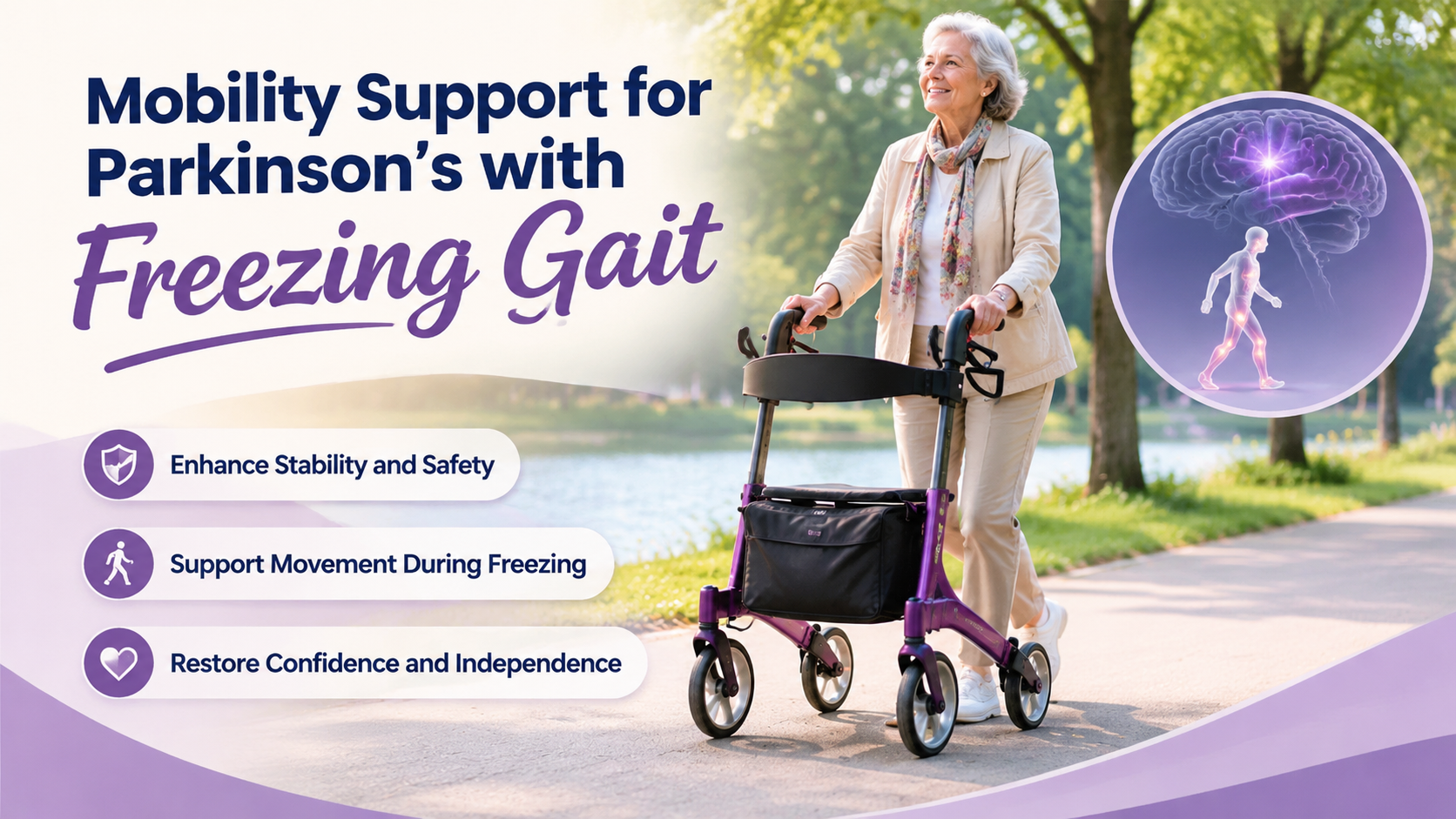
Understanding the Challenges of Freezing Gait
Freezing gait affects mobility in multiple ways:
1. Sudden Immobilization: Patients stop mid-step, losing momentum and control over their movement.
2. Increased Fall Risk: Abrupt stops make maintaining balance difficult, especially when turning or navigating obstacles.
3. Reduced Confidence and Activity: Fear of freezing or falling leads to activity avoidance, social isolation, and decreased participation in daily routines.
4. Physical Deconditioning: Reduced movement over time exacerbates weakness, rigidity, and balance issues.
5. Psychological Impacts: Anxiety and fear of falling increase, reducing the willingness to attempt independent walking.
Addressing these challenges requires mobility aids specifically designed to respond to sudden gait interruptions while providing physical and psychological reassurance.
Limitations of Traditional Mobility Aids
Traditional walkers or rollators generally provide general stability but are inadequate for freezing gait:
· Lack of dynamic response: Devices do not compensate for sudden immobilization, leaving patients unsteady.
· Limited stability support: Standard designs offer no extra support when a freeze occurs.
· Complex operation: Multi-step brakes or folding mechanisms are challenging for patients with tremor or rigidity.
· No sensory or feedback mechanisms: Patients receive no cues for step initiation or freeze detection.
A rehabilitation therapist explained:
"Even a stable walker is not enough if it doesn’t give the patient confidence to initiate movement during a freeze. Fear can prevent mobility entirely."
Key Design Features for Freezing Gait Mobility Aids
1. Dynamic Support Structures: Front-arm supports or back supports provide additional upper-body stability, helping maintain balance during sudden freezes.
2. Smart Dynamic Feedback Systems: Sensors and feedback mechanisms can detect a freeze and provide gentle cues or resistance adjustments to facilitate step initiation.
3. Large, Anti-Slip Wheels: Optimized wheel size and surface traction ensure smooth movement across different terrains, reducing slips or falls during sudden stops.
4. Ergonomic, Easy-to-Use Controls: Simplified brake systems and one-touch locking mechanisms reduce cognitive and physical effort, ensuring safety and confidence.
5. Adjustable Components: Height-adjustable handles and seats allow personalized posture alignment, improving comfort and stability.
6. Integrated Seating for Rest: Providing a seat allows patients to pause safely, reducing fatigue and the risk of falls during prolonged activity.
These features together create a mobility aid that actively supports patients through freezing episodes, enhancing both physical stability and psychological confidence.
Real-World Feedback
· "The arm supports help me stay upright when my feet freeze, and the wide wheels keep me steady," shared a 77-year-old patient.
· "Smart sensors alert me subtly to start moving again, which reduces anxiety and fear of falling," added another.
· Clinicians report reduced fall incidents, increased mobility, and improved participation in daily activities for patients using adaptive rollators with these features.
This evidence underscores the importance of designing mobility aids that combine mechanical stability with cognitive reassurance for Parkinson’s patients.
Healthcare and Procurement Considerations
When selecting mobility aids for freezing gait:
· Prioritize stability: Low center of gravity, wide base, and anti-tip features.
· Ensure dynamic response: Smart feedback or sensor integration to assist step initiation.
· Optimize ergonomics: Adjustable handles and comfortable grips for tremor or rigidity.
· Simplify operation: One-touch brakes and folding reduce cognitive and physical strain.
· Support endurance: Integrated seating enables rest during longer walks.
Choosing devices that address these factors enhances safety, restores confidence, and encourages independent movement.
Summary
Mobility aids for seniors with Parkinson’s disease and freezing gait should combine stability, dynamic support, ergonomic design, smart feedback, and intuitive controls. Benefits include:
· Reduced risk of falls and sudden instability
· Improved confidence and willingness to move independently
· Enhanced endurance and participation in daily activities
· Mitigation of psychological anxiety associated with freezing episodes
A rehabilitation specialist summarized:
"The right mobility aid allows seniors to move safely through freezing episodes, restoring confidence and independence in daily life."
By integrating both physical and psychological support, adaptive rollators transform mobility for Parkinson’s patients with freezing gait, enabling safer, more independent living.