






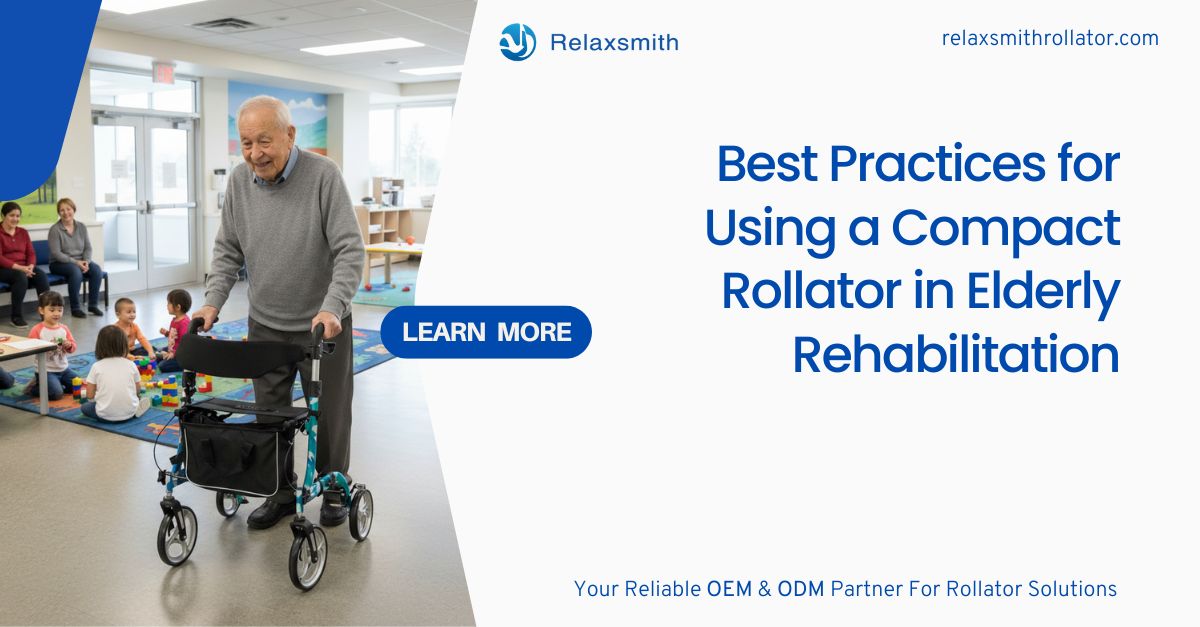
Best Practices for Using a Compact Rollator in Elderly Rehabilitation
For product managers and supply chain professionals, supporting elderly rehabilitation means more than just choosing any mobility aid—it requires a deep understanding of how compact high-arm 4-wheeled rollator walkers for elderly rehabilitation work, what best practices ensure patient safety, and how international compliance, user training, and digital management can maximize both safety and operational efficiency.
1. Deep Dive: Understanding the Unique Needs of Elderly Rehabilitation
Elderly patients undergoing rehabilitation present a wide range of mobility challenges, from weakened lower limbs and balance disorders to cognitive decline and frailty syndrome. Before selecting a compact high-arm 4-wheeled rollator walker for elderly rehabilitation, professionals should perform a detailed needs analysis that includes:
Gait assessment (observing stride, pace, and balance)
Environmental mapping (identifying obstacles and surface types in home/facility)
Medical history (fall risks, post-surgical restrictions, neurologic conditions)
User goals (independent mobility, social participation, or home-based care)
Case Example: In a recent pilot at a mid-sized rehabilitation center in the EU, elderly patients with mild Parkinson’s Disease using compact high-arm rollators demonstrated a 25% reduction in falls compared to those using traditional low-arm models. This highlights the value of proper product selection aligned with patient profiles.
2. Selecting the Right Rollator: Key Product Features and International Standards
The global medical devices market is regulated by standards such as CE marking (Europe), FDA clearance (USA), and ISO 11199-2. For supply chain and procurement teams, it's essential to ensure every compact high-arm 4-wheeled rollator walker for elderly rehabilitation meets or exceeds these requirements:
Frame stability (must withstand dynamic user weight and repetitive movement)
Adjustable ergonomic handles (to suit users of various heights and shoulder widths)
Lockable and easy-access brakes (for both caregivers and patients with arthritis)
All-terrain, puncture-proof wheels
Lightweight and foldable design for storage and transport
CE/FDA/ISO compliance labeling and documentation
Product Manager’s Tip: When evaluating suppliers, request third-party compliance documentation and pilot test the rollator in both clinical and home settings with real users. Include feedback from physiotherapists and caregivers in your purchasing decision.
3. Implementation: Preparing Facilities and Users for Success
The successful introduction of a new mobility device depends on both staff training and user readiness. Key actions include:
Facility adaptation: Remove tripping hazards, install ramps/rails, and ensure wide doorways.
User assessment and fitting: Personalize handle height, test wheel stability, and demonstrate safe mounting/dismounting.
Onboarding sessions: Provide walk-throughs, practice turns and braking, and address user questions.
Digital user manuals and video tutorials: Make learning accessible for all literacy levels.
Case Example: A hospital in Canada implemented a week-long onboarding program for new compact rollator users, resulting in higher patient satisfaction scores and 15% faster achievement of mobility goals.
4. Professional Training and Ongoing Support
Continuous education is vital, not only for elderly users but also for clinical teams and caregivers. A robust training system includes:
Quarterly workshops led by physiotherapists and occupational therapists
Annual re-certification on device use for staff
Accessible online troubleshooting and Q&A forums
Direct support channels to rollator suppliers/manufacturers
Supply Chain Insight: Choose suppliers that offer not only the product but also comprehensive after-sales support, spare part availability, and remote technical assistance.
5. Maintenance Strategies and Digital Tracking for Safety
Preventive maintenance minimizes breakdowns and maximizes user safety. Consider these best practices:
Implement monthly safety checks (wheels, brakes, frame, handles)
Use QR-code asset tagging for each rollator and track maintenance digitally
Maintain a service log for all adjustments and repairs
Stock high-turnover spare parts (brake cables, wheels, grips)
Provide users/caregivers with a quick checklist for daily use
Digital Example: Some advanced facilities now integrate rollator inventory and maintenance into their Hospital Information Systems (HIS), generating reminders and tracking product lifecycle data for compliance and insurance.
6. Customizing Rollator Use: Advanced Tips for Diverse Rehabilitation Needs
Elderly rehabilitation is rarely a one-size-fits-all solution. Customize device usage to suit:
Post-surgical recovery: Prioritize ultra-stable models with extra-wide frames and adjustable speed control
Cognitive decline: Choose rollators with color-coded brakes and simple locking mechanisms
Community use: Select lightweight, foldable designs with built-in storage bags and reflective safety features
Industry Note: There is a trend towards “smart rollators” that offer real-time monitoring of user gait, fall detection, and telemedicine integration.
7. Data-Driven Procurement: The Role of Feedback and Continuous Improvement
For product managers, data is critical. Establish feedback loops through:
User surveys after 30/90/180 days of rollator use
Incident and near-miss reports
Comparative outcome studies across device brands and models
Use this data to refine product specifications, inform supplier negotiations, and support claims in regulatory compliance audits.
8. Looking Forward: Trends and Innovations in Elderly Mobility Devices
The future of elderly rehabilitation will be shaped by technology, sustainability, and user-centric design:
Integration of IoT sensors for fall alerts and usage analytics
Eco-friendly materials and recyclable product designs
Personalization via modular accessories and smart health tracking
Product managers and procurement leaders must continuously monitor global trends and supplier innovations to remain competitive and deliver optimal patient outcomes.
Conclusion
Successfully implementing a compact high-arm 4-wheeled rollator walker for elderly rehabilitation strategy requires an evidence-based approach spanning selection, training, digital management, and ongoing feedback. By prioritizing patient safety, compliance, and continuous improvement, supply chain managers and product leaders can ensure that their organizations not only meet current healthcare demands but also stay ahead in a rapidly evolving field.
40 SEO Keyword Groups:
compact rollator
high-arm 4-wheeled rollator
elderly rehabilitation
senior mobility device
medical mobility aid
rollator safety
rehabilitation walker
product manager guide
supply chain medical devices
mobility innovation
adjustable rollator
user training rollator
senior care safety
compact high-arm 4-wheeled rollator walker for elderly rehabilitation
advanced rollator features
procurement rollator
rollator for hospitals
geriatric rehabilitation solutions
rollator ergonomics
clinical rollator use
walker maintenance tips
fall prevention seniors
posture support walker
rehabilitation equipment
quality assurance rollator
safe home mobility
lightweight rollator
rollator with brakes
compact walker innovation
senior independence aid
medical procurement guide
clinical staff training
rollator digital maintenance
elderly product safety
walker spare parts
professional healthcare devices
mobility device compliance
aged care product manager
user confidence training
rehabilitation progress support
20 Recommended Tags:
compact rollator
elderly rehabilitation
senior care
mobility
rollator walker
medical device
safety
high-arm rollator
product manager
supply chain
training
rehabilitation
maintenance
innovation
fall prevention
ergonomics
procurement
quality assurance
senior independence
walker support



