





.png)
Checklist for Supply Chain Professionals: How to Check the Quality of a Rollator’s Components in Sourcing and Bidding
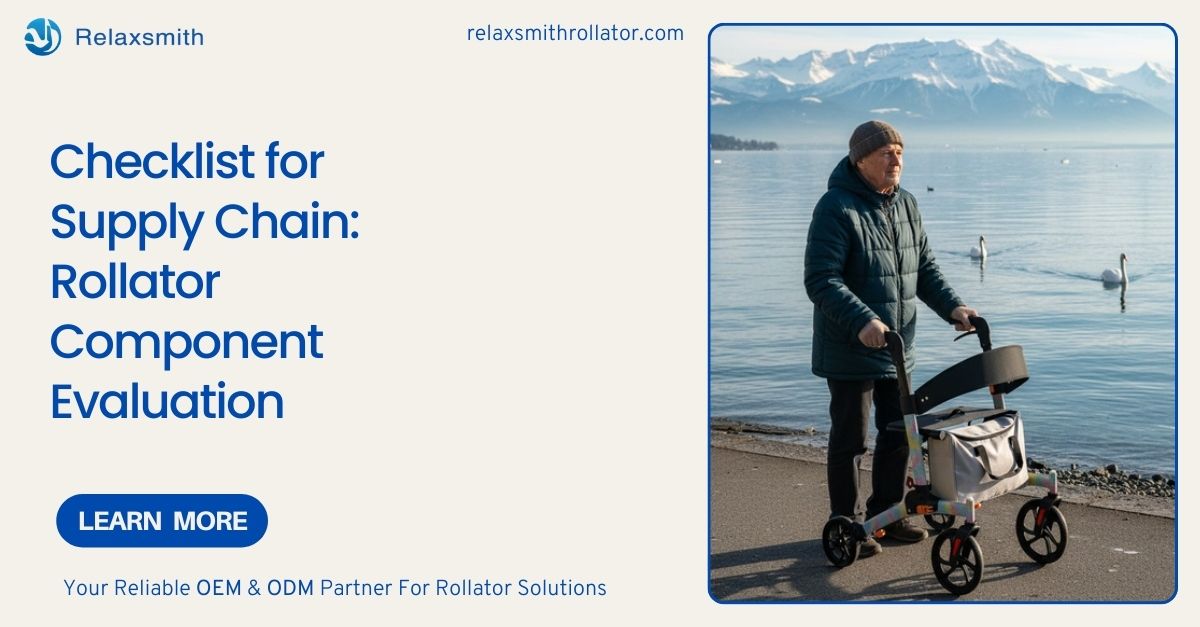
In the competitive realm of medical equipment sourcing, ensuring the component-level quality of rollators can define the success of a long-term contract. For supply chain professionals, this article provides a detailed checklist to check the quality of a rollator’s components during sourcing, vendor evaluation, and bidding processes. From bid reviews to factory visits, this framework supports smarter, safer procurement.
1. Pre-Bid Vendor Qualification
Begin by screening vendors for certification and documentation. Look for ISO 9001 and ISO 13485 compliance, plus regulatory credentials (FDA, CE). Request a bill of materials and third-party audit results. This front-end filtration ensures you only evaluate bidders that meet minimum quality standards before you even check the quality of a rollator’s components.
2. Sample-Based Component Testing
When reviewing bids, request physical samples for inspection. Use a standardized checklist to evaluate:
Frame finish and weld strength
Brake responsiveness and adjustability
Wheel tread material and bearing movement
Handlebar locking mechanisms and grip texture
Seat weight tolerance and folding safety
These insights allow you to check the quality of a rollator’s components across multiple bidders before price influences your judgment.
3. Supplier Facility Audit
Visit production sites when possible or conduct remote video audits. Focus on component testing equipment (brake force gauges, rolling simulators, vibration testers). Ask to observe 5% random sampling protocols. Evaluate incoming materials, batch tracking systems, and final QC sign-off workflows.
4. Risk-Based Scorecard Integration
Integrate your findings into a supplier risk scorecard that combines:
Component failure history
Service and warranty support
Third-party complaint records
Price vs. performance scoring
This approach provides holistic visibility when deciding who can consistently check the quality of a rollator’s components and deliver at scale.
Conclusion
When sourcing mobility aids like rollators, the devil is in the details. Applying a component-level checklist protects your institution from faulty batches, ensures end-user satisfaction, and builds long-term supplier relationships. By mastering how to check the quality of a rollator’s components at the procurement stage, you shift quality control upstream—where it belongs.