





Clinical Insights: Rehabilitation Protocols and High-Arm Rollator Adjustments to Avoid Shoulder Stress
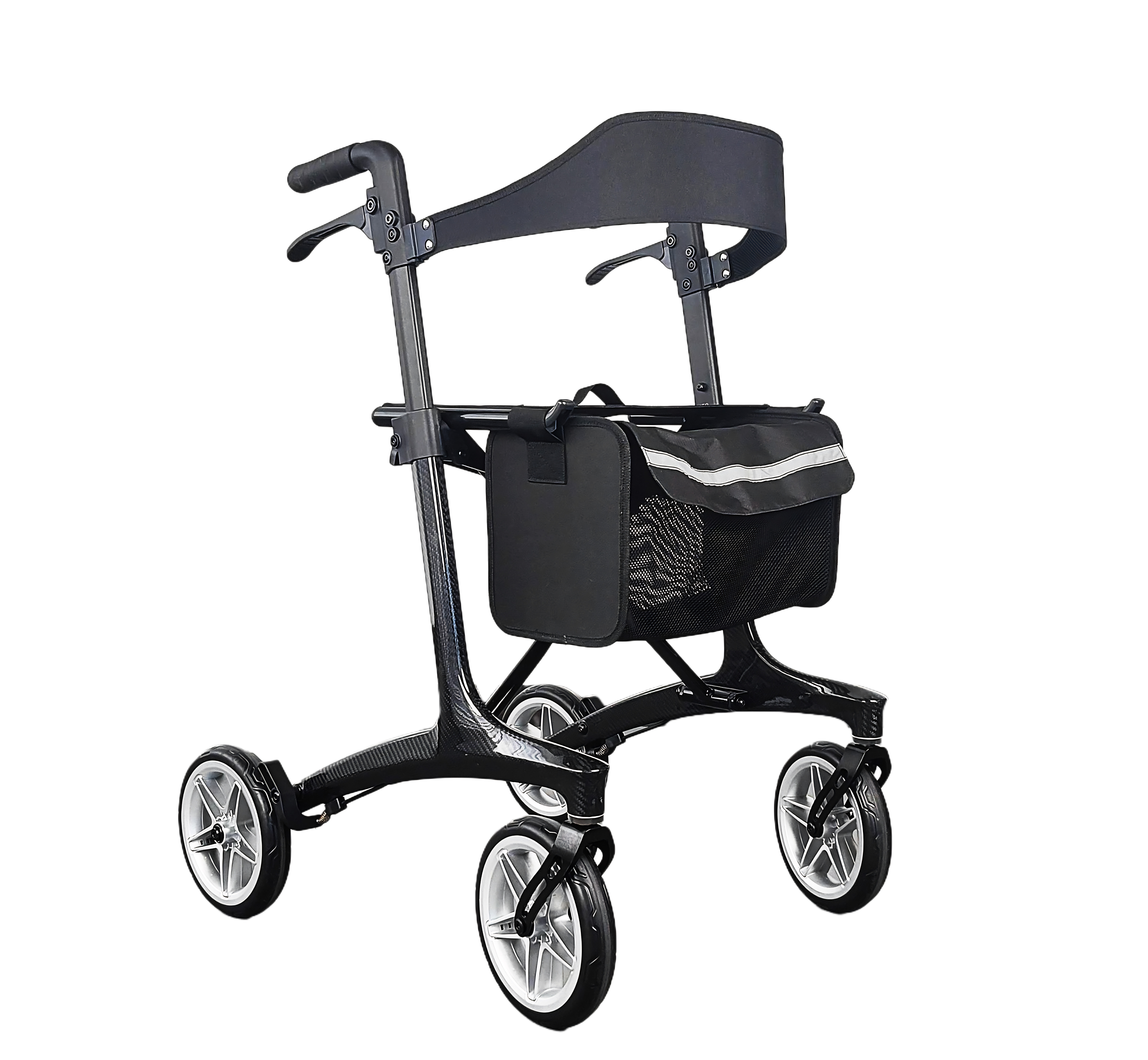
Abstract: This article provides a clinical and procurement-focused guide to preventing shoulder stress in elderly rehabilitation by optimizing high-arm rollator selection and adjustment. It draws on real-world experience with models such as the compact high-arm 4-wheeled rollator walker for elderly rehabilitation and outlines best practices for physiotherapists, product managers, and procurement specialists.
Introduction
Properly adjusting high-arm rollators is crucial to reducing the risk of shoulder stress among elderly rehabilitation patients. As product and procurement managers seek to balance clinical effectiveness with operational efficiency, understanding clinical insights and evidence-based protocols for device selection and setup—especially for the compact high-arm 4-wheeled rollator walker for elderly rehabilitation—is vital.
Understanding Shoulder Stress in Rehabilitation
Shoulder overuse or incorrect rollator height leads to tendon irritation and fatigue.
Poor armrest or handgrip alignment exacerbates muscle strain and impairs recovery.
Shoulder pain increases dropout risk and undermines rehabilitation goals.
Collaborative efforts between clinicians and product teams can reduce these risks at the point of selection and adjustment.
Evidence-Based Rehabilitation Protocols
Initial patient assessment by physiotherapist to determine ideal rollator settings.
Gradual gait training with focus on posture and arm positioning.
Incorporation of strengthening and stretching routines for the shoulder girdle.
Periodic reassessment of user comfort, gait, and device setup.
Consistent education and support from multidisciplinary team.
Integrating these protocols ensures the clinical value of any high-arm rollator procurement.
Key Rollator Adjustments for Shoulder Safety
Armrest Height: Adjust so elbows remain at a 90-degree angle while walking.
Handgrip Position: Align grips with wrist level, not above, to avoid shoulder elevation.
Forearm Support Angle: Maintain natural wrist and elbow alignment—avoid internal rotation.
Base Stability: Ensure the rollator base supports patient weight without tipping or shifting.
Devices like the compact high-arm 4-wheeled rollator walker for elderly rehabilitation enable all necessary fine-tuning for clinical safety.
Product Selection: Compact High-Arm 4-Wheeled Rollator Walker for Elderly Rehabilitation
Tool-free, quick adjustments for height and grip settings
Stable four-wheeled design to support rehabilitation in varied settings
Feedback from clinicians confirms improved user comfort and reduced complaints of shoulder pain
Procurement specialists should document clinical outcomes and regularly update specification requirements to reflect evolving best practices.
Team-Based Implementation: Clinical & Procurement Collaboration
Engage clinical leads, therapists, and suppliers early in the procurement cycle.
Conduct on-site trials and collect user-reported outcome measures (PROMs).
Develop shared documentation and adjustment protocols for all users.
Monitor and respond to feedback to ensure continued optimization of device use.
Conclusion
Effective prevention of shoulder stress in elderly rehabilitation is achieved through clinical best practices, robust procurement processes, and devices designed for precision adjustment, such as the compact high-arm 4-wheeled rollator walker for elderly rehabilitation. This integrated approach protects patients, maximizes value, and strengthens institutional outcomes.