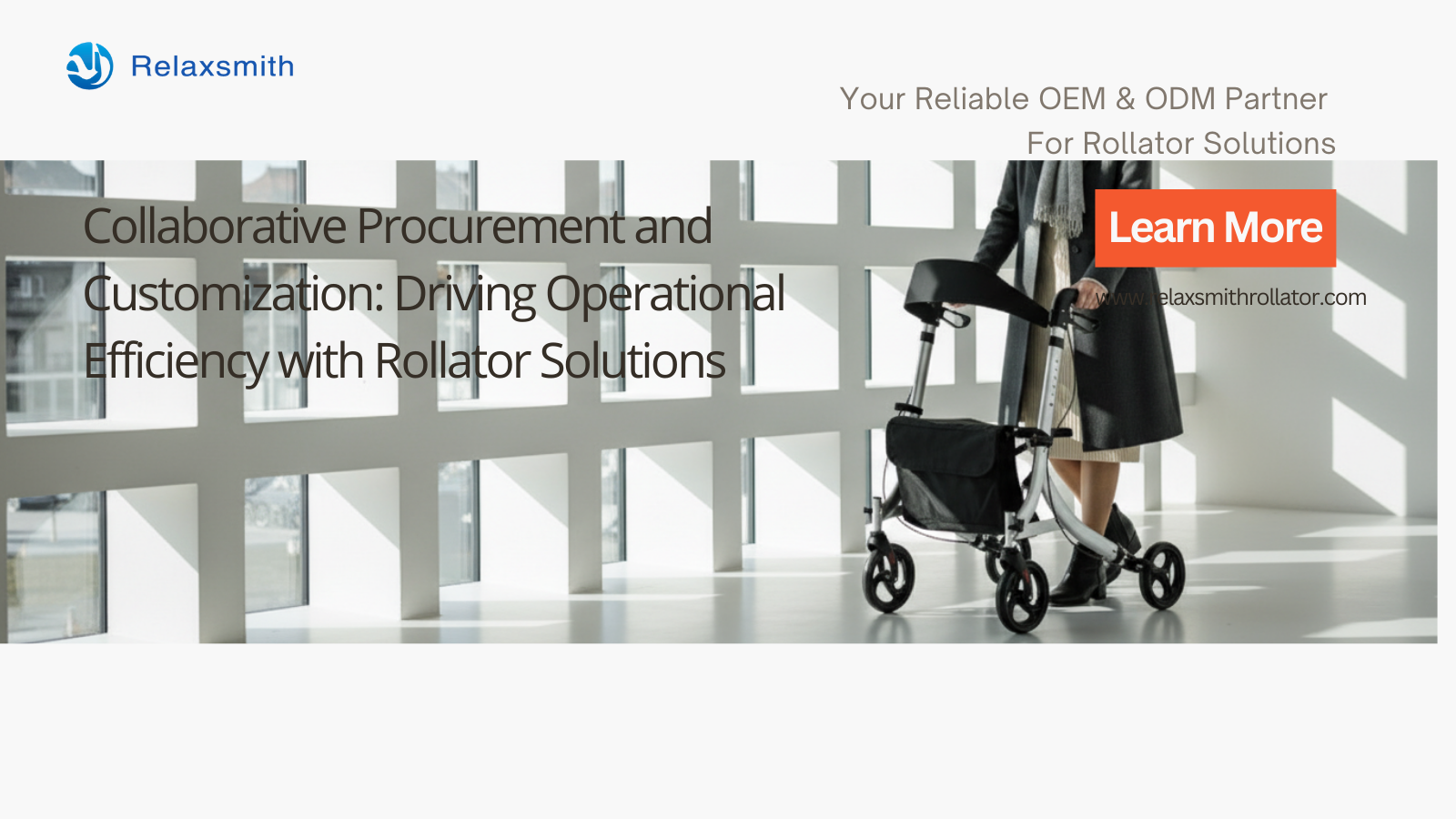
Collaborative Procurement and Customization: Driving Operational Efficiency with Rollator Solutions
In today’s healthcare and rehabilitation landscape, operational efficiency depends on matching equipment capabilities to evolving workflow needs. Collaborative procurement and design customization for operational efficiency rollator solutions can help facilities achieve their goals while meeting patient and staff requirements. This article outlines the process and benefits of strategic partnership in rollator specification and deployment.
1. The Value of Cross-functional Teams
Bringing together clinical, operational, and procurement experts leads to:
Comprehensive needs assessment before purchase.
Clear definition of must-have features for workflow integration.
Rapid feedback on user experience for continuous improvement.
This collaboration ensures the selected operational efficiency rollator delivers maximum value.
2. Customization and Supplier Collaboration
Facilities can request bespoke design elements, such as:
Unique frame sizes and adjustable components for diverse populations.
Integrated accessories tailored to department-specific functions.
Branding or color-coding for inventory control and visual management.
Supplier flexibility accelerates operational adaptation and satisfaction.
3. Lifecycle Planning and Cost Control
Strategic procurement includes planning for:
Asset longevity and scheduled maintenance cycles.
Warranty terms aligned with facility usage patterns.
Supplier support for training, parts, and upgrades over time.
Lifecycle focus reduces total cost of ownership and improves operational continuity.
4. Feedback-driven Iteration
Continuous improvement is possible when staff and patients can report:
Suggestions for additional features or adjustments.
Usability concerns that impact workflow or safety.
Performance data to inform future procurement rounds.
Facilities gain a competitive edge by adopting an agile, user-responsive approach.
5. Measuring Outcomes and Efficiency Gains
Key performance indicators for collaborative rollator solutions include:
Reduction in staff time spent on mobility aid management.
Improved patient mobility scores and satisfaction ratings.
Lower incident rates and faster adaptation to new care models.
Quantifying these benefits demonstrates ROI for decision-makers and stakeholders.
Relevant Tags: Elder walker with comfort grip, Lightweight folding aid, Rollator walker with bag, Mobility support with wheels, Easy storage walker, Ultra compact rollator, Stylish senior walker, Sturdy mobility walker, Walker with dual function seat, Rollator for uneven terrain, Portable walking frame, Bariatric walking aid, Adjustable handle rollator, Indoor rollator with seat, Rollator with locking brakes, Elderly mobility support, Rollator walker for tall users, Foldable seated walker, Mobility walker with basket, Rollator walker with tray attachment, Basic Walkers
SEO Keywords
Operational efficiency rollator
Healthcare rollator design
Rehabilitation mobility solution
Staff workflow optimization
Patient safety rollator
Adjustable medical rollator
Modular healthcare mobility
Facility asset management rollator
Foldable mobility aid
Caregiver friendly rollator
Data-driven healthcare equipment
Digital rollator integration
Compliance rollator solution
Long-term mobility investment
Return on investment rollator
Multi-functional rollator
Anti-slip rollator features
Durable rehabilitation equipment
Lightweight rollator benefit
Smart rollator tracking
Patient-centered rollator
Operational risk reduction
Facility workflow mobility
Ergonomic rollator benefits
Clinical asset utilization
Supply chain rollator solution
Mobility equipment maintenance
Therapeutic rollator design
Rapid response rollator
Hospital rollator innovation
For more details, please visit: www.relaxsmithrollator.com