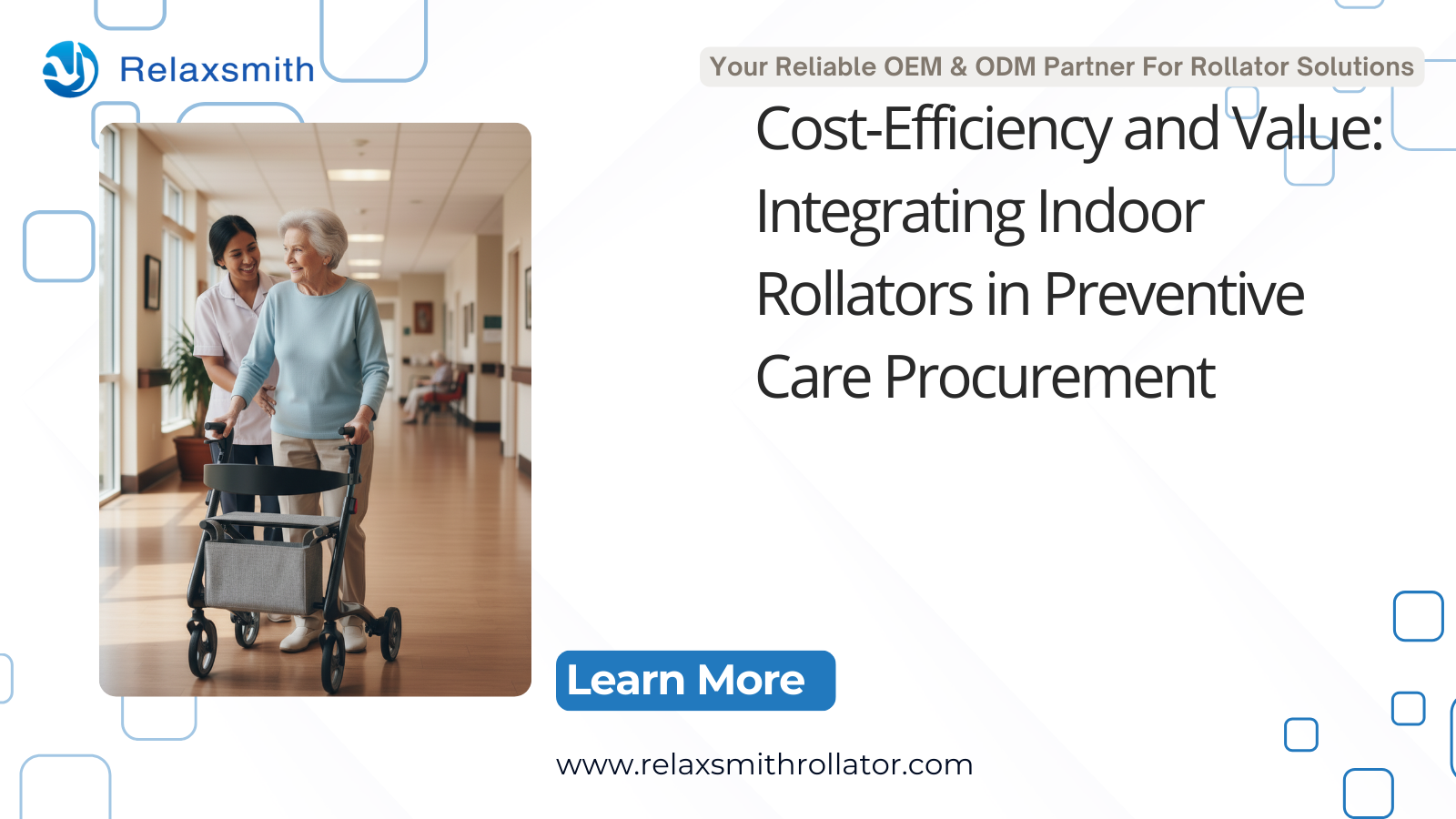
Cost-Efficiency and Value: Integrating Indoor Rollators in Preventive Care Procurement
Introduction: Procurement’s Critical Role in Preventive Healthcare
Modern healthcare procurement goes beyond just sourcing products—it’s about selecting interventions that drive better outcomes, reduce costs, and support preventive care. One of the most impactful tools for improving patient mobility and reducing future health expenses is the indoor rollator. But a frequently asked question remains: why should I use a rollator even for short distances inside my home?
Cost Analysis: Why Should I Use a Rollator Even for Short Distances Inside My Home?
Procurement managers and product decision-makers must consider the total cost of ownership, not just initial purchase price. When evaluating rollators for preventive indoor use, the value is evident:
Reduced rates of costly fall-related injuries
Minimized hospital readmissions and rehabilitation expenses
Enhanced patient satisfaction, driving better organizational performance scores
It is essential to educate both clinical staff and patients about why should I use a rollator even for short distances inside my home—early intervention prevents expensive complications.
Best Practices for Rollator Procurement
Standardize product evaluation criteria focusing on durability, adjustability, and patient comfort
Collaborate with clinical teams to gather feedback on usability and risk-reduction features
Negotiate supplier contracts that include ongoing training and support
Operational Benefits of Indoor Rollator Integration
Integrating rollators into preventive care workflows brings practical value for supply chain teams:
Simplified logistics and inventory management
Consistent supply of approved devices for high-risk populations
Data-driven tracking of outcomes linked to rollator use
Addressing Stakeholder Concerns: Communication and Implementation
Overcoming barriers to adoption requires effective communication strategies. Procurement and supply chain professionals should work closely with stakeholders to address the recurring concern: why should I use a rollator even for short distances inside my home?
Offer clear data on safety improvements and cost savings
Demonstrate return on investment through pilot programs
Highlight patient testimonials and real-world case studies
Tags: Elder walker with comfort grip, Lightweight folding aid, Rollator walker with bag, Mobility support with wheels, Easy storage walker, Ultra compact rollator, Stylish senior walker, Sturdy mobility walker, Walker with dual function seat, Rollator for uneven terrain
SEO Keywords: cost-efficient rollator procurement, healthcare product strategy, preventive mobility device, fall prevention solution, rollator value assessment, hospital supply chain optimization, in-home safety equipment, clinical risk reduction, procurement best practices, mobility improvement outcomes
For more details, please visit:www.relaxsmithrollator.com