





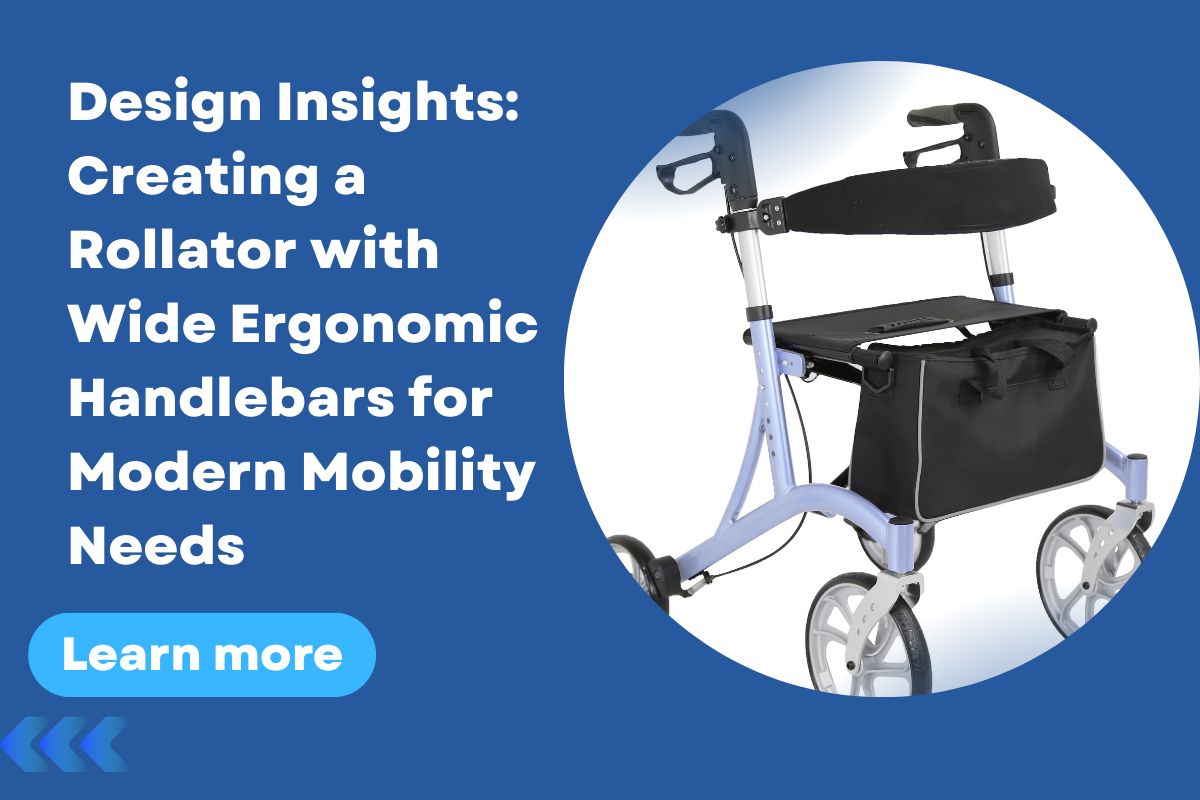
Design Principles That Help Rollators Avoid the ‘Medical Device’ Look
Today’s consumers want functionality, but they also demand style, especially when it comes to mobility aids. For product managers and procurement leads, one growing priority is to make sure my rollator doesn't look like a medical device. This shift is not just about aesthetics—it’s a strategic move to improve user confidence and brand perception.
1. Harmonized Form & Function
Effective design must be ergonomic, but also visually appealing. To avoid a clinical look, create frames with rounded edges, concealed mechanics, and streamlined geometry. Replace exposed screws with integrated connectors. Use symmetry to evoke balance and calm.
2. Material Innovation
Traditional rollators rely heavily on utilitarian materials like cold metal and flat plastics. Instead, use aerospace-grade aluminum with anodized finishes or soft-shell polymers that feel tactile. These elements make sure my rollator doesn't look like a medical device by adding modern texture and visual warmth.
3. Brand-Led Aesthetic Integration
Product identity must carry through every visual touchpoint. Consistent color schemes, minimalist logos, and refined graphics replace overly complex branding. A rollator should sit beside premium lifestyle products and not look out of place.
4. Sensory-Centered Usability
From tactile handles to silent wheels, sensory design reinforces that the rollator is a lifestyle product, not a piece of medical equipment. Features like silent gliding, smooth brakes, and non-clinical click feedback improve the experience and further make sure my rollator doesn't look like a medical device.
5. Personalization Options
Give users the chance to choose color trims, bag styles, grip materials, or even frame decals. Modular and customizable designs foster ownership and pride, key to distancing the product from traditional healthcare gear.
Conclusion
Creating a rollator that aligns with user aspirations rather than their conditions is a fundamental shift in mobility design. As the aging population becomes more style-conscious, your design decisions directly affect product desirability. Now is the time to apply these principles and make sure my rollator doesn't look like a medical device.
SEO Keywords (40 groups for this series)
- Rollator with High-Visibility Accents
- High-visibility rollator
- Patient safety mobility device
- Reflective mobility aid
- Fall prevention rollator
- Healthcare facility safety
- Rollator for vision-impaired users
- Outdoor safety rollator
- Care team mobility solution
- Senior living safety device
- Hospital rollator selection
- Rehabilitation mobility equipment
- Ergonomic rollator design
- Patient engagement mobility aid
- Accident prevention mobility
- Mobility device inventory
- Compliance mobility aid
- Group therapy mobility solution
- Reflective strip rollator
- Bright accent mobility device
- Operational safety mobility
- Procurement rollator
- Healthcare supply chain device
- Therapy mobility equipment
- Caregiver-friendly mobility aid
- Accessible mobility device
- Senior activity rollator
- Facility safety protocol
- Staff efficiency mobility solution
- Medical equipment for fall prevention
- Modern hospital rollator
- Quality of life safety product
- Long-term care mobility
- Nighttime safety mobility aid
- Rehabilitation safety device
- Innovative mobility technology
- Product manager safety solution
- Outdoor senior mobility device
- High-contrast rollator
- Regulatory compliant rollator
Tags:
Ergonomic rollator design, Stylish senior walker, Modern hospital rollator