





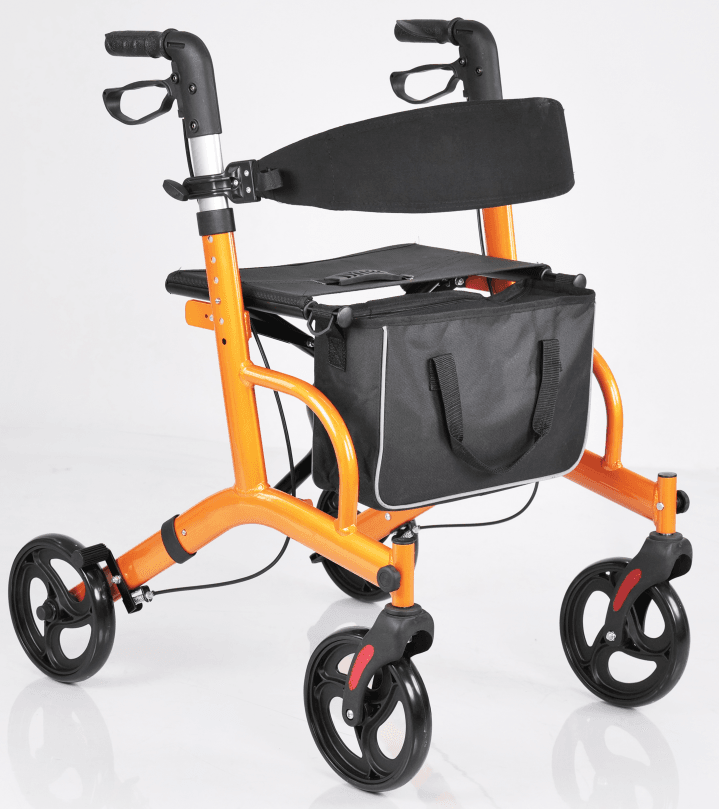
Engineering Slim Profile Rollators: Material Strategies to Navigate Tight Spaces

For procurement professionals and product engineers, finding the best ways to navigate tight spaces and doorways with a rollator starts long before the product hits the shelf. It begins with thoughtful engineering, precise materials selection, and manufacturing strategies that create both slim and strong mobility devices. This article explores critical design principles that enable rollators to function well in real-world constraints.
1. Prioritizing Lightweight Structural Alloys
One of the simplest, yet most powerful ways to engineer slimmer rollators is by using high-tensile aluminum alloys. These materials allow frame tubes to be thinner without sacrificing load capacity. Unlike steel, which adds bulk and weight, aluminum maintains rigidity while promoting user maneuverability—critical in hallways and door frames. This is one of the best ways to navigate tight spaces and doorways with a rollator from a manufacturing standpoint.
2. Precision Welding and Load-Bearing Analysis
Rollators require welded joints strong enough to bear weight yet compact enough to reduce frame intrusion. Laser and TIG welding can create minimal, smooth joints with high shear strength. Product teams should also conduct finite element analysis (FEA) to simulate how stress is distributed during doorway maneuvers. Engineering compact welds that pass real-world strain conditions supports rollators that move freely through constrained environments.
3. Integrated Design: Combining Form and Function
To maintain a slim profile, engineering should integrate accessory components such as baskets or seats into the main frame. Rather than tacking on bulky items, using CAD tools to mold accessories flush within the rollator’s skeleton minimizes added width. For sourcing teams, evaluating suppliers with capabilities for integrated extrusion and molding is essential.
4. Material Coatings that Minimize Friction
Glide-through performance also depends on the outer coating. Powder-coated or anodized finishes on aluminum create ultra-smooth, low-friction surfaces. When users push rollators past thresholds or door jambs, these surfaces reduce abrasion—extending product lifespan. Strategic use of coatings is among the best ways to navigate tight spaces and doorways with a rollator while reducing long-term maintenance issues.
5. Foldability Without Compromising Strength
Engineers must ensure foldable sections—like crossbars or hinges—retain load integrity without becoming oversized. Using hollow-forged joints or internal locking cams allows frames to collapse without protruding elements. This makes storage easier in clinics or vehicles and facilitates indoor mobility without snagging on walls or furniture.
Conclusion: Precision and Practicality in Manufacturing
Ultimately, the best rollator is one that disappears into the background—reliable, strong, yet never obstructive. By carefully selecting materials, welding techniques, and foldable mechanisms, manufacturers and product developers can offer devices that meet real user demands. For those designing for performance in complex environments, these are the best ways to navigate tight spaces and doorways with a rollator.



