





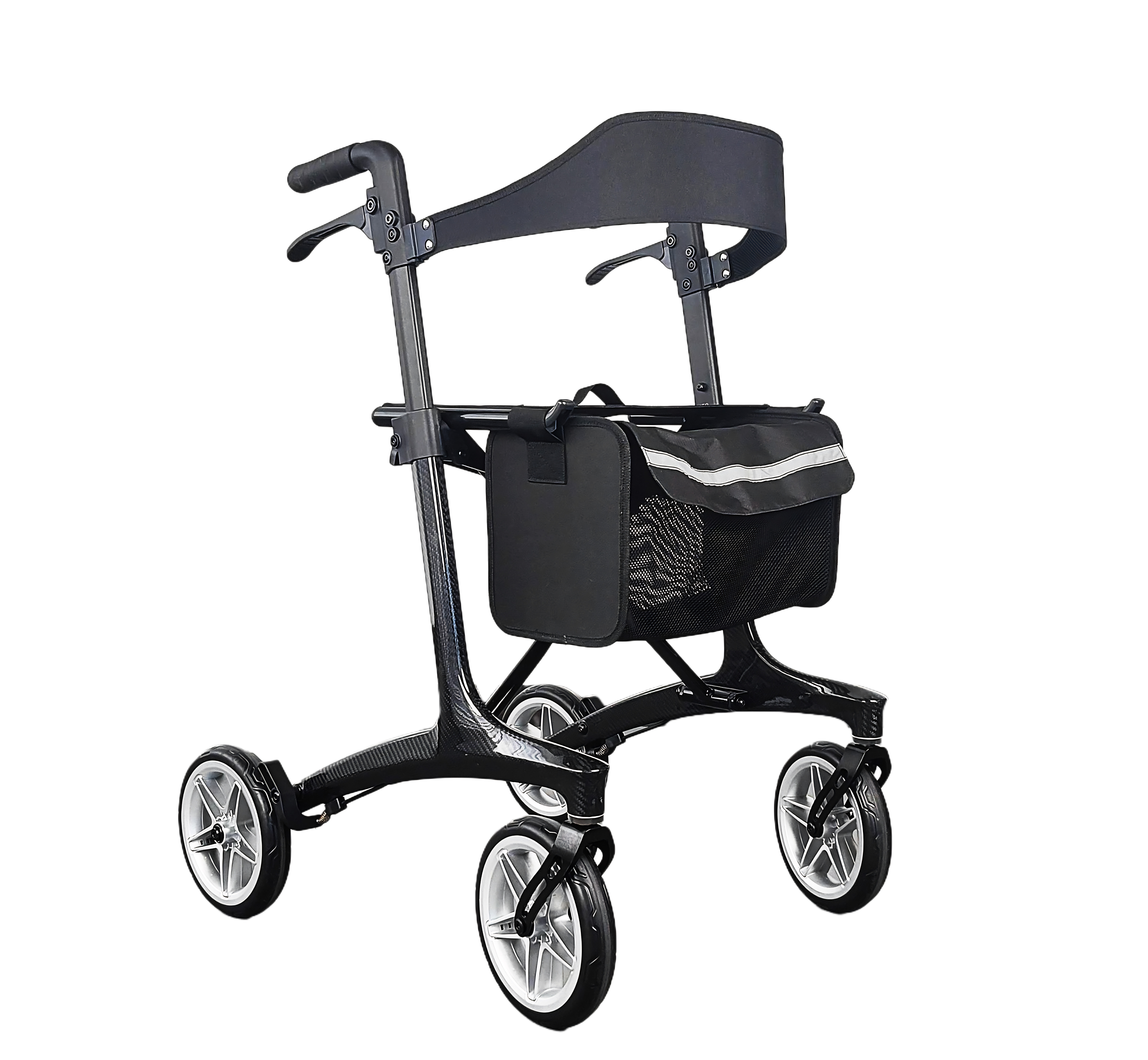
From Foam to Silicone: Comparing Rollator Grip Materials in Medical Settings

Choosing the right handle grip material for rollators in medical settings involves more than aesthetics or cost. It can determine safety, comfort, and long-term clinical outcomes. Understanding how handle grip material affect comfort and control enables purchasing and design teams to make informed, patient-centered decisions. This comparison of common materials explores the trade-offs and applications in professional environments.
1. What’s at Stake in Material Selection?
Medical-grade mobility products must meet high standards for hygiene, usability, and resilience. A suboptimal grip may increase fall risk, discourage device usage, or trigger allergic reactions. How handle grip material affect comfort and control should therefore be part of every specification sheet or product evaluation form.
2. Material Comparison Chart
| Material | Comfort | Control | Hygiene | Use Case |
|---|---|---|---|---|
| Foam | Soft, good for pressure relief | Moderate grip, degrades with sweat | Low, absorbs moisture | Short-term rehab or indoor use |
| Rubber | Firm, slightly cushioned | High friction, stable grip | Medium, can trap bacteria | Indoor/outdoor daily users |
| Silicone | Highly soft, temperature neutral | Excellent, non-slip | Excellent, easy to clean | Hospitals, seniors, neuro rehab |
| TPR | Balanced and ergonomic | Reliable grip, durable | High, resistant to moisture | Premium models or rugged terrain |
| Plastic | Hard, no cushioning | Slippery when wet | High, but least comfortable | Budget options, occasional use |
3. Product Strategy Recommendations
Selecting handle grip material should match the intended usage environment, patient population, and pricing tier. Facilities serving older or high-risk patients should avoid foam or hard plastic. Silicone and TPR provide the best blend of hygiene, comfort, and control. Understanding how handle grip material affect comfort and control helps you create or purchase smarter product lines.
Conclusion
Whether you're designing a new line or evaluating tenders for your hospital, never overlook handle grips. Their material composition shapes not only comfort but also patient safety, clinical workflow, and product lifecycle cost. A thoughtful grip decision today can lead to fewer falls and happier users tomorrow.



