How Advanced Rollator Features Streamline Procurement for Professional Managers
For today’s product managers and procurement professionals, purchasing mobility aids for elderly rehabilitation is not just about ticking boxes on a checklist—it’s about maximizing value, minimizing risk, and ensuring top-tier patient care. One product type stands out in this process: the compact high-arm 4-wheeled rollator walker for elderly rehabilitation. But how do the latest innovations in rollator design make procurement smarter and more efficient for organizations at scale?
1. Standardization Simplifies Inventory and Training
Modern healthcare organizations demand equipment that serves multiple user groups with minimal variation. A compact high-arm 4-wheeled rollator walker for elderly rehabilitation typically features standardized, modular components, making it easy to train clinical staff, reduce inventory complexity, and streamline ordering. The fewer models and spare parts needed, the lower the risk of supply chain disruption and costly errors.
2. Modular Adjustability Boosts Utilization Rates
Adjustable height armrests, seats, and handles make one rollator model suitable for a wider range of patients. This versatility increases device utilization, so procurement managers can buy fewer units and still support many therapy needs. The compact high-arm 4-wheeled rollator walker for elderly rehabilitation shines here, as tool-free adjustments empower rapid patient turnover and adaptive rehab programming.
3. Enhanced Durability Reduces Lifecycle Costs
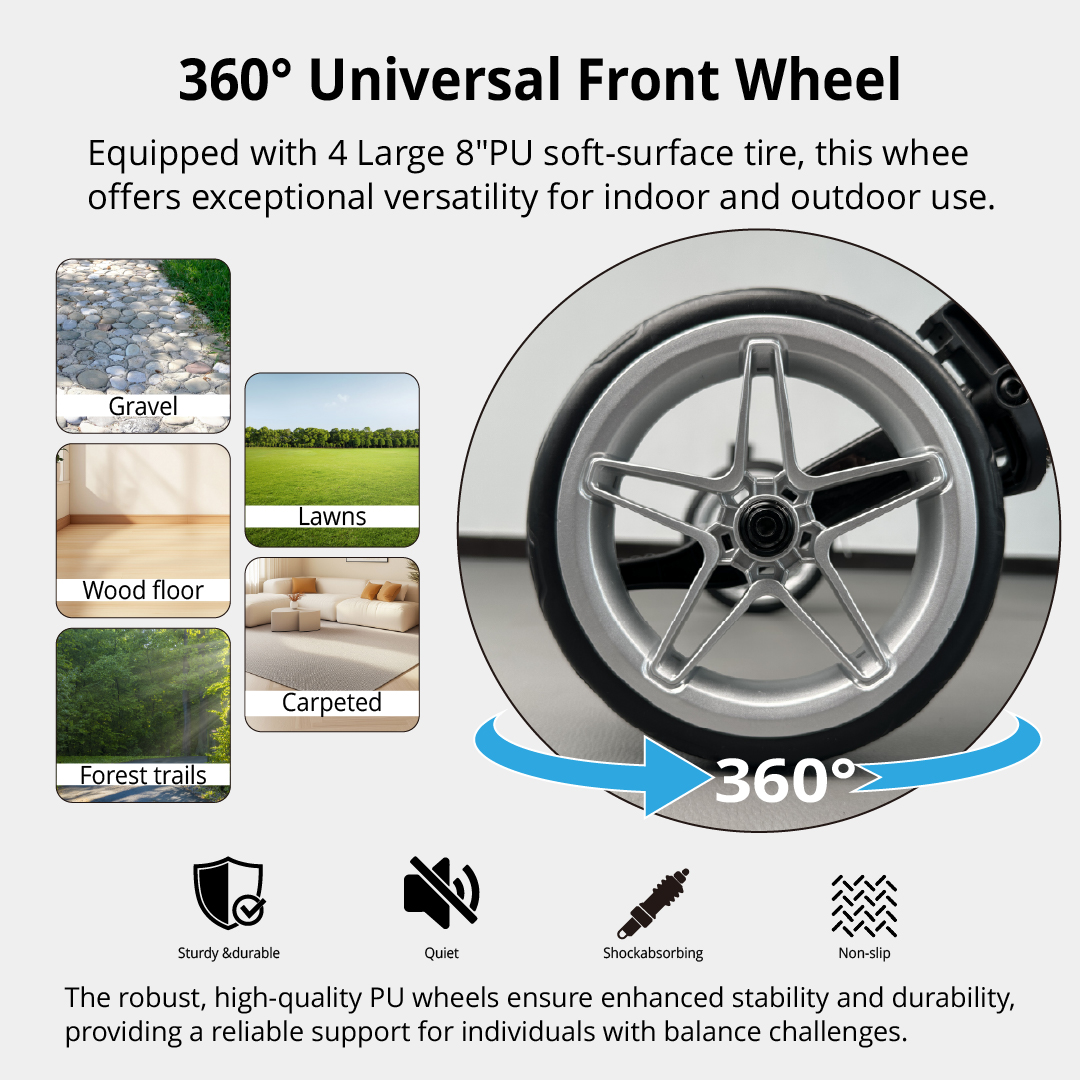
Equipment longevity is a cornerstone of cost-effective procurement. Advanced rollators are made with corrosion-resistant frames, durable wheels, and robust braking mechanisms. These features mean fewer replacements, less frequent repairs, and a lower total cost of ownership over the device lifecycle—key for budget-conscious supply chain leaders.
4. Safety Innovations Lower Clinical and Legal Risk
Today’s top rollators include anti-tip designs, ergonomic grips, and dual-braking systems, which collectively reduce fall risk and improve patient outcomes. With safety compliance built in, product managers can be confident in meeting regulatory standards and minimizing incidents that could result in liability or reputational harm.
5. Easy Maintenance Streamlines Daily Operations
Equipment that is easy to clean, disinfect, and repair saves time for clinical and facility staff. Snap-on components and simple cleaning surfaces are now industry standards. Procurement teams benefit from reduced downtime and increased operational efficiency, further supporting return on investment.
6. Real-World Versatility Drives Adoption
The compact high-arm 4-wheeled rollator walker for elderly rehabilitation is not just a clinic tool—it’s equally at home in hospitals, long-term care, and even patient residences. Its ability to cross environments makes it attractive to procurement leaders looking for a single SKU to deploy across their network, boosting negotiating leverage and simplifying after-sales support.
Conclusion
As healthcare organizations move toward integrated care, procurement decisions must prioritize versatility, safety, and efficiency. Advanced rollator features—standardized design, modular adjustability, robust construction, built-in safety, and streamlined maintenance—enable professional managers to deliver superior results for patients, staff, and the bottom line. Investing in the right compact high-arm 4-wheeled rollator walker for elderly rehabilitation is a strategic advantage in modern rehabilitation supply chains.