



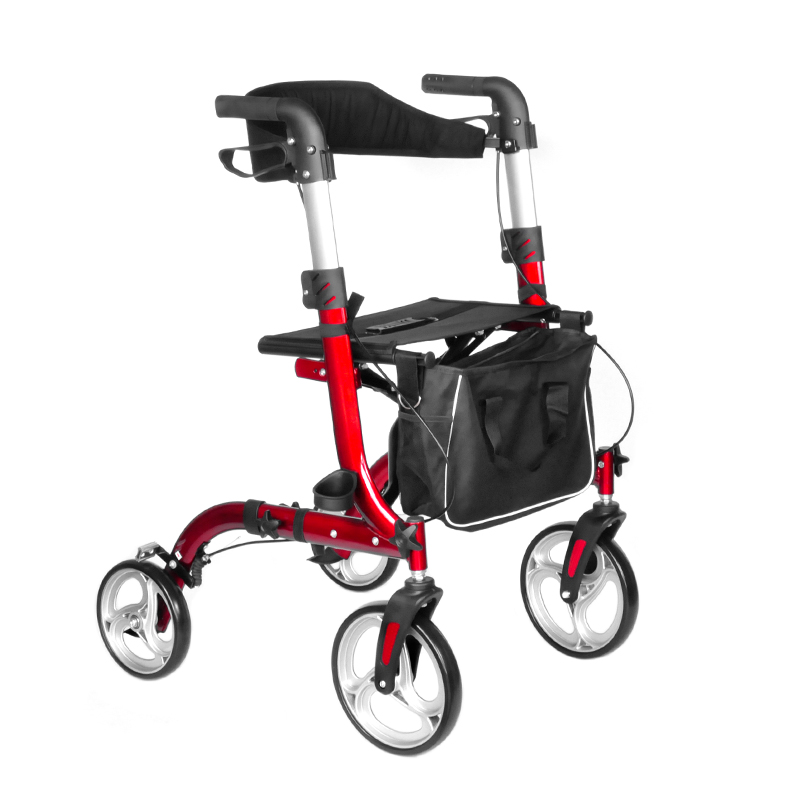
How Ethical Manufacturing Standards Enhance Mobility Aid Supply Chains
In today’s globalised manufacturing environment, professionals in product management and supply‑chain roles face increasingly complex mandates. Among these, embedding ethical manufacturing standards into mobility‑aid supply chains has emerged as a strategic imperative. For those managing rollators and other assistive mobility devices, the questions are no longer just about cost, quality and delivery—but also about responsibility, transparency and long‑term sustainability. This article explores why ethical manufacturing matters in mobility‑aid supply chains, how to implement it, and how practitioners can work with suppliers to ensure the right standards. We will also address the specific concerns of procurement and sourcing teams, and how the concept of Rollator Supplier Ethics fits within this broader agenda.
1. Why Ethical Manufacturing Standards Matter in Mobility Aids
Mobility aids such as rollators, walkers and frames serve a vulnerable end‑user group: older adults, people with mobility impairments, rehabilitation patients and other health‑care users. For these products, manufacturing integrity is indispensable—for safety, reliability and user confidence. Yet beyond product safety and functional performance lies a higher expectation: that these devices are produced under conditions that respect human rights, decent labour, environmental protection and governance transparency.
For product managers, this means aligning device design and supplier selection with ethical criteria. For procurement and supply‑chain managers, it means ensuring your network supports these criteria and delivers traceability, accountability and resilience. Research confirms that ethical supply‑chain practices deliver value—reduced risk, stronger brand reputation, supplier loyalty and improved stakeholder trust.
In the context of rollators, investing in what we’ll call Rollator Supplier Ethics becomes a differentiator: choosing suppliers with ethical credentials, transparent workplace practices, and documented environmental and social compliance. Doing so can also protect your organisation from reputational, regulatory and operational risks.
2. Key Ethical Manufacturing Standards for Mobility Aid Supply Chains
What do we mean by “ethical manufacturing standards”? For mobility‑aid supply chains, some core dimensions include:
Labour rights and safe working conditions. Suppliers must commit to fair wages, no forced or child labour, reasonable working hours and safe environments.
Environmental stewardship. Materials sourcing, waste management, emissions control and resource efficiency all matter.
Transparency and traceability. End‑to‑end visibility of materials, components, production steps and supplier tiers is vital.
Governance, ethics and compliance. Suppliers must adhere to laws and international norms—human rights, anti‑corruption, fair trade.
Supplier partnership and continuous improvement. Ethical manufacturing is not one‑off: it requires ongoing monitoring, audits, training and remediation.
When procurement professionals for mobility‑aid organisations embed these standards into supplier selection and management, they are effectively operationalizing “ethical manufacturing standards in mobility aid supply chains.” The phrase itself reflects the convergence of two priorities: high‑quality assistive devices and responsible manufacturing."
3. Embedding Ethical Standards into Supplier Selection and Contracting
For professionals managing mobility‑aid product lines, the supplier onboarding and contracting phase is a critical juncture to embed ethics up‑front. Steps include:
Developing a clear Supplier Code of Conduct that integrates your organisation’s ethical standards (including those relevant to rollators). This is a primary lever in establishing Rollator Supplier Ethics across your procurement operations.
Including ethical criteria alongside cost, quality and delivery in your supplier scorecards—for example: labour & human‑rights compliance, environmental footprint, traceability depth.
Prioritising suppliers with certifications and audits: e.g., ISO 26000 on social responsibility, third‑party audits of labour safety, environmental management certifications.
Embedding contract clauses requiring adherence to ethical standards, and specifying audit rights, corrective‑action plans and termination rights for non‑compliance.
Conducting an initial ethical‐risk assessment for each prospective supplier, mapping risks across geography, tier position, material sourcing and legal/regulatory context.
4. Monitoring, Auditing and Supplier Development
Selection is just the beginning. In mobility‐aid supply chains, keeping standards alive means instituting robust monitoring and development systems. Key activities for supply‑chain managers include:
Regular supplier audits: on‑site visits, worker interviews, document reviews. The aim is to verify compliance with the Supplier Code of Conduct and ethical manufacturing standards.
Use of technology: tools for traceability, digital dashboards, supplier scorecards and risk‑analytics to spot issues early.
Training and capacity‑building: partnering with suppliers to raise their internal standards, improve documentation, worker education and environmental practices.
Corrective‐action plans: when deficiencies are found, suppliers must execute documented action plans, with follow‑up verification. Without this, ethical standards cannot be sustained.
Transparency reporting: providing supplier performance data to stakeholders—internal stakeholders (product team, procurement) and external (customers, regulators). This helps embed a culture of accountability.
By adopting these practices, mobility‑aid companies turn the goal of “ethical manufacturing standards in mobility aid supply chains” into operational reality, and uphold Rollator Supplier Ethics in day‑to‑day supplier management.
5. Benefits for Product & Supply‑Chain Managers
Why should a product manager or procurement/SCM leader care about ethical manufacturing? The benefits extend beyond compliance. For mobility‑aid supply chains:
Risk mitigation. Ethical deficiencies—such as forced labour, unsafe working environments or environmental violations—can trigger regulatory sanctions, supply disruptions, product recalls or reputational damage.
Brand value and market differentiation. In the assistive‑device space, healthcare buyers, hospitals, rehabilitation providers and patients increasingly recognise and prefer suppliers with ethical and sustainable credentials.
Supplier stability and performance. Ethical suppliers tend to have better worker retention, fewer quality issues, fewer disruptions and more willingness to invest in continuous improvement.
Compliance and future‑proofing. Regulatory regimes (especially in Europe, North America) are tightening on due‑diligence, human‑rights and sustainability obligations—embedding ethics now means staying ahead of requirements.
Operational efficiency and cost savings. Through better traceability, improved supplier collaboration and fewer disruptions, ethical supply‑chain practices often yield better performance over time.
6. Practical Implementation Checklist
For mobility‑aid product and supply‑chain professionals, here is a practical checklist to move from intent to action:
Define your ethical manufacturing policy: include labour, environment, transparency, traceability, audit rights.
Map your current supply network for rollators and related devices: identify tier‑1, tier‑2 suppliers, geographic risks, material risks.
Set up supplier selection criteria and scorecards that include ethical metrics alongside cost, quality, delivery.
Require supplier declaration of compliance and provide them your Supplier Code of Conduct.
Onboard suppliers only after ethics/CSR screening and risk assessment.
Implement monitoring regime: audits, site‑visits, data‑dashboards, KPIs for ethical metrics.
Train suppliers and internal team on ethical manufacturing standards and expectations for mobility‑aid devices.
Report internally and externally on ethical performance—supplier scorecards, non‑compliance incidents, improvement plans.
Continually review and evolve your ethical manufacturing programme, benchmark against industry peers and certifications.
7. Addressing Common Challenges
Implementing ethical manufacturing standards in mobility‑aid supply chains is not without its challenges. Some common ones and how to address them:
Supplier resistance or cost concerns. Suppliers may view ethics as a burden or cost. Mitigate this by showing mutual benefit, offering capacity‑building, and linking ethics to quality, reliability and preferred‑supplier status.
Visibility beyond tier‑1 suppliers. Many risks lie deeper in the supply chain (tier‑2, tier‑3). Use traceability tools and require tier‑1 suppliers to disclose sub‑suppliers.
Measuring impact. Tracking ethical metrics can be harder than cost or delivery metrics. Define clear KPIs (worker turnover, audit findings, material‑sourcing disclosures) and track over time.
Changing regulatory and stakeholder expectations. Ethical manufacturing expectations are evolving. Stay informed about regulatory trends (e.g., due‑diligence laws) and integrate them proactively.
Balancing cost, quality and ethics. In mobility aids, cost pressures are real. But balancing them with ethical criteria is critical—especially when buyers emphasise device safety and reliability for vulnerable users.
8. Case Application: Mobility Aids & Rollator Markets
Let’s apply these principles specifically to the rollator segment. As a product manager or procurement lead, you might ask: how do we ensure that our rollators are manufactured under ethical conditions? The answer lies in integrating the above steps into your rollator supply‑chain strategy.
Start by treating Rollator Supplier Ethics as a key performance dimension—just like material cost or lead‑time. For each rollator supplier, collect declared commitments and evidence for labour and environment, audit history, traceability of raw materials (e.g., metal tubing, plastics), and repair‑and‑recycle practices. Require supplier improvement plans if deficits are found.
In your product roadmap for new rollators, integrate supplier ethics as a gate: new supplier → ethics approval → contract → monitoring. For existing suppliers, conduct an ethics review during the next sourcing cycle. Communicate to your internal stakeholders (design, procurement, marketing) how supplier ethics ties to device safety, brand trust, hospital procurement decisions and regulatory compliance.
9. Strategic Outlook: Building the Future of Mobility Aid Supply Chains
Looking ahead, the mobility‑aid industry must anticipate rising stakeholder expectations: hospitals, end‑users, investors, governments and NGOs will demand greater accountability in manufacturing. Senior supply‑chain professionals are already viewing ethics & sustainability as strategic, not just compliance.
For product managers, this means designing devices with the upstream supply chain in mind—materials, manufacturing ethics, end‑of‑life reuse. For procurement leaders, it means evolving from cost‑focus to value‑focus: cost, quality, delivery and ethics/ sustainability. Supplier ecosystems will need to be more transparent, resilient and partner‑oriented.
When organisations operationalise “ethical manufacturing standards in mobility aid supply chains,” they create supply networks that are not only responsible but also competitive—attracting better suppliers, reducing risk, improving innovation and satisfying more demanding customers. And in the rollator market, the term Rollator Supplier Ethics becomes a brand and sourcing differentiator.
10. Conclusion
In summary, embedding ethical manufacturing standards into mobility‑aid supply chains is no longer optional—it is a business imperative. For professionals managing rollators, walkers and other mobility supports, treating ethics alongside cost, quality and delivery positions your organisation for long‑term success. By implementing robust supplier‑selection criteria, monitoring systems, traceability tools and continuous improvement programmes, you ensure that your supply chain contributes to safer, more reliable devices—and to a stronger brand reputation and reduced risk.
As you move forward, remember: ethical manufacturing is not a one‑time project—it’s a programme, a culture, a capability. Start today, measure progress, engage your suppliers and lead the way in responsible mobility‑aid supply chain management.
For more details, please visit: https://relaxsmithrollator.com/
SEO Keywords & Related Groups
mobility aid supply chain, ethical manufacturing standards, assistive device procurement, rollator supplier ethics, rollator sourcing best practices, medical mobility equipment procurement, elderly mobility solutions, walker manufacturing ethics, rollator design and ethics, mobility aid supplier transparency, supply chain traceability for mobility aids, ethical supplier auditing mobility, rollator supplier risk management, mobility aid material sourcing ethics, mobility aid supplier code of conduct, product manager mobility aid ethics, procurement manager assistive devices ethics, supply chain compliance assistive devices, rollator supplier sustainability, mobility aid manufacturing labour rights, mobility aid environment impact manufacturing, ethical sourcing of mobility aids, assistive device supply chain resilience, rollator supplier certification programmes, mobility aid supplier performance metrics ethics, mobility aid supplier auditing checklist, medical device supply chain ethical guide, rollator supply chain partner engagement, assistive mobility equipment supplier evaluation, rollator component sourcing ethics, mobility aid supplier audit technology, assistive device manufacturing supplier training, rollator quality and ethical manufacturing, mobility aid brand reputation and ethics, procurement mobility aid sustainable sourcing, rollator supply chain transparency, mobility aid supplier continuous improvement, rollator supplier social responsibility, mobility aid product lifecycle ethics, procurement strategy for mobility aids
SEO Tags
mobility aid supply chain, ethical manufacturing standards, assistive device procurement, rollator supplier ethics, rollator sourcing best practices, medical mobility equipment procurement, elderly mobility solutions, walker manufacturing ethics, rollator design and ethics, mobility aid supplier transparency, supply chain traceability for mobility aids, ethical supplier auditing mobility, rollator supplier risk management, mobility aid material sourcing ethics, mobility aid supplier code of conduct, product manager mobility aid ethics, procurement manager assistive devices ethics, supply chain compliance assistive devices, rollator supplier sustainability, mobility aid manufacturing labour rights, mobility aid environment impact manufacturing, ethical sourcing of mobility aids, assistive device supply chain resilience, rollator supplier certification programmes, mobility aid supplier performance metrics ethics, mobility aid supplier auditing checklist, medical device supply chain ethical guide, rollator supply chain partner engagement, assistive mobility equipment supplier evaluation, rollator component sourcing ethics, mobility aid supplier audit technology, assistive device manufacturing supplier training, rollator quality and ethical manufacturing, mobility aid brand reputation and ethics, procurement mobility aid sustainable sourcing, rollator supply chain transparency, mobility aid supplier continuous improvement, rollator supplier social responsibility, mobility aid product lifecycle ethics, procurement strategy for mobility aids
READ MORE:





