





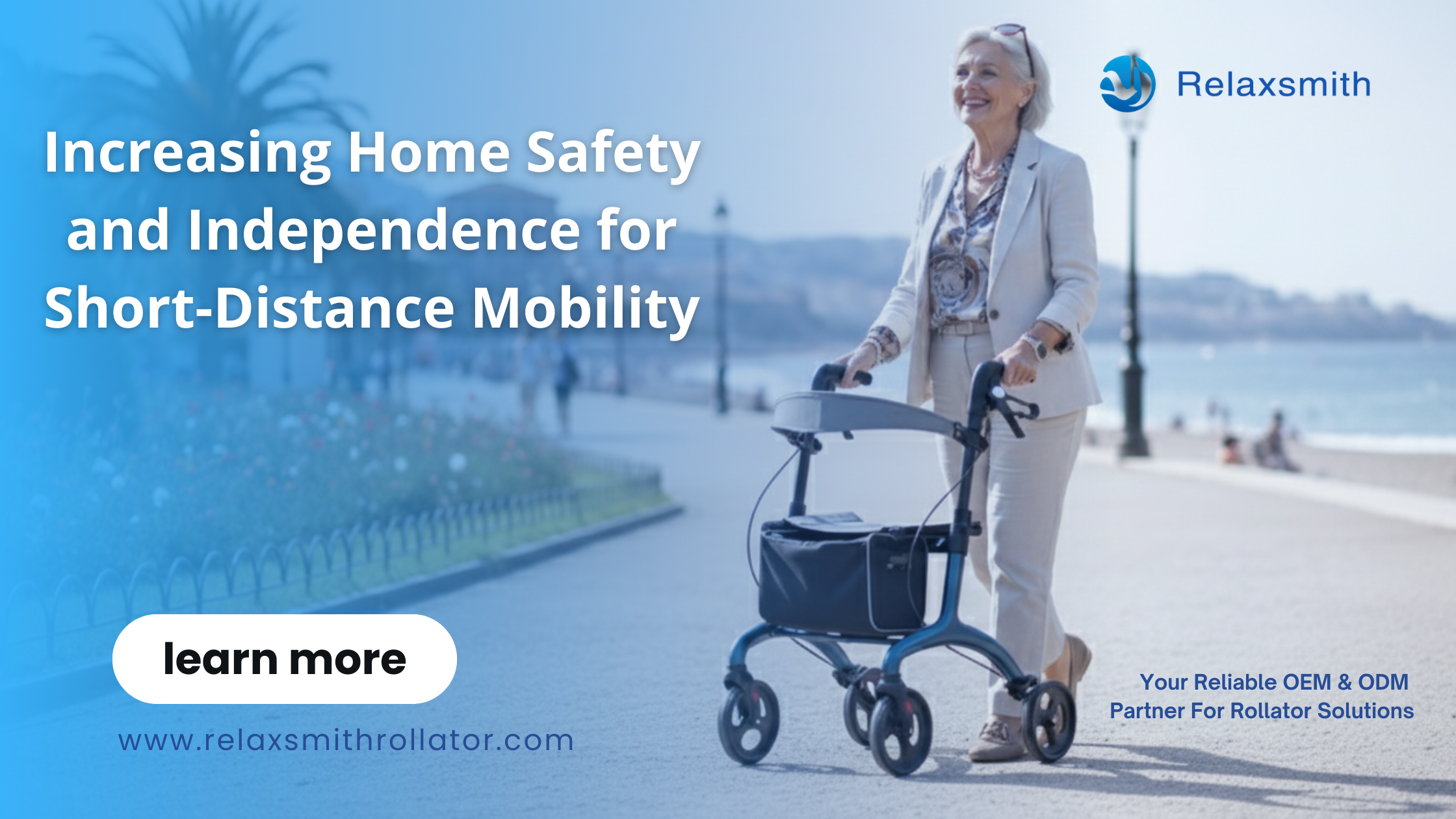
Increasing Home Safety and Independence for Short-Distance Mobility
Ensuring safety and independence within the home environment is crucial for individuals facing mobility challenges, especially for product and supply chain managers making purchasing decisions for healthcare facilities and end users. One common question often raised is: why should I use a rollator even for short distances inside my home? This article explores five actionable approaches to maximizing safety and independence with a rollator, targeting real-world challenges procurement professionals face today.
1. Understanding the Value: Why a Rollator is Essential Indoors
Even when distances are short, the risk of slips, trips, and falls remains significant inside homes, particularly in tight spaces or when moving between rooms. Why should I use a rollator even for short distances inside my home? The answer lies in enhanced support, stability, and confidence, reducing incident rates while enabling greater autonomy. A rollator provides a reliable touchpoint, preventing balance loss and ensuring items can be carried safely using the built-in tray or basket.
2. Selecting Rollator Features for Home Use
Procurement managers and decision-makers need to focus on features designed specifically for home environments. Prioritize lightweight frames, easy folding mechanisms, and adjustable handles to accommodate various users and storage constraints. Advanced safety features—such as locking brakes, sturdy wheels suitable for carpets and tiles, and supportive seats—are essential for seamless daily integration.
3. Integrating the Rollator into Daily Routines
For true independence, the rollator must fit naturally into users’ lives. Professional purchasers must evaluate how easy it is for end-users to move the device through doorways, bathrooms, and kitchens. Procurement strategy should ensure access to rollators that facilitate activities like carrying meals, performing household chores, or assisting with transfers, thus increasing utility across scenarios.
4. Overcoming Psychological Barriers and Training Users
Beyond physical design, procurement and product teams should provide training resources, ensuring users are comfortable using their rollator even for short indoor trips. Address any stigma by highlighting the device as a tool for empowerment, not dependence. Regular feedback and support sessions help users build confidence and maximize benefits.
5. Data-Driven Procurement: Measuring Impact and ROI
Finally, supply chain professionals should collect and analyze data on fall reduction, user satisfaction, and device utilization. This enables procurement teams to justify investments and continuously improve product offerings. Leveraging such data not only improves safety and independence but also strengthens vendor relationships and purchasing decisions.
For more details, please visit: www.relaxsmithrollator.com