





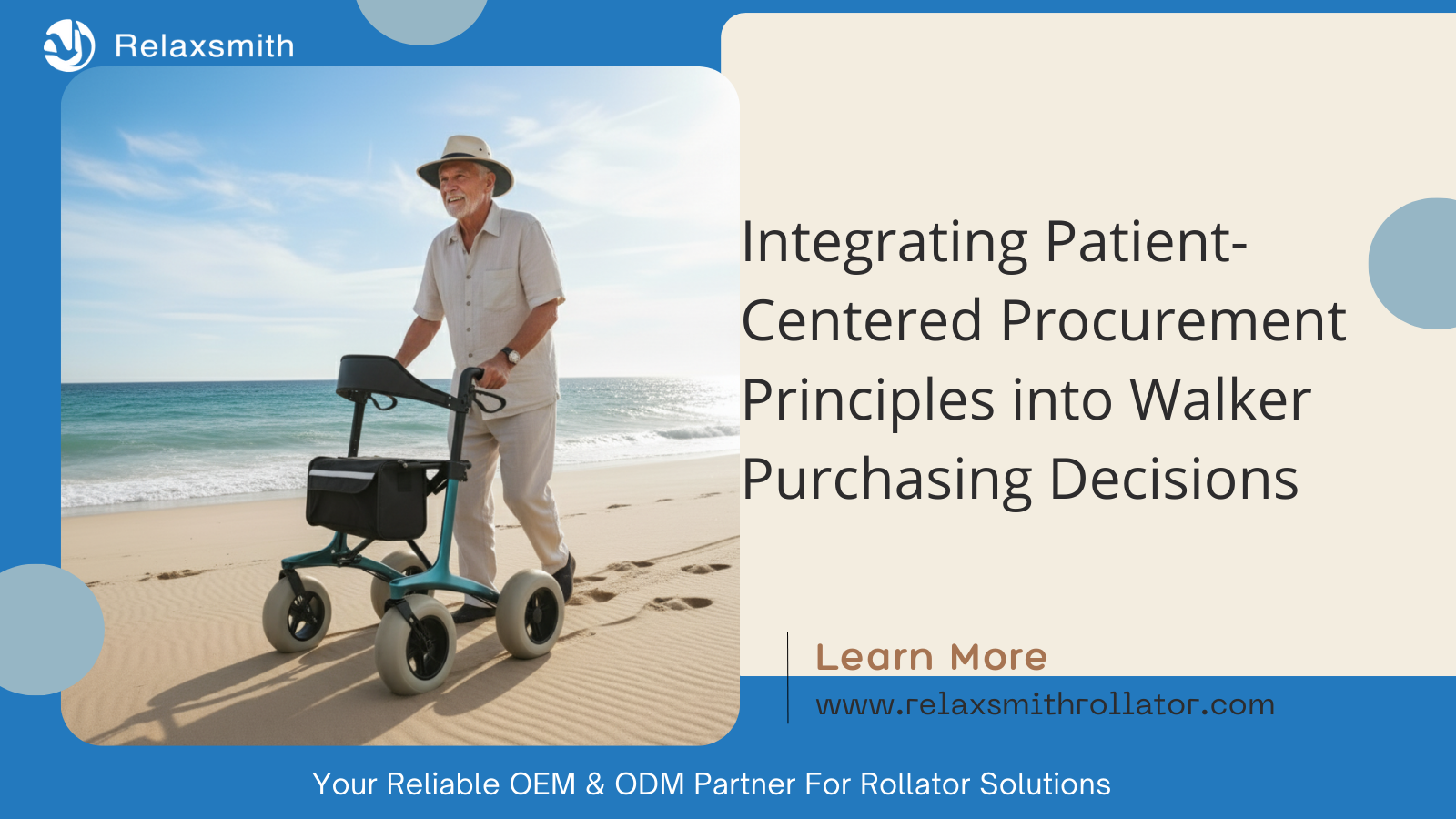
Integrating Patient-Centered Procurement Principles into Walker Purchasing Decisions
Introduction:
Patient-centered procurement is transforming how hospitals and healthcare facilities select walkers. Beyond price and product specs, the process must now prioritize safety, user comfort, and long-term outcomes for diverse patient groups. This article explores how to embed “patient-centered procurement walker” principles in every stage of the purchasing process.
Defining Patient-Centered Procurement for Mobility Aids
True patient-centered procurement aligns purchase decisions with patient needs, clinical evidence, and caregiver input. Procurement teams must consult stakeholders, conduct patient trials, and seek feedback to ensure walker choices match actual use scenarios in their facility.
Best Practices for Implementing Patient-Centered Approaches
Inclusive Stakeholder Engagement: Involve clinicians, therapists, patients, and caregivers in setting requirements and evaluating products.
Usability and Accessibility Testing: Organize real-world assessments to measure walker performance across patient types and settings.
Long-Term Outcome Focus: Select products based on data for readmission reduction, rehabilitation success, and patient satisfaction.
Continuous Feedback Loops: Integrate user experience surveys into post-purchase reviews and future procurement cycles.
Benefits for Hospitals and Healthcare Facilities
Integrating “patient-centered procurement walker” principles leads to safer, more effective care. Hospitals achieve higher patient satisfaction, better rehabilitation outcomes, and improved resource allocation by matching walker solutions to actual patient needs.
Addressing Barriers to Implementation
Challenges such as limited budgets, supply constraints, and resistance to change can be overcome with leadership commitment and cross-departmental collaboration. Training, clear communication, and supplier partnerships make patient-centered procurement walker models sustainable and scalable.
Conclusion: Making Procurement a Pillar of Patient-Centered Care
By making procurement an extension of clinical care, hospitals elevate the patient experience and advance their mission. Every walker purchase becomes an opportunity to support better mobility, independence, and quality of life for patients across the healthcare continuum.
Patient-centered procurement walker
Hospital walker purchasing decisions
Inclusive stakeholder engagement
Mobility aid usability testing
Healthcare procurement best practices
Patient feedback walker selection
Clinical evidence walker procurement
Rehabilitation outcomes walker
Walker satisfaction surveys
Post-purchase walker review
Accessibility assessment hospital
Outcome-driven procurement healthcare
Cross-department collaboration procurement
Usability studies walker
Walker product evaluation hospital
Value-based healthcare procurement
Procurement stakeholder inclusion
Evidence-based mobility aid selection
Hospital procurement leadership
User experience walker feedback
Cost-effective patient-centered procurement
Readmission reduction mobility aid
Quality of life walker procurement
Healthcare resource allocation walker
Sustainable procurement models hospital
Walker supplier partnerships
Hospital patient independence
Patient-centered care procurement
Healthcare continuum mobility solutions