





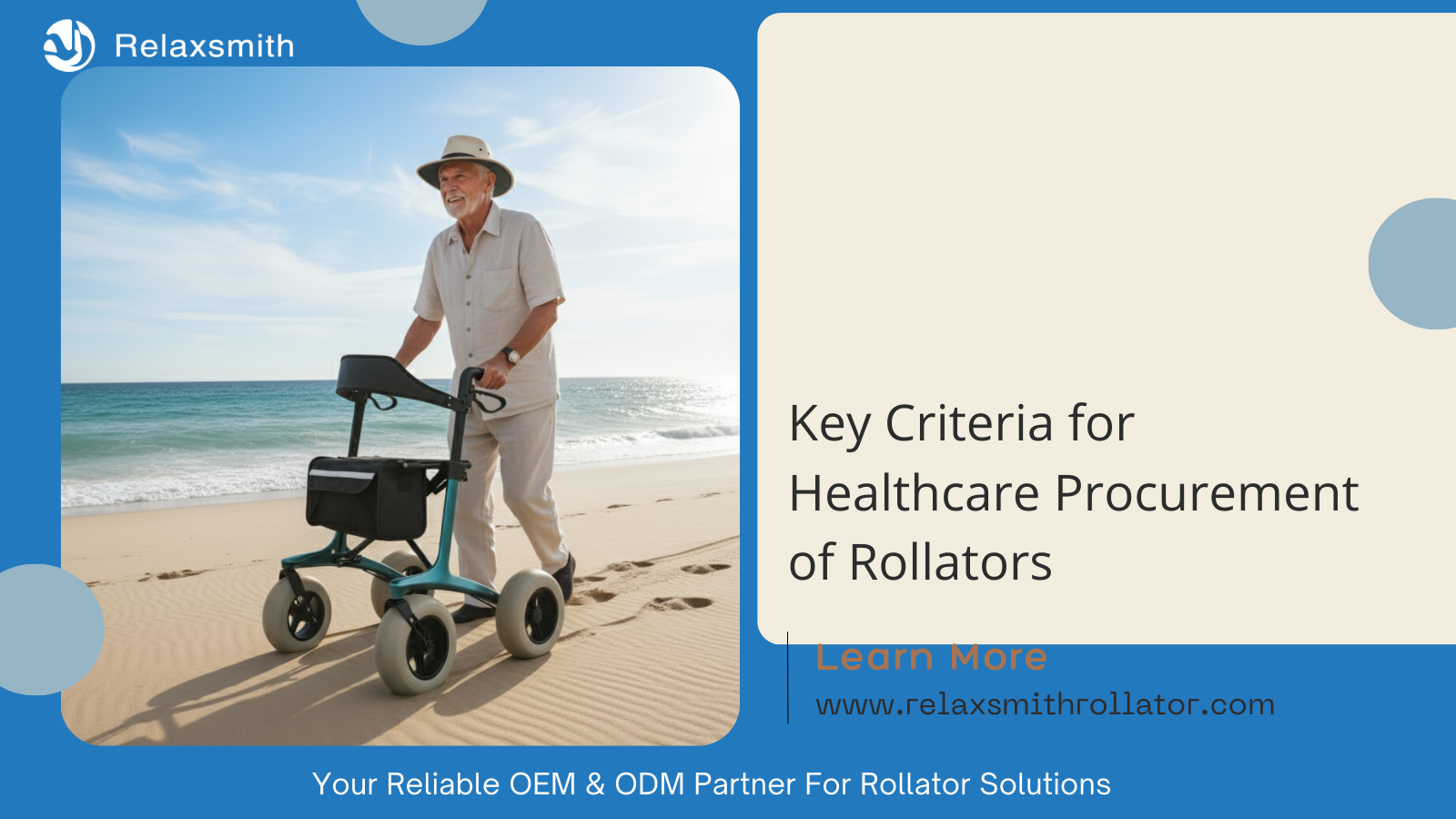
Key Criteria for Healthcare Procurement of Rollators
Introduction: Healthcare procurement managers and supply chain professionals face a complex task when sourcing rollators at scale. This article presents a comprehensive evaluation framework and outlines the key criteria decision-makers should use to ensure optimal outcomes in terms of safety, cost-effectiveness, user satisfaction, and compliance.
1. Strategic Alignment and Stakeholder Engagement
Effective procurement begins with a deep understanding of organizational goals and active engagement of stakeholders. Product managers and purchasing directors should collaborate with clinical teams, patient safety advocates, and finance leaders to define what constitutes value for their institution.
Identify organizational objectives and how the rollator fits into broader patient mobility and rehabilitation strategies.
Engage with end-users and clinical experts to gather real-world feedback on product preferences and pain points.
Map procurement timelines to operational needs to minimize supply disruptions.
2. Quality Standards and Compliance
Healthcare procurement of rollators must adhere to stringent quality standards and regulatory requirements. Ensure that potential suppliers provide documentation that meets national and international standards (such as ISO, FDA, CE marking).
Review supplier certifications and history of regulatory compliance.
Examine third-party test results for durability, stability, and safety.
Ensure products support risk management and infection control protocols.
3. Cost Analysis and Total Value Assessment
Procurement decisions should move beyond initial purchase price. Conduct a total cost of ownership analysis that considers maintenance, spare parts availability, warranty coverage, and product lifecycle costs.
Calculate annual maintenance costs and expected product lifespan.
Compare supplier warranty and aftersales service terms.
Review previous procurement cycles for hidden costs or budget overruns.
4. Supplier Performance and Risk Management
Evaluating supplier performance history is critical for risk mitigation. Use scorecards or a supplier rating system based on delivery reliability, responsiveness, and quality consistency.
Assess supply chain robustness and ability to deliver at scale.
Check for history of product recalls or quality failures.
Audit logistics and support for on-time, in-full delivery.
5. Usability and Patient Outcomes
Ultimately, the goal is to enhance patient mobility and quality of life. Evaluate how different rollators perform in clinical trials and real-world settings.
Conduct usability testing with diverse patient groups.
Gather post-purchase feedback and monitor user satisfaction rates.
Work with therapists to ensure rollators are easy to adjust and maintain.
Conclusion
By adopting a structured evaluation framework, healthcare procurement managers can make informed, data-driven decisions when sourcing rollators at scale. This minimizes risk, optimizes costs, and, most importantly, improves patient care.
healthcare procurement
rollator sourcing
mobility device
patient safety
medical equipment
supply chain
product evaluation
quality compliance
cost analysis
risk management
usability
outcomes
clinical trials
procurement manager
stakeholder engagement
maintenance
warranty
supplier performance
user satisfaction
innovation
healthcare procurement frameworks
rollator tendering process
bulk rollator buying
mobility aids procurement
quality standards rollator
rollator supplier evaluation
patient mobility equipment
procurement decision rollator
cost analysis mobility devices
clinical usability rollators
regulatory compliance rollator
rollator performance metrics
risk mitigation in procurement
innovation in mobility aids
after sales support rollator
user satisfaction rollator
stakeholder engagement healthcare
value-based procurement rollator
supply chain management rollator
rollator warranty assessment
rollator lifecycle cost
durability testing rollators
maintenance planning rollator
patient feedback procurement
ISO standards rollator
FDA approved rollators
CE marking mobility aids
healthcare product sourcing
compliance documentation rollator
medical equipment buying guides