





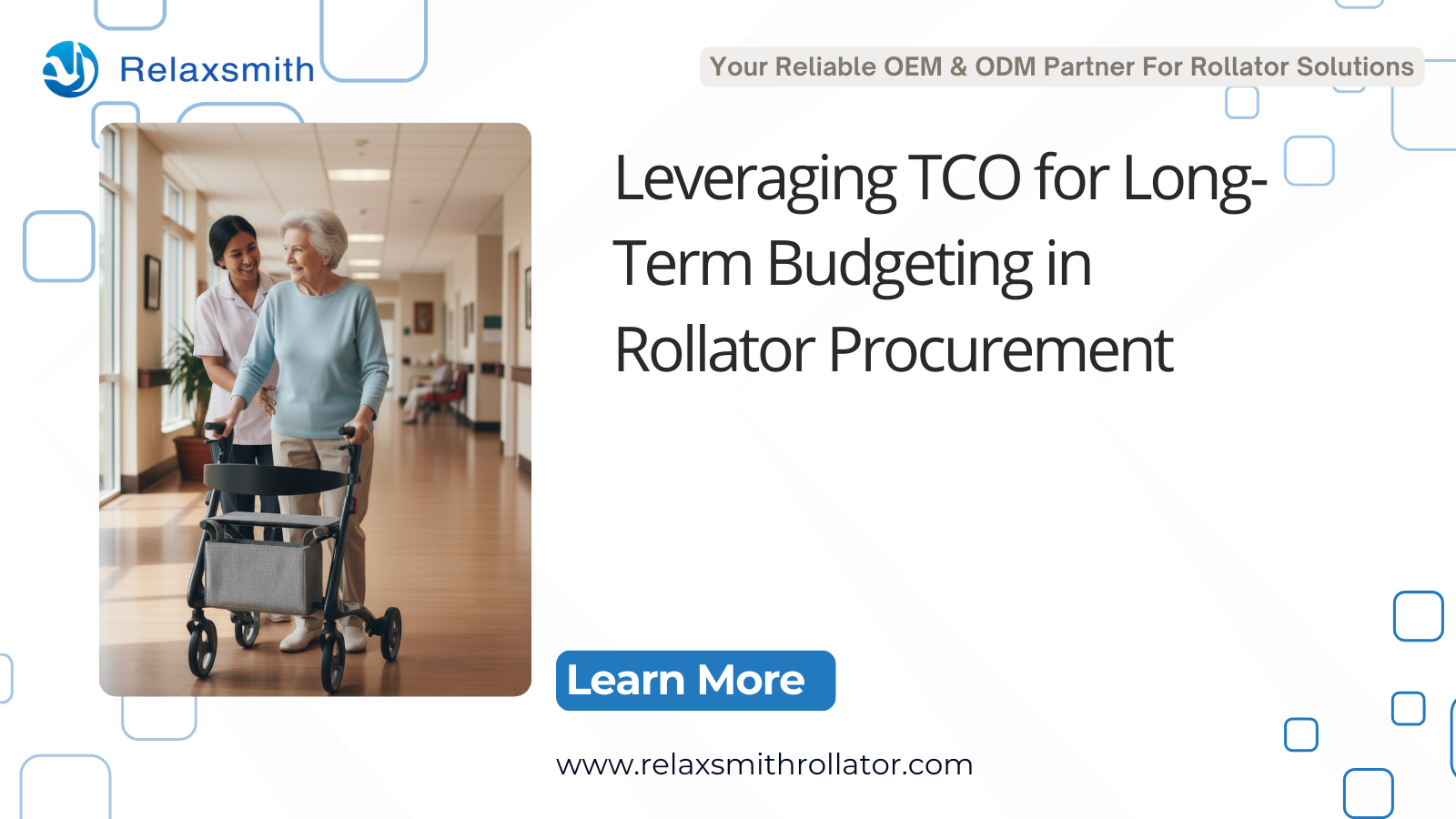
Leveraging TCO for Long-Term Budgeting in Rollator Procurement
Introduction: Sustainable budgeting in healthcare depends on seeing beyond initial purchase prices. By leveraging total cost of ownership (TCO) rollator analysis, procurement managers can forecast, plan, and justify long-term investments, optimizing resource allocation and avoiding costly surprises.
1. TCO as a Forecasting Tool
TCO analysis enables procurement teams to project all direct and indirect costs associated with rollator ownership, from acquisition to disposal. This data-driven approach supports multi-year budgeting, especially when scaling up mobility solutions.
Gather historical cost data from past rollator procurements
Include consumables, training, maintenance, and upgrade costs in projections
Account for regulatory changes and inflation in long-term estimates
2. Investment Planning and Risk Assessment
Incorporate risk modeling into TCO to anticipate uncertainties such as equipment failures, vendor price increases, or supply chain disruptions. Build financial buffers and contingency plans for sustainable operations.
Model best-case and worst-case TCO scenarios
Include buffer funds for unexpected repairs or replacements
Evaluate supplier risk based on contract history and market trends
3. Building the Business Case for Capital Expenditure
Use TCO to justify capital investments in higher-quality rollators that yield lower lifecycle costs. Present clear evidence of value for leadership approval and budget allocation.
Prepare comparative TCO models for different suppliers and product lines
Highlight cost avoidance achieved through durability and extended warranties
Demonstrate the impact of TCO-based investment on patient care and staff efficiency
4. Monitoring and Adjusting Budgets Over Time
Budgeting is a dynamic process. Regularly review actual vs. projected TCO to refine future forecasts, inform negotiations, and identify continuous improvement opportunities.
Track actual spend and maintenance data against forecasts
Adjust long-term budgets based on realized cost savings
Integrate feedback from users and finance stakeholders
5. Engaging Stakeholders in TCO-Based Planning
Collaborate with clinicians, finance teams, and executives to align budget plans with clinical goals, compliance needs, and organizational strategy. Clear communication of TCO benefits builds support for value-driven procurement.
Present regular TCO updates to all relevant departments
Facilitate cross-functional workshops for input on needs and outcomes
Incorporate patient satisfaction and outcomes into budgeting decisions
Conclusion
Total cost of ownership rollator analysis equips procurement leaders with the data and strategies needed for sustainable long-term budgeting, smarter investments, and continuous improvement—benefiting both organizations and patients.
long-term budgeting
TCO forecasting
rollator procurement
investment planning
risk assessment
resource allocation
capital expenditure
cost avoidance
budget monitoring
continuous improvement
stakeholder engagement
scenario modeling
supplier risk
comparative analysis
warranty planning
contract history
patient outcomes
staff efficiency
cost tracking
financial buffer
total cost of ownership rollator
long-term budgeting rollator
TCO forecasting procurement
investment planning rollator
risk assessment procurement
resource allocation rollator
capital expenditure rollator
cost avoidance procurement
budget monitoring rollator
continuous improvement procurement
stakeholder engagement TCO
scenario modeling rollator
supplier risk analysis
comparative analysis TCO
warranty planning rollator
contract history procurement
patient outcomes TCO
staff efficiency rollator
cost tracking procurement
financial buffer planning
multi-year procurement planning
inflation adjustment rollator
durability analysis procurement
maintenance projection rollator
spend tracking TCO
feedback integration budgeting
leadership approval procurement
value-driven procurement rollator
sustainable operations procurement
budget refinement TCO