





.JPG)
Optimizing Supply Chain Decisions: Choosing the Best Rollator with Contoured Backrest
In the rapidly evolving medical mobility industry, supply chain managers and product professionals are challenged with the task of selecting devices that not only satisfy end-user needs but also ensure operational efficiency. Among the many mobility aids available, the Rollator with Contoured Backrest stands out for its advanced ergonomic features and tangible benefits for healthcare procurement. This article provides a comprehensive guide to optimizing supply chain decisions when selecting the best rollator with contoured backrest, with a focus on maximizing value and minimizing risks.
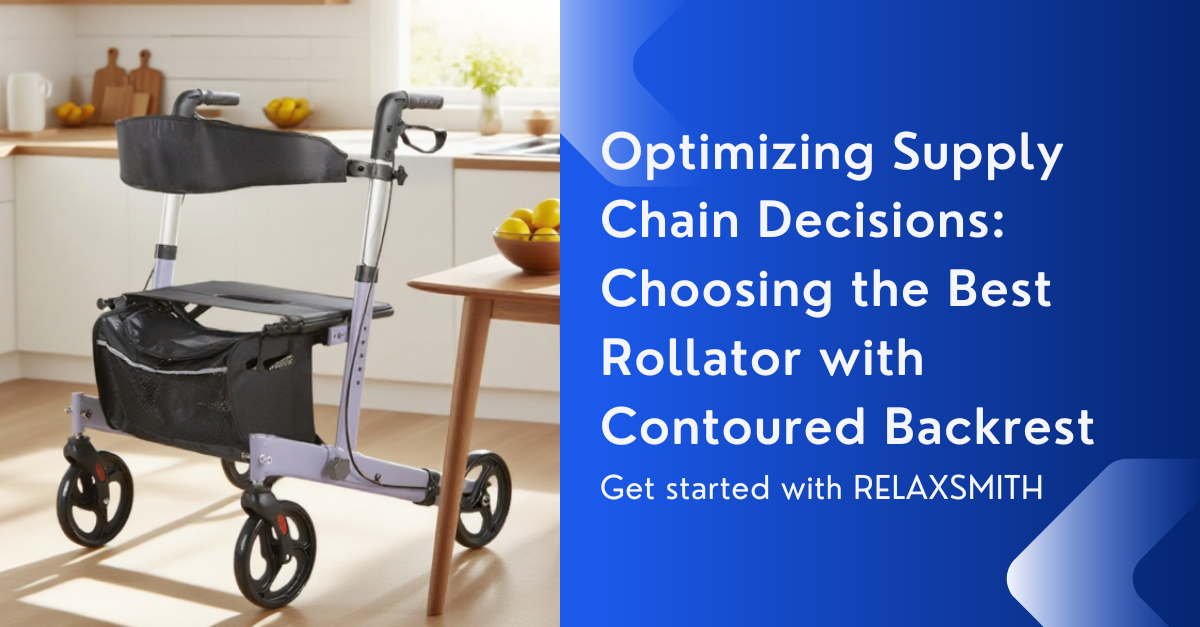
1. Understanding the Product Lifecycle
For product managers, every new mobility aid must be evaluated across its entire lifecycle—from supplier selection and procurement through end-user delivery and after-sales support. Choosing a Rollator with Contoured Backrest involves careful consideration of not only the core ergonomic advantage but also the supplier’s track record, inventory lead times, and support infrastructure.
Vendor evaluation and auditing
Compliance with global safety and medical device standards
Availability of training and documentation for buyers and end-users
2. Assessing Key Supply Chain Metrics
The decision to procure a new rollator model impacts critical KPIs, such as order fulfillment speed, cost per unit, warranty claims, and overall supply chain agility. Procurement managers must prioritize products with proven durability, ease of transport, and reliable vendor support. The Rollator with Contoured Backrest is increasingly favored for its strong balance of price and long-term value, resulting in fewer returns and higher end-user satisfaction.
Lead time optimization
Cost-of-ownership analysis
Return rate and serviceability
3. Integrating Feedback from Professional Stakeholders
One of the most overlooked strategies in product selection is integrating direct feedback from field users—rehabilitation professionals, occupational therapists, and end-customers. Product managers should request trial programs and field testing with real users to ensure the Rollator with Contoured Backrest truly delivers on its promise of superior back support. Such user-driven data not only guides purchasing but also helps suppliers refine their offerings for future procurement cycles.
4. Mitigating Risk in Supplier Partnerships
Selecting a rollator with advanced ergonomic features requires more than product specifications; it demands a strategic supplier relationship. Procurement managers should prioritize vendors with transparent quality control processes, robust after-sales support, and flexible order management. The right partnership ensures stable product availability and reduces the risk of costly disruptions.
Supplier reliability and redundancy
Customizable procurement contracts
Proactive support for regulatory changes
5. Measuring Success: The Impact on User Outcomes and Business Value
Ultimately, the effectiveness of a supply chain decision is measured by user satisfaction and business outcomes. Rollators with contoured backrests report higher comfort ratings, better user retention, and increased compliance with rehabilitation protocols. For the professional procurement audience, these outcomes directly impact ROI, brand reputation, and long-term success in the healthcare sector.
In summary, selecting the best Rollator with Contoured Backrest is not only a matter of product specs but of strategic supply chain management. By integrating lifecycle analysis, stakeholder feedback, and risk mitigation, procurement managers and product professionals can optimize decisions for both end-user outcomes and organizational value.
SEO Targeted Phrases & Product/Service/Customer Keywords for Search Engines:
Rollator with Contoured Backrest
Mobility aid innovation
Professional mobility solutions
Ergonomic walker design
Procurement manager mobility device
Supply chain for rollators
Healthcare product manager
Assistive walking device
Senior mobility support
Backrest comfort rollator
User-centric rollator walker
Adjustable backrest walker
Procurement specialist
Rehabilitation supply chain
Quality mobility aids
Mobility device ROI
Healthcare supply procurement
Mobility product features
Rehab equipment buyer
Ergonomic medical device
Back support walker
Mobility comfort innovation
Medical device sourcing
Rollator with adjustable seat
Professional grade rollator
End-user feedback walker
Procurement decision tools
Adaptive walker solutions
Senior rehabilitation device
Healthcare purchasing manager
Innovative walker features
Mobility walker distribution
Rollator back support
Product manager mobility aid
Medical supply chain manager
Contoured support rollator
Supply chain optimization mobility
Rollator with ergonomic backrest
Comfort grip rollator
Senior product solutions