





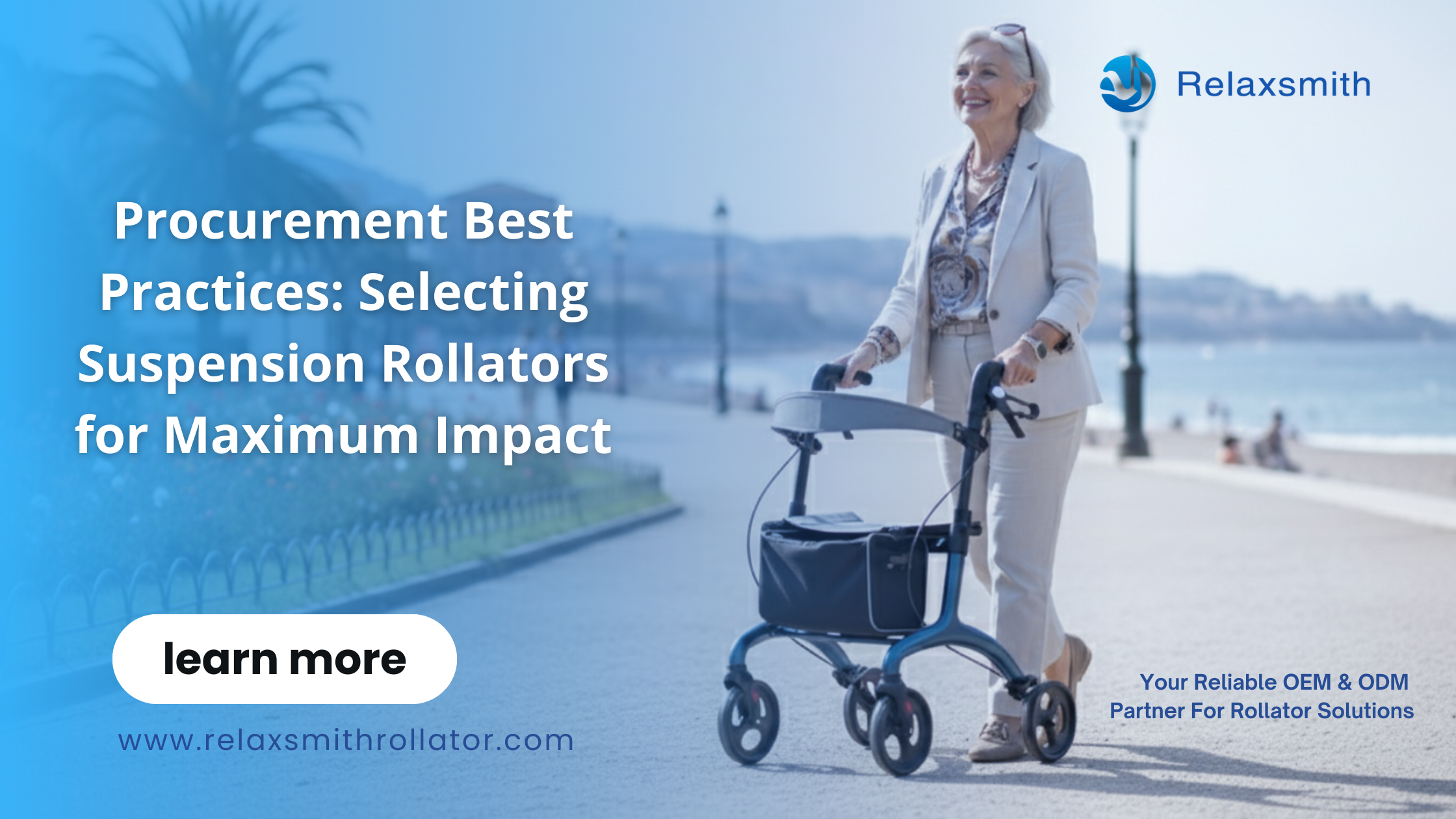
Procurement Best Practices: Selecting Suspension Rollators for Maximum Impact
For procurement leaders, the shift toward suspension rollator procurement marks a step-change in healthcare mobility. Advanced suspension not only enhances comfort but also drives safety and long-term value for large-scale buyers. This article breaks down the most effective strategies to select, justify, and implement suspension rollators at scale, with a practical focus on measurable benefits for professional purchasers and end-users alike.
1. Defining Organizational Needs and Stakeholder Input
Effective suspension rollator procurement starts with mapping out end-user needs, facility environments, and clinical input. Consider patient weight ranges, typical floor types, and movement patterns. Gather feedback from therapists and nursing staff to ensure specifications align with on-the-ground requirements and expectations.
2. Technical Assessment: What to Look for in Suspension Systems
Suspension systems vary in effectiveness, maintenance, and longevity. Evaluate shock absorption, durability of springs or elastomers, and ease of adjustment for diverse users. Involve your engineering or technical teams in pilot testing to gather actionable performance data—this evidence can be used to justify procurement to financial controllers.
3. Cost-Benefit Analysis: Building the Business Case
Showcasing the ROI of suspension rollator procurement is critical. Quantify the potential reduction in fall-related injuries, lower maintenance costs, and fewer user complaints. Model cost savings over device lifecycles and include soft benefits like improved staff efficiency and patient satisfaction in your final proposal.
4. Supplier Due Diligence and Tendering Process
Vet suppliers for experience, support capabilities, and warranty terms. Conduct transparent tenders with clearly defined criteria, emphasizing real-world outcomes from previous large-scale deployments. A focus on suspension system reliability will reduce downstream support costs and safeguard user experience.
5. Implementation, Training, and Ongoing Evaluation
After procurement, deliver targeted training and develop protocols for ongoing evaluation. Set up regular performance reviews, user satisfaction surveys, and maintenance tracking. Use these insights to update procurement specs and supplier contracts for future purchasing cycles.
For more details, please visit: www.relaxsmithrollator.com