





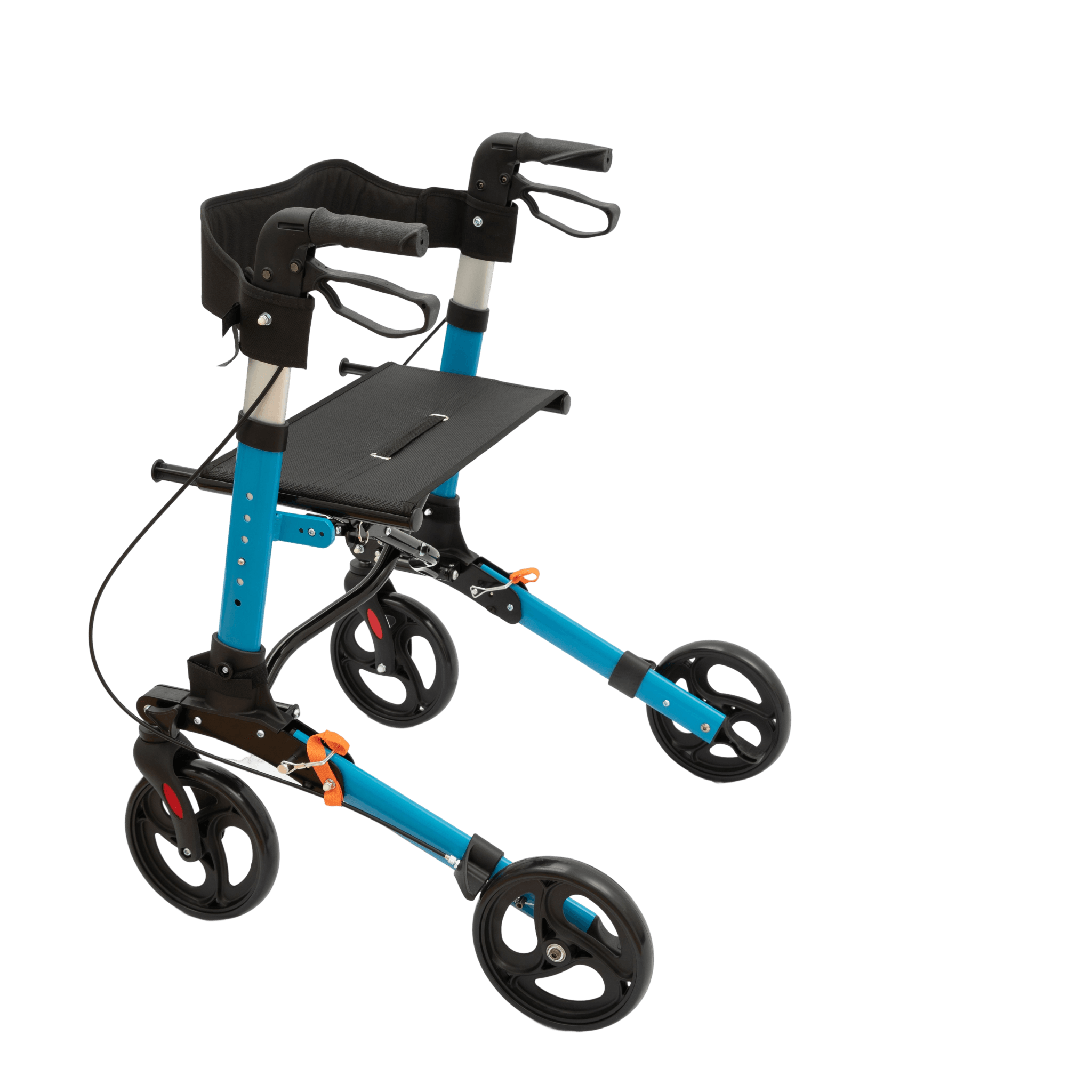
Procurement Considerations: Evaluating Braking Systems When Sourcing Rollators for Healthcare Facilities
.jpg)
For product managers and procurement professionals working in hospitals, rehab centers, or senior living facilities, the selection of rollators is about much more than price and supply availability. One of the most critical—but often overlooked—decision points is the different types of braking systems on rollators. This article provides a step-by-step framework to evaluate and choose the safest, most cost-effective, and compliant braking solution for your organization’s needs.
Step 1: Understand the Core Braking System Types
Before sending an RFP or contacting suppliers, build an internal knowledge base around the different types of braking systems on rollators:
Loop Hand Brakes: Levers are squeezed to stop the rollator. Best for users with strong grip and coordination.
Push-Down Brakes: Activated by downward pressure on the frame. Best for users with grip issues, but requires enough body weight for activation.
Single-Handed Brakes: Allows operation with one hand. Essential for stroke survivors or hemiplegic users.
Automatic/Smart Brakes: Engaged automatically by sensors or electronic triggers. Innovative, but may require additional testing for reliability.
Step 2: Map Braking Type to Clinical and User Profiles
Not all braking systems suit all patients. Map the different types of braking systems on rollators to user needs:
High-functioning, active residents: Loop brakes for maximum control.
Patients with arthritis, Parkinson’s, or hemiplegia: Push-down or single-handed brakes for ease of use.
High-risk, memory care, or unsupervised use: Consider automatic or locking brakes for added safety.
Involve therapists, nursing, and patients in product selection committees.
Step 3: Compliance, Warranty, and Support
Beyond the device itself, evaluate each vendor’s ability to deliver compliant, well-supported products:
Review certifications for local and international standards.
Ensure documentation covers maintenance, inspection, and staff training.
Ask about warranty support and access to replacement parts.
Audit incident history or recall data for known braking system failures.
Step 4: Pilot Testing and User Feedback
Arrange hands-on product demos and pilot trials with actual end users and clinical teams:
Set up comparison trials for loop, push-down, single-handed, and smart braking models.
Capture feedback on ease of activation, comfort, and perceived safety.
Include maintenance staff in testing to evaluate repair complexity.
Make procurement decisions based on both clinical input and operational requirements.
Conclusion: An Evidence-Based Path to Safer Procurement
The procurement of mobility devices must put safety first, with careful evaluation of the different types of braking systems on rollators for your population. A collaborative, data-driven approach ensures optimal value for both patients and staff, lowering risk and improving care outcomes.
SEO Keywords (40 groups for this series)
the different types of braking systems on rollators
rollator procurement strategy
brake type selection
clinical rollator safety
loop hand brake pros
push-down brake assessment
single-handed brake sourcing
automatic brake evaluation
vendor compliance rollator
product manager rollator choice
rehabilitation mobility device
staff training rollator brake
warranty rollator braking
incident reporting brake
maintenance support rollator
replacement part rollator
mobility equipment compliance
pilot testing rollator
end-user brake feedback
rollator RFP criteria
supply chain braking system
facility safety audit
mobility device recall
user comfort braking
care home rollator selection
hospital mobility procurement
staff workflow rollator
therapy recommendation rollator
mobility aid certification
ergonomic rollator brake
senior living brake choice
multi-clinical setting device
brake maintenance training
rollator device support
rollator audit preparation
compliance checklist braking
mobility device comparison
facility equipment purchase
risk mitigation braking
patient safety rollator brakes
Tags:
the different types of braking systems on rollators, rollator procurement strategy, brake type selection, clinical rollator safety, loop hand brake pros, push-down brake assessment, single-handed brake sourcing, automatic brake evaluation, vendor compliance rollator, product manager rollator choice, rehabilitation mobility device, staff training rollator brake, warranty rollator braking, incident reporting brake, maintenance support rollator, replacement part rollator, mobility equipment compliance, pilot testing rollator, end-user brake feedback, rollator RFP criteria, supply chain braking system, facility safety audit, mobility device recall, user comfort braking, care home rollator selection, hospital mobility procurement, staff workflow rollator, therapy recommendation rollator, mobility aid certification, ergonomic rollator brake, senior living brake choice, multi-clinical setting device, brake maintenance training, rollator device support, rollator audit preparation, compliance checklist braking, mobility device comparison, facility equipment purchase, risk mitigation braking, patient safety rollator brakes