



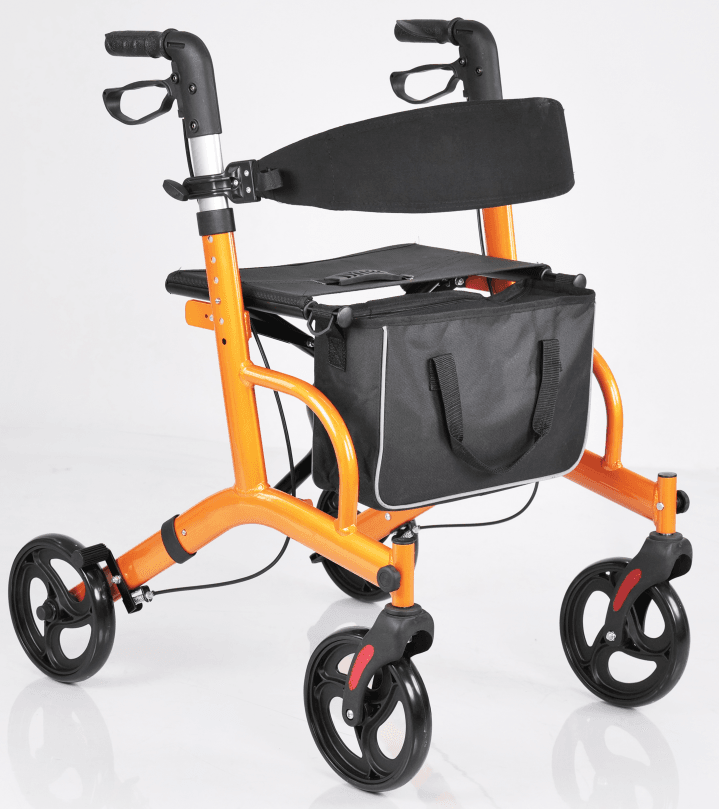
Procurement Guide: Evaluating Travel Rollator Options for Healthcare Institutions
Procurement managers in healthcare institutions face unique challenges when sourcing mobility aids. These devices are not only essential for patient recovery but also represent a long-term financial commitment. Selecting the right product can impact patient satisfaction, staff efficiency, and institutional reputation. Among modern solutions, the Travel Rollator: Portable with Quick-Fold Technology has become a leading choice due to its combination of portability, durability, and patient-centered design.
1. The Procurement Context in Healthcare
Healthcare institutions operate under unique constraints:
Budgetary Pressures: Hospitals face increasing demand for cost containment while maintaining high standards of care.
Diverse Patient Needs: From post-surgical rehabilitation to long-term senior care, mobility aids must be adaptable.
Regulatory Compliance: Devices must meet medical safety standards and accessibility guidelines.
Operational Efficiency: Procurement must ensure standardized training, ease of use, and efficient inventory management.
The Travel Rollator: Portable with Quick-Fold Technology addresses all four dimensions by combining ergonomic design, robust engineering, and cost-efficient lifecycle value.
2. Why Quick-Fold Technology Matters
Traditional rollators often present storage and transport challenges in healthcare environments. Quick-fold innovation redefines usability:
Space Optimization: Compact folding enables efficient storage in hospitals where space is limited.
Transport Flexibility: Patients and staff can easily carry rollators between wards, clinics, and homes.
Patient Empowerment: Independent folding reduces reliance on caregivers, increasing patient confidence.
Versatility: A single design suits multiple contexts—rehabilitation centers, senior living, and outpatient facilities.
The Travel Rollator: Portable with Quick-Fold Technology simplifies logistics while improving patient autonomy.
3. Key Features Procurement Managers Should Evaluate
When sourcing rollators, procurement teams should examine five core dimensions:
Durability and Material Quality
High-strength aluminum frames offer lightweight yet long-lasting performance. Shock-absorbing wheels extend device lifespan in both indoor and outdoor environments.Safety Standards
Non-slip grips and ergonomic brakes reduce fall risks. Padded seating ensures safe resting points during rehabilitation.Portability and Folding Mechanism
Quick-fold engineering must be tested for repeated cycles without mechanical failure. Compactness should suit institutional storage needs.Patient Comfort and Usability
Adjustable handles accommodate different patient heights. Cushioned seating enhances long-term comfort during therapy sessions.Vendor Reliability and Warranty
Procurement teams should seek vendors offering warranties, spare parts, and long-term service support.
4. Financial Considerations: Beyond Upfront Cost
Healthcare procurement often makes the mistake of focusing exclusively on unit cost. A lifecycle approach reveals greater value:
Lower Replacement Costs: Durable quick-fold designs reduce the need for frequent purchases.
Maintenance Savings: High-quality engineering reduces repair frequency.
Standardization Efficiency: Using a single model simplifies staff training and spare parts inventory.
Improved ROI: Enhanced patient satisfaction and faster recovery lead to indirect savings by reducing hospital stays.
Procurement leaders should employ Total Cost of Ownership (TCO) models when comparing rollator suppliers.
5. Operational Benefits for Institutions
The Travel Rollator: Portable with Quick-Fold Technology contributes operational value across multiple levels:
Staff Efficiency: Nurses spend less time assisting patients with cumbersome mobility devices.
Inventory Optimization: Compact design saves space in storage facilities.
Patient Flow: Faster mobility aids discharge planning and transition to outpatient care.
6. Patient Outcomes and Clinical Impact
Procurement decisions should always consider patient recovery outcomes:
Rehabilitation Acceleration: Lightweight and portable rollators encourage more frequent mobility exercises.
Patient Compliance: Comfortable and easy-to-use devices increase adherence to therapy.
Psychological Empowerment: Patients who can independently manage their rollator report higher confidence levels.
Clinical teams consistently find that patients using Travel Rollator: Portable with Quick-Fold Technology demonstrate improved rehabilitation milestones.
7. Procurement Best Practices
To ensure value-driven decision-making, procurement managers should:
Conduct Pilot Programs – Test the rollator in a small unit before institution-wide deployment.
Gather Multidisciplinary Input – Include physical therapists, occupational therapists, and patient representatives in evaluations.
Negotiate Vendor Contracts – Secure volume-based discounts and service agreements.
Standardize Across Facilities – Choose one or two models to streamline operations.
Plan Lifecycle Support – Ensure suppliers provide maintenance training and replacement parts.
8. Industry Applications
The Travel Rollator: Portable with Quick-Fold Technology is suited for multiple healthcare contexts:
Hospitals: For post-surgical patients requiring short-term mobility assistance.
Rehabilitation Centers: For long-term therapy and patient independence.
Senior Care Facilities: For residents requiring daily mobility support.
Outpatient Clinics: For patients transitioning between institutional and home care.
9. Strategic Insights for Supply Chain Leaders
Supply chain leaders should recognize that procurement of mobility aids is not just about equipment—it shapes institutional reputation and patient experience. Institutions that invest in innovative rollators demonstrate commitment to quality care and inclusivity, which can improve patient trust and attract funding.
Future procurement strategies may involve integrating smart rollator features (sensors, IoT-enabled tracking) to further enhance patient safety and supply chain visibility.
Conclusion
The Travel Rollator: Portable with Quick-Fold Technology represents an ideal procurement choice for healthcare institutions seeking to balance cost, operational efficiency, and patient care. By prioritizing durability, portability, and patient-centered design, this rollator delivers long-term financial savings, operational advantages, and enhanced recovery outcomes.
For procurement managers and supply chain executives, adopting this device is more than a purchasing decision—it is a strategic investment in institutional performance and patient satisfaction.
40 SEO Keywords: healthcare rollator procurement, travel rollator with quick-fold technology, institutional rollator sourcing, procurement-friendly mobility aid, portable rollator for rehabilitation, quick-fold hospital rollator, bulk procurement mobility solutions, cost-efficient rollator sourcing, hospital-grade travel rollator, durable mobility rollator for patients, procurement-driven mobility aid decisions, patient-centered rollator investment, quick-fold walker procurement guide, rehabilitation rollator sourcing strategies, healthcare equipment lifecycle planning, standardized rollator procurement solutions, supply chain optimization for mobility devices, inclusive mobility procurement, ergonomic travel rollator evaluation, professional procurement walker, durable quick-fold mobility rollator for hospitals, procurement-friendly healthcare equipment, portable rollator bulk order guide, mobility aid vendor negotiation, lifecycle savings mobility aid procurement, procurement optimization for senior care rollators, accessible rollator sourcing for healthcare, rehabilitation-focused travel rollator, workplace mobility procurement insights, healthcare investment in patient mobility, strategic rollator procurement management, procurement lifecycle savings insights, quick-fold rollator hospital evaluation, procurement strategies for rehab centers, advanced travel rollator procurement insights, healthcare supply chain walker investment, institutional procurement rollator best practices, long-term procurement cost efficiency, senior care facility rollator sourcing, hospital procurement guide rollator.
READ MORE:
- The Role of Portable Travel Rollators in Corporate Wellness and Workplace Accessibility
- Enhancing Patient Mobility with Travel Rollators: The Value of Quick-Fold Technology
- Long-Term Investment Insights: Choosing the Right Comfortable Walker for Bulk Orders
- Innovation in Walker Design: Why Padded Seats and Shock-Absorbing Wheels Matter
- The Role of Comfortable Walkers in Workplace Accessibility and Wellness
- Procurement Strategies for Comfortable Walkers in Healthcare Institutions
- How Comfortable Walkers Improve Patient Recovery and Daily Mobility
- Procurement Insights: Evaluating Rollator with Cup Holder Options for Bulk Orders
- Innovation in Rollator Design: Why Cup Holders Add More Value Than You Think





