






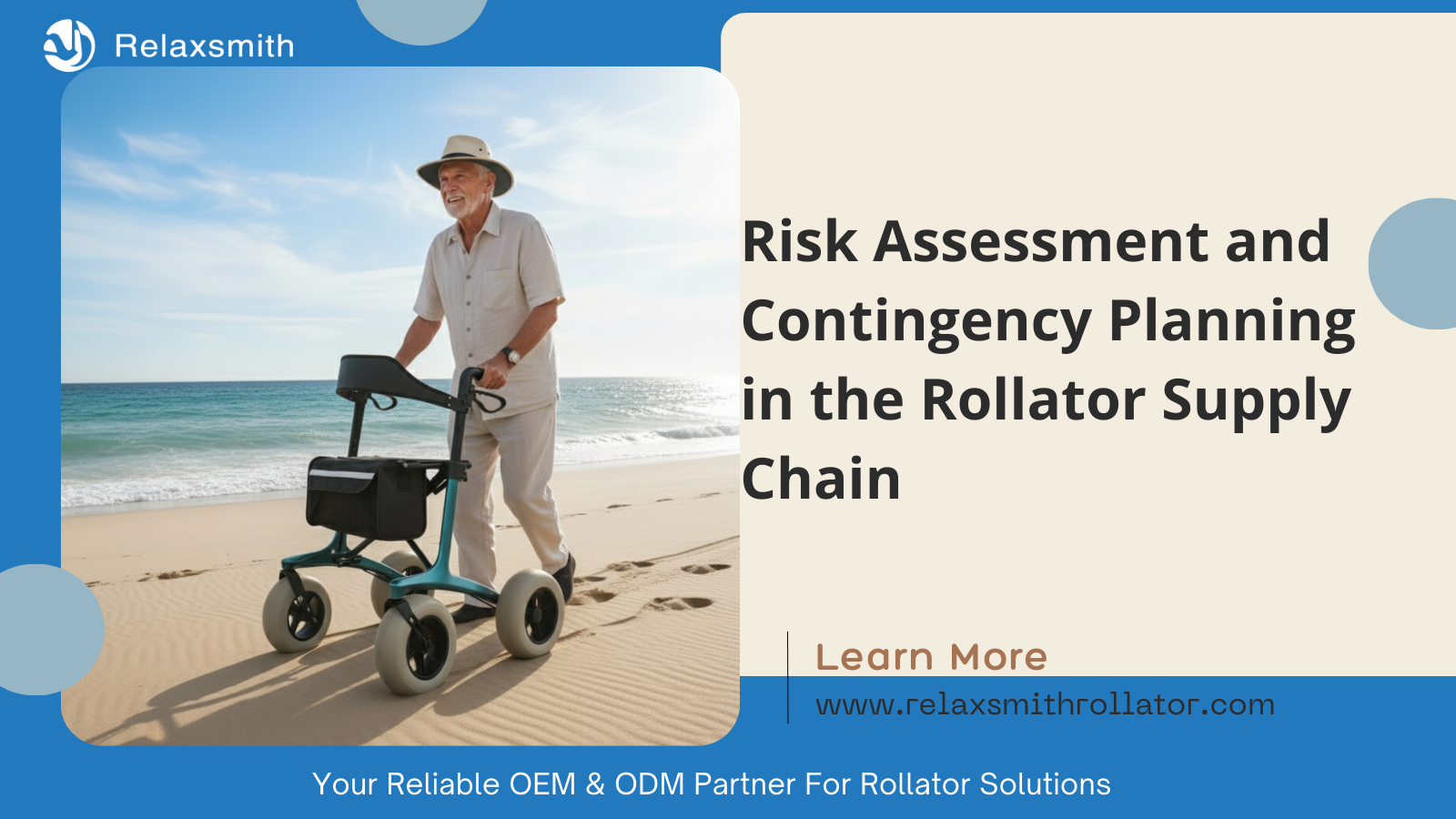
Risk Assessment and Contingency Planning in the Rollator Supply Chain
Effectively managing risk in the supply chain for rollators is fundamental to supply chain resilience and business continuity. In this article, we examine how procurement and supply chain managers can identify, evaluate, and plan for key risks, ensuring reliable product flow and cost control in the global marketplace.
1. Identifying Risks in the Rollator Supply Chain
Thorough risk identification is the starting point for robust supply chain management. Common risk categories include:
Supplier failure or capacity reduction due to unforeseen events.
Raw material shortages, especially of specialty metals or medical-grade plastics.
Logistics breakdowns, customs delays, or transportation strikes.
Regulatory changes impacting cross-border shipments.
Geopolitical events or environmental disasters.
2. Risk Assessment Techniques
Quantifying and prioritizing risks is critical for decision-making. Methods include:
Risk matrices to assess probability and impact.
Scenario analysis for potential disruptions in the supply chain for rollators.
Supplier risk scoring using audit data and financial reports.
Regular review of logistics provider performance and backup capacity.
3. Developing Contingency Plans
Contingency plans should be built for high-priority risks. Best practices include:
Multi-sourcing of critical components and pre-qualifying alternate suppliers.
Stockpiling high-risk inventory in key regions.
Investing in digital supply chain monitoring tools.
Maintaining flexible contracts with logistics providers for rapid response.
4. Training and Communication Protocols
Effective response relies on clear roles, responsibilities, and communication channels during disruptions:
Regular risk awareness training for staff and key partners.
Simulated supply chain disruption drills.
Centralized risk reporting and decision-making frameworks.
5. Case Studies and Real-World Lessons
Real-life examples of risk management in the rollator industry highlight the value of proactive planning. For example:
One manufacturer reduced the impact of a regional lockdown by leveraging multi-country component sourcing and pre-negotiated air freight rates.
Another company quickly requalified alternate suppliers after discovering a quality issue, minimizing production downtime.
Collaborative crisis response teams across functions delivered faster solutions than isolated decision-makers.
Conclusion
Supply chain leaders who invest in risk assessment and contingency planning are better positioned to navigate uncertainty and sustain growth. By embedding these practices into daily operations, companies enhance agility and secure a long-term competitive advantage in the global supply chain for rollators.
Rollator Supply Chain Risk Assessment
Rollator Contingency Planning
Rollator Supplier Audit
Alternate Supplier Strategy
Rollator Risk Matrix
Rollator Scenario Planning
Rollator Risk Mitigation
Rollator Component Sourcing
Rollator Disruption Drills
Rollator Communication Protocols
Supply Chain for Rollators
Rollator Inventory Stockpile
Rollator Staff Training
Rollator Digital Tools
Rollator Pre-qualified Supplier
Rollator Supplier Risk Scoring
Rollator Quality Issue Response
Rollator Supply Chain Drills
Rollator Logistics Contingency
Rollator Centralized Risk
Rollator Sourcing Flexibility
Rollator Growth Strategy
Rollator Competitive Advantage
Rollator Disruption Response
Rollator Resilience Practice
Rollator Supplier Evaluation
Rollator Backup Sourcing
Rollator Contract Flexibility
Rollator Global Sourcing
Supply Chain for Rollators
For more details, please visit:www.relaxsmithrollator.com