



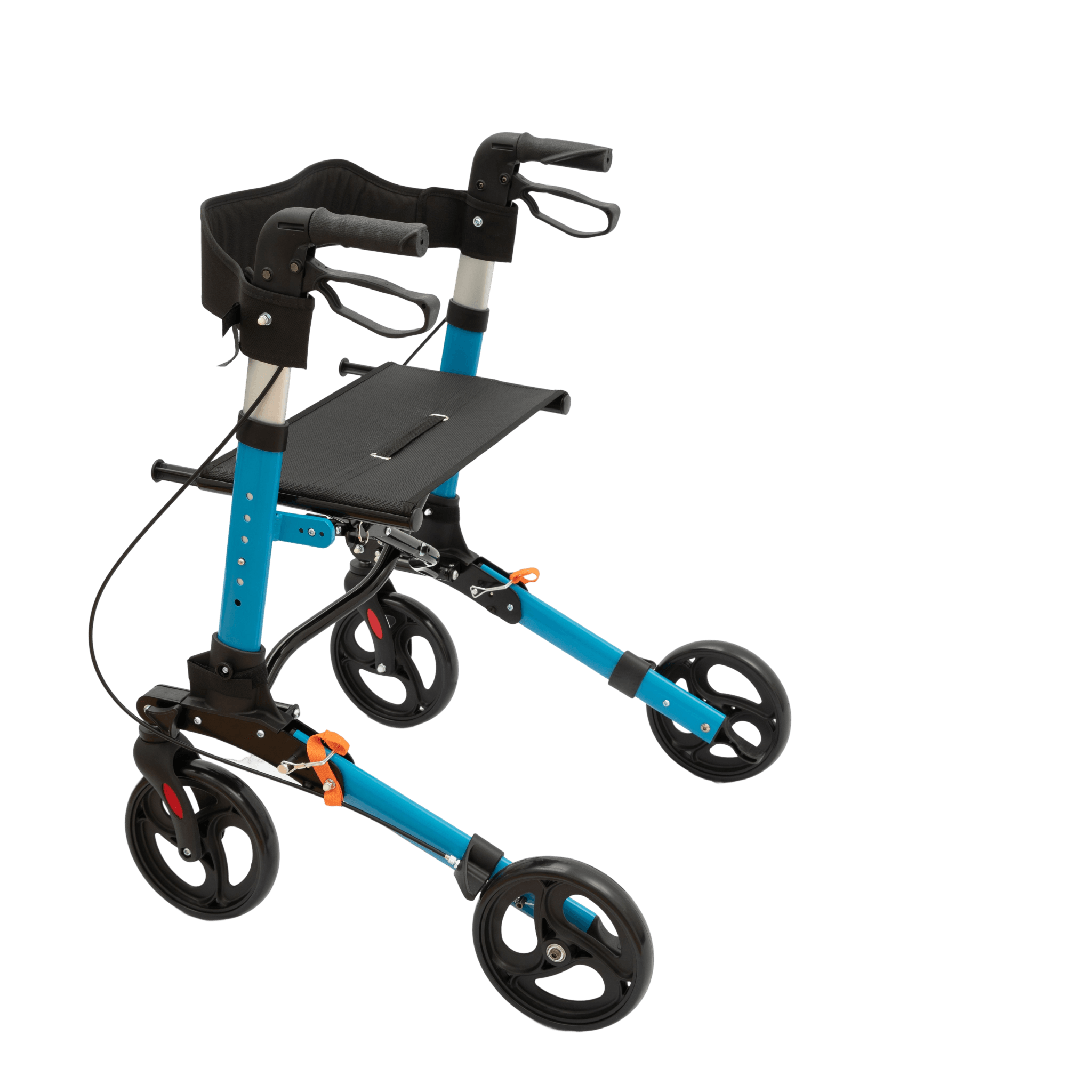
Supply Chain Efficiency with Rollator with Lightweight Carbon Frame: Lightweight and Sturdy
In healthcare and rehabilitation markets, efficient supply chains are essential to ensure that mobility devices reach patients and institutions without delays or unexpected costs. Procurement managers, supply chain leaders, and product designers must constantly evaluate products not just for their immediate usability, but for their impact on logistics, warehousing, and distribution networks. The Rollator with Lightweight Carbon Frame: Lightweight and Sturdy delivers strong advantages for supply chain optimization by combining lightweight design with durable performance.
1. The Role of Supply Chain in Healthcare Devices
Healthcare institutions depend on steady, reliable supply chains to meet patient demand. Any inefficiency—whether due to product fragility, heavy shipping weight, or frequent returns—can cause disruptions and higher costs. For mobility aids like rollators, supply chain performance directly affects patient outcomes because:
Product Availability: Rollators must be ready for immediate deployment in hospitals, rehab centers, or senior homes.
Logistics Reliability: Heavy or fragile devices increase transportation risks and costs.
Forecasting Accuracy: Durable, consistent products improve demand predictability.
The Rollator with Lightweight Carbon Frame: Lightweight and Sturdy resolves these issues, strengthening supply chain efficiency.
2. Lightweight Advantage in Transport
One of the biggest challenges in logistics is balancing durability with manageable shipping weight. This rollator provides:
Reduced Freight Costs: Lightweight carbon frame lowers shipping fees compared to traditional models.
Easier Handling: Distributors and warehouse teams benefit from simplified loading and unloading.
Fewer Shipping Damages: Strong carbon material resists impact during transport, reducing product losses.
By addressing both cost and reliability, the rollator enhances logistics resilience.
3. Storage and Warehousing Benefits
Efficient storage is critical for large-scale healthcare procurement. Institutions often manage hundreds or thousands of units, so compactness and durability are key. The carbon rollator contributes to:
Space Optimization: Foldable, compact design allows efficient warehouse stacking.
No Degradation: Carbon frame resists environmental wear, ensuring long-term storage without damage.
SKU Simplification: Standardized rollator reduces complexity across inventory systems.
This minimizes operational inefficiencies while supporting reliable product availability.
4. Reduced Returns and Reverse Logistics
Fragile or poorly designed products often result in higher return rates, increasing reverse logistics costs. The Rollator with Lightweight Carbon Frame: Lightweight and Sturdy minimizes these risks by:
Durable Construction: Withstands frequent use without structural failures.
Reliable Tires and Frame: Reduces likelihood of product recalls.
Improved Customer Trust: Institutions and patients gain confidence in consistent performance.
Fewer returns lead to reduced costs and more predictable supply chain cycles.
5. Procurement and Supply Chain Alignment
Supply chain efficiency depends on alignment with procurement strategies. The carbon rollator supports this by:
Facilitating Bulk Purchases: Lightweight yet durable, ideal for large-scale institutional procurement.
Predictable Demand Cycles: Longer product life means easier forecasting.
Standardization Across Networks: A single reliable model reduces multi-SKU procurement challenges.
This creates synergy between procurement planning and supply chain execution.
6. Product Manager Perspective on Supply Chain Efficiency
Product managers must design with logistics in mind. The rollator provides a unique competitive edge because:
Logistics-Friendly Design: Lightweight and foldable features appeal to distributors and hospitals.
Market Differentiation: A product that reduces operational costs becomes more attractive to procurement managers.
Sustainability Advantage: Durable, long-lasting carbon material aligns with eco-conscious logistics policies.
By showcasing these features, product managers can highlight not only user benefits but also institutional and supply chain advantages.
7. Case Example: Supply Chain Impact
A regional distributor supplying nursing homes adopted the carbon frame rollator into its product line. Results included:
20% Lower Shipping Costs due to reduced weight.
Fewer Product Returns thanks to the sturdy carbon frame.
Improved Storage Utilization with foldable, compact units.
This real-world impact demonstrates how rollator design choices directly affect supply chain performance.
Conclusion
The Rollator with Lightweight Carbon Frame: Lightweight and Sturdy is not only a patient-centered mobility aid but also a supply chain optimization tool. For procurement officers, it offers predictable demand and lifecycle savings. For supply chain leaders, it reduces freight costs, simplifies warehousing, and minimizes returns. For product managers, it provides a logistics-friendly differentiator in a crowded market. By combining lightweight convenience with durable strength, this rollator strengthens the healthcare ecosystem at every stage of the supply chain.
SEO Keyword Phrases
Rollator with lightweight carbon frame
Supply chain optimized lightweight rollator
Durable carbon frame walker
Logistics-friendly healthcare rollator
Lightweight and sturdy mobility aid
Procurement-aligned carbon rollator
Cost-efficient transport rollator
Compact storage carbon frame rollator
Reliable healthcare distribution walker
Sustainable supply chain mobility aid
READ MORE:
- How Rollator with Integrated Shopping Basket Enhances Retail & Consumer Experience
- Optimizing Daily Mobility with Rollator Walkers Featuring Shopping Baskets
- Rollator with Lightweight Carbon Frame: Lightweight and Sturdy – Long-term Value
- Rollator with Lightweight Carbon Frame: Lightweight and Sturdy – Meeting Healthcare Market Demand
- Rollator with Lightweight Carbon Frame: Lightweight and Sturdy – Procurement Benefits
- Rollator with Lightweight Carbon Frame: Lightweight and Sturdy – Enhancing Mobility
- Rollator with Puncture-Proof Tires: Durable, No Flat Tire Worries – Long-term Value
- Rollator with Puncture-Proof Tires: Durable, No Flat Tire Worries – Meeting Market Demand in Senior Care
- Rollator with Puncture-Proof Tires: Durable, No Flat Tire Worries – Supply Chain Optimization