





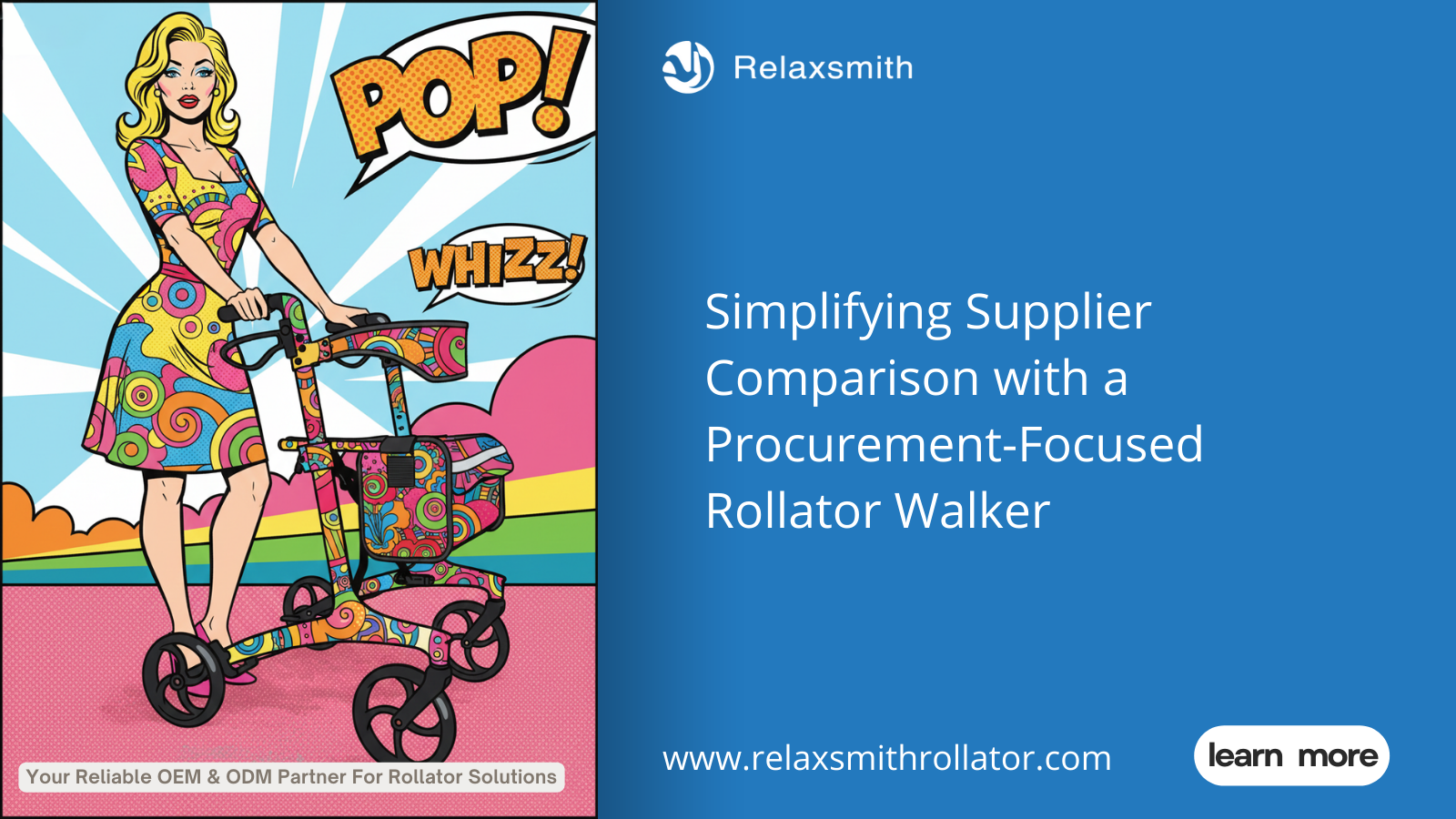
Simplifying Supplier Comparison with a Procurement-Focused Rollator Walker
The procurement process for mobility aids such as rollator walkers can be complex and time-consuming, especially for product managers and supply chain professionals who must compare multiple vendors on cost, compliance, and service quality. A procurement-focused rollator walker is designed specifically to streamline supplier evaluation, making it easier to identify the best partners and negotiate beneficial contracts.
1. Transparent Specifications for Effective Comparison
One of the primary ways a procurement-focused rollator walker simplifies supplier comparison is through clear, standardized specifications. By ensuring all vendors provide comprehensive technical and compliance documentation, purchasing teams can make true apples-to-apples evaluations. Key criteria—such as weight capacity, foldability, material quality, and warranty terms—are clearly defined, so buyers can focus on value rather than sorting through inconsistent data.
2. Data-Driven Supplier Evaluation
Modern procurement strategies rely on more than price alone. A procurement-focused rollator walker supports data-driven evaluation, including quality control metrics, historical performance, customer satisfaction ratings, and delivery reliability. Digital procurement platforms allow for automated scorecards and dashboards, so supply chain leaders can instantly identify strengths and weaknesses among suppliers. This reduces bias and speeds up decision making.
3. Built-In Compliance and Certification Management
Purchasing managers in healthcare and mobility sectors must ensure all products meet local and international standards. Procurement-focused rollator walkers come with integrated compliance and certification management, so every supplier is vetted against the latest regulatory and quality benchmarks. Automated reminders for recertification or updated documentation help minimize legal risk and streamline ongoing audits.
4. Streamlined Negotiation Workflows
With all relevant supplier data centralized and accessible, contract negotiation becomes a much smoother process. Procurement teams can quickly generate draft agreements, compare terms, and highlight any discrepancies for review. Integrated collaboration tools make it easier to involve legal and finance stakeholders, while version control ensures transparency throughout negotiation cycles.
5. Enhanced Total Cost of Ownership (TCO) Analysis
Procurement-focused rollator walker solutions make it easier to calculate and compare total cost of ownership by providing a detailed breakdown of upfront, operational, and after-sales expenses. This allows purchasing teams to make holistic decisions based not only on price, but also on long-term value and support.
procurement-focused rollator walker
Supplier evaluation tools
Healthcare procurement
Contract negotiation software
Mobility aid comparison
Compliance management
Vendor scorecards
Quality assurance systems
Purchase order automation
RFQ management
Product lifecycle management
Supply chain visibility
Digital procurement platforms
Total cost of ownership
Performance benchmarking
Audit readiness
Warranty management
After-sales support
Supplier performance analytics
International standards compliance
procurement-focused rollator walker
Supplier evaluation tools
Healthcare procurement
Contract negotiation software
Mobility aid comparison
Compliance management
Vendor scorecards
Quality assurance systems
Purchase order automation
RFQ management
Product lifecycle management
Supply chain visibility
Digital procurement platforms
Total cost of ownership
Performance benchmarking
Audit readiness
Warranty management
After-sales support
Supplier performance analytics
International standards compliance
Vendor relationship management
Cost reduction strategies
Supplier onboarding
Purchase agreement tracking
Strategic sourcing
Supplier risk management
Product traceability
Mobility equipment contracts
End-user satisfaction
Bid comparison solutions