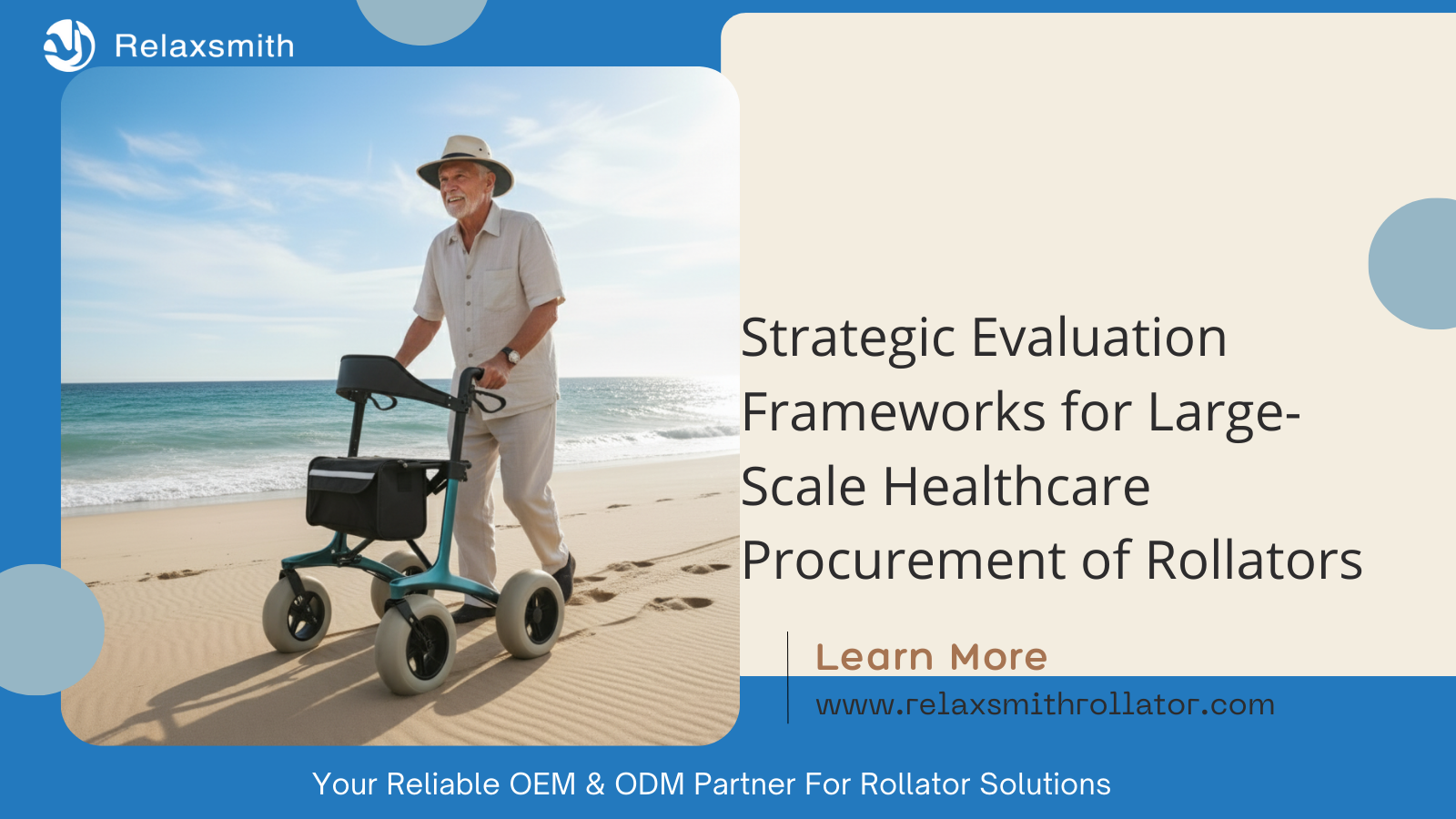
Strategic Evaluation Frameworks for Large-Scale Healthcare Procurement of Rollators
Large-scale procurement of rollators in the healthcare sector is a multi-layered challenge, requiring product managers, procurement specialists, and supply chain decision-makers to deploy rigorous evaluation frameworks. Selecting the right rollator impacts patient mobility, operational budgets, and compliance with safety standards. This article delivers actionable guidance by focusing on the most effective frameworks and methods tailored to large-scale healthcare procurement rollator scenarios.
1. Frameworks for Objective Product Assessment
Objective product assessment is the first step in successful healthcare procurement rollator projects. Buyers must utilize comprehensive scorecards that incorporate safety certifications, ergonomic design, durability metrics, and adaptability to diverse healthcare environments. Weighted scoring models enable decision-makers to rank supplier offerings based on standardized criteria, ensuring all shortlisted rollator products meet or exceed minimum regulatory and performance standards.
Adopt the ISO 11199 standard for walking aids, verifying compliance for all procured rollators.
Include patient feedback mechanisms in scorecards for real-world usability insights.
Test for load capacity, adjustability, and ease of maneuvering in simulated healthcare settings.
2. Supplier Due Diligence and Risk Mitigation
Thorough supplier due diligence is paramount. Large-scale procurement exposes organizations to supply risks, which must be proactively identified and managed. Employ frameworks that include supplier capability assessments, ethical sourcing audits, and data-driven analysis of supplier performance history. A robust healthcare procurement rollator approach should demand transparency throughout the supply chain.
Conduct background checks on supplier certifications and manufacturing track records.
Deploy third-party audits to ensure ethical standards and labor practices are met.
Review financial health and on-time delivery statistics before contract award.
3. Compliance, Regulatory, and Quality Assurance Frameworks
Healthcare procurement rollator strategies must prioritize legal compliance and quality. Evaluation frameworks should address not only domestic regulations, but also international standards relevant to the export and import of medical mobility equipment. Documented quality assurance protocols help reduce liability and reinforce patient safety outcomes.
Stay current with FDA and CE certification requirements for all rollators.
Verify anti-tamper features, batch traceability, and recalls history.
Establish ongoing quality audits throughout the supplier relationship.
4. Lifecycle Cost Analysis and Total Value Frameworks
Cost is a critical variable, but focusing on up-front price alone is short-sighted. Sophisticated evaluation frameworks include lifecycle cost analysis, considering initial procurement costs, maintenance, expected lifespan, and residual value of rollators. Decision-makers should implement models that balance cost with clinical benefit, operational reliability, and user satisfaction.
Calculate total cost of ownership (TCO) for each rollator model.
Assess maintenance agreements, spare parts availability, and upgrade options.
Weigh supplier warranties and after-sales service track records.
5. Strategic Sourcing and Continuous Improvement
For sustainable healthcare procurement rollator outcomes, strategic sourcing frameworks are vital. These frameworks foster ongoing supplier innovation, competitive pricing, and process improvement. Organizations benefit from multi-year contracts with built-in performance reviews and continuous improvement clauses, aligned to evolving patient and institutional needs.
Integrate supplier scorecards with periodic performance evaluations.
Promote joint development and knowledge-sharing sessions with suppliers.
Document lessons learned and feed them back into future procurement cycles.
Applying these five frameworks empowers healthcare organizations to secure the right rollators at scale, balancing compliance, cost, quality, and patient outcomes in every purchase decision.
SEO Keywords
Strategic Procurement
Rollator Selection
Healthcare Procurement
Supplier Evaluation
Lifecycle Costing
Compliance Framework
Quality Assurance
Medical Device Sourcing
Procurement Best Practices
Patient Mobility Solutions
Regulatory Compliance
Supplier Auditing
Durability Assessment
Cost-Benefit Analysis
Supply Chain Risk
Healthcare Buyers
Product Scorecard
Supplier Performance
Clinical Evaluation
Total Value Analysis
Mobility Aid Procurement
Continuous Improvement
Operational Efficiency
Value-Based Purchasing
Clinical Needs Assessment
Patient Outcomes
After-Sales Service
Innovation in Rollators
Procurement Guidelines
Strategic Sourcing
For more details, please visit: www.relaxsmithrollator.com