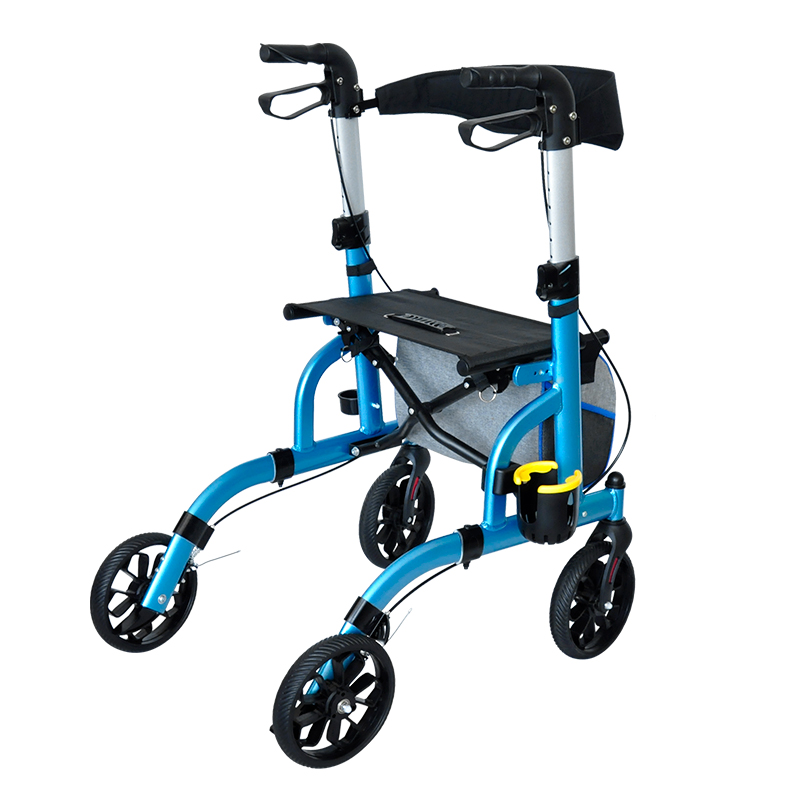
Strategies for Evaluating Supplier Reliability in Mobility Aid Manufacturing: Establishing Metrics and KPIs

In the highly specialized field of mobility aid manufacturing, particularly in products such as rollators, the reliability of suppliers directly impacts product quality, compliance, customer satisfaction, and business continuity. For product managers and procurement professionals, particularly those working in healthcare-related sectors, having a clear set of strategies to evaluate supplier reliability is critical to maintaining efficiency and trust in supply chains.
1. Defining Supplier Reliability in Mobility Aid Manufacturing
Supplier reliability refers to the ability of a supplier to consistently deliver products that meet specifications, timelines, and quality requirements. In mobility aid manufacturing, this extends to regulatory compliance (FDA, ISO13485), design precision, and material consistency.
2. Key Metrics for Supplier Evaluation
On-Time Delivery Rate (OTD): Percentage of deliveries made on or before the agreed schedule.
Defect Rate: The frequency of defective or non-compliant units received.
Lead Time Variability: How consistently a supplier meets the expected lead time.
Customer Complaint Ratio: Reflects how many end-user complaints are traced back to specific suppliers.
Compliance Score: Based on audit results, documentation completeness, and certifications.
3. Implementing KPIs for Reliable Sourcing
When sourcing rollator components, KPIs should not just measure delivery performance but also incorporate communication responsiveness, traceability, and batch consistency. Integrating these into procurement scorecards provides visibility into supplier strengths and weaknesses.
4. Regular Supplier Audits
Scheduled and surprise audits help maintain standards. Audits should verify production capacity, quality control systems, raw material traceability, and employee training.
5. Using Scorecards and Dashboards
Digital procurement platforms allow teams to consolidate performance data into dashboards, facilitating real-time decision-making. A standard scorecard for rollator suppliers might include OTD, NCR (Non-Conformance Reports), and response time to issues.
6. Building Supplier Trust in Rollator Procurement
Trust is fostered by transparency and mutual accountability. Establish SLAs (Service-Level Agreements), promote collaborative forecasting, and share feedback loops. This aligns expectations and builds long-term supplier relationships—vital for high-quality mobility aids.
7. Case Example: Supplier KPIs for a European Rollator Brand
A European rollator brand implemented a quarterly scorecard system assessing defect rate, documentation accuracy, and after-sales support. Within two cycles, supplier performance improved by 28% and delays dropped by 43%.
8. Conclusion
For supply chain managers and procurement specialists, defining clear KPIs is not optional—it's essential. With structured metrics, strategic audits, and transparent communication, companies can build reliable supply ecosystems that support innovation, compliance, and patient safety.
Strategies for Evaluating Supplier Reliability in Mobility Aid Manufacturing and Building Supplier Trust in Rollator Procurement are not just phrases—they are blueprints for procurement excellence.
For more details, please visit: https://relaxsmithrollator.com/
SEO Keywords
Rollator supplier evaluation
Mobility aid compliance metrics
Supplier KPI tracking
Rollator procurement best practices
Mobility aid supply chain trust
Reliable rollator manufacturers
Supplier risk assessment tools
Rollator component quality control
Procurement dashboard for mobility aids
On-time delivery metrics
ISO-certified rollator supplier
Supplier audit checklist
Healthcare supply chain KPI
Supplier compliance performance
Rollator defect rate tracking
Service-level agreement rollator
Mobility aid reliability scoring
Rollator product traceability
Transparent rollator sourcing
Supplier feedback loop
>
Certified mobility aid parts
Performance review rollator supplier
Strategic procurement in healthcare
Rollator sourcing metrics
Supplier diversification for rollators
Trust-building in procurement
Supplier communication tools
Rollator lead time consistency
Rollator complaint reduction
Procurement excellence mobility aid
Rollator delivery accuracy
Supply chain transparency
Mobility aid innovation partners
Rollator compliance checklist
Procurement risk reduction
Reliable supplier network
Rollator vendor management
Mobility aid benchmarking
Supplier trust metrics
READ MORE: