






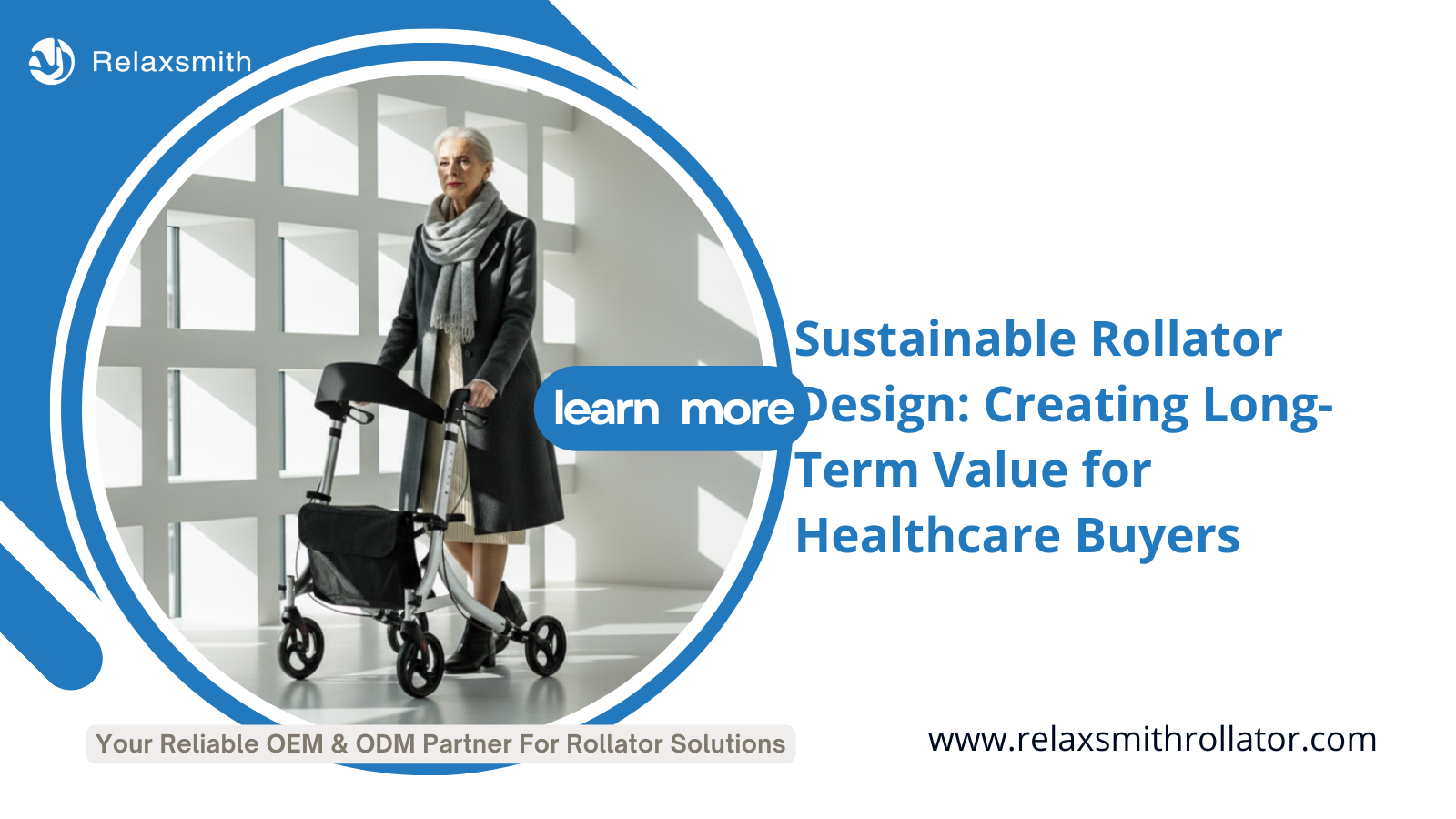
Sustainable Rollator Design: Creating Long-Term Value for Healthcare Buyers
Sustainability has become a core priority in rollator design innovation for healthcare buyers seeking both clinical excellence and responsible procurement. This article examines how sustainable materials, energy-efficient production, and circular economy thinking in rollator design generate long-term value for institutions, patients, and the environment.
1. Eco-Friendly Materials and Manufacturing
Modern rollators now incorporate environmentally responsible choices throughout the supply chain:
Frames and components made from recycled aluminum, bioplastics, or sustainably sourced materials.
Low-VOC paints and non-toxic finishes for safer indoor use.
Manufacturing processes that minimize water and energy consumption.
2. Lifecycle Durability and Repairability
Procurement professionals value rollator design innovation that maximizes product lifespan:
Sturdy construction to reduce replacement frequency and waste.
Modular designs for easy upgrades and repairs, extending useful life.
Standardized components for simplified maintenance and part sourcing.
3. Circular Economy Approaches
Rollator manufacturers are adopting circular strategies to deliver long-term institutional value:
Buy-back and refurbishment programs that lower total cost of ownership.
Recycling initiatives to recover valuable materials at end of life.
Upgradable features and flexible component replacement for evolving care needs.
4. Impact Measurement and Transparency
Healthcare buyers increasingly demand transparency on environmental performance:
Digital tools and labeling to track carbon footprint, recyclability, and compliance.
Public sustainability reporting to meet regulatory and stakeholder expectations.
Collaborative supply chain monitoring for ethical sourcing and environmental responsibility.
5. Value Beyond Compliance
Sustainable rollator design innovation yields financial, social, and reputational benefits:
Reduced disposal costs and environmental fees through waste minimization.
Enhanced institutional reputation with eco-conscious buyers and patients.
Eligibility for green procurement programs and certifications.
Conclusion
Sustainability-driven rollator design innovations empower healthcare buyers to achieve long-term value and fulfill environmental responsibilities. By prioritizing eco-friendly materials, repairability, and transparent reporting, organizations contribute to positive health, financial, and environmental outcomes.
Sustainable Rollator Design
Eco-Friendly Rollator Materials
Recycled Rollator Components
Modular Rollator Repairs
Circular Economy Rollators
Green Procurement Rollators
Rollator Lifecycle Durability
Repairable Rollator Innovation
Energy-Efficient Rollator Manufacturing
Rollator Carbon Footprint
Healthcare Sustainability Procurement
Rollator Environmental Labeling
Rollator Supply Chain Transparency
Healthcare Green Programs
Rollator Design Innovation
Long-Term Rollator Value
Refurbished Rollator Solutions
Rollator Waste Minimization
Rollator Environmental Reporting
Healthcare Eco-Procurement
Rollator End-of-Life Recycling
Responsible Rollator Sourcing
Rollator Green Certifications
Rollator Cost Reduction
Healthcare Buyer Sustainability
Positive Environmental Outcomes
Ethical Rollator Supply Chain
Rollator Transparency Tools
Energy-Saving Rollators
Rollator Design Innovation
For more details, please visit:www.relaxsmithrollator.com