





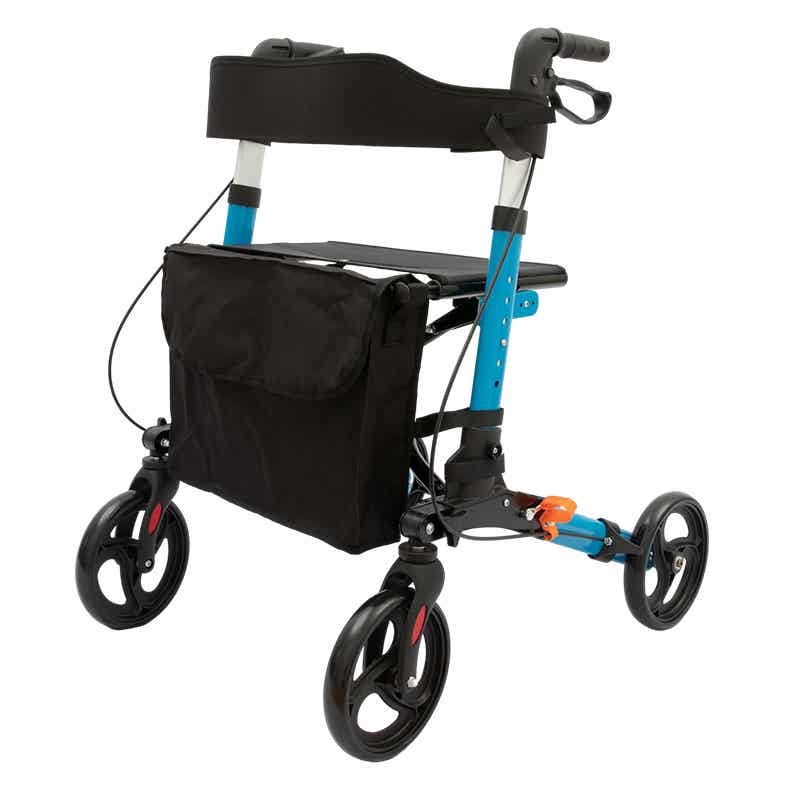
The Supply Chain Impact of Adopting Rollators with Wide Ergonomic Handlebars
In today’s fast-evolving healthcare industry, supply chain management is under increasing pressure to deliver both operational efficiency and innovation. One notable trend is the growing demand for the Rollator with Wide Ergonomic Handlebars, a solution designed for easy maneuverability and superior user comfort. This article analyzes the full supply chain impact of integrating such rollators into institutional procurement, focusing on the unique considerations for product managers, procurement teams, and healthcare facilities.
1. Upstream Sourcing and Vendor Collaboration
The adoption of a Rollator with Wide Ergonomic Handlebars starts with strategic supplier partnerships. Quality raw materials and specialized components (ergonomic grips, reinforced aluminum, advanced locking mechanisms) require reliable vendors who can meet rigorous specifications. Product managers should work closely with suppliers to ensure consistency, manage lead times, and mitigate risks associated with supply disruptions.
Pre-qualify multiple suppliers for critical components
Negotiate long-term contracts to ensure availability
Incorporate regular audits for quality control
2. Production Planning and Scalability
Introducing new models such as the Rollator with Wide Ergonomic Handlebars requires production lines to adapt. Manufacturers must integrate new jigs, molds, and assembly procedures to handle the wider and often more robust handlebar configurations. Scalable manufacturing processes, modular parts, and cross-training of labor can help minimize downtime and accelerate time-to-market.
Flexible manufacturing cells for new product lines
Lean principles to reduce waste and boost throughput
Ongoing training for assembly and quality staff
3. Logistics, Inventory, and Distribution
The unique shape and features of rollators with wide ergonomic handlebars present new challenges for shipping and storage. Larger handlebar widths may impact packaging design, container loading, and inventory space requirements. Advanced inventory management systems, optimized packaging, and efficient distribution strategies are critical to maintaining a smooth supply chain.
Develop stackable, protective packaging for transit
Use just-in-time inventory to reduce holding costs
Track shipments in real-time for greater visibility
4. Compliance, Documentation, and After-Sales Support
Healthcare products are subject to stringent regulatory standards. Rollators with wide ergonomic handlebars must meet ISO, CE, or FDA certifications, requiring detailed documentation throughout the supply chain. After-sales support—including spare parts logistics, warranty claims, and technical training for facility staff—further enhances the overall value proposition.
Maintain digital records for traceability and compliance
Establish a dedicated support and service network
Train distributors and clients on product features
5. Value for Procurement Managers and End Users
For procurement managers, the adoption of Rollator with Wide Ergonomic Handlebars can result in measurable benefits: higher satisfaction rates, fewer returns, and improved rehabilitation outcomes. Streamlined supply chains also reduce total cost of ownership and increase responsiveness to clinical feedback. For end users, these rollators deliver a tangible improvement in daily comfort and independence.
6. Looking Forward: Supply Chain Innovation and Sustainability
Forward-thinking organizations are now looking to further optimize supply chains by integrating digital technologies, predictive analytics, and sustainable sourcing. As demand for ergonomic rollators grows, investment in greener packaging, circular supply models (repair, refurbish, reuse), and continuous process improvement will set leaders apart in the healthcare equipment market.
Conclusion: The Strategic Value of Ergonomic Innovation
The Rollator with Wide Ergonomic Handlebars is more than a product innovation—it’s a catalyst for end-to-end supply chain transformation. By aligning sourcing, production, logistics, and after-sales with this new standard, healthcare suppliers and product managers drive measurable value, improve user outcomes, and future-proof their organizations for the next wave of healthcare innovation.
SEO Targeted Phrases & Product/Service/Customer Keywords for Search Engines:
Rollator with Wide Ergonomic Handlebars
Healthcare supply chain innovation
Vendor management rollator
Rehab product logistics
Easy maneuver rollator supply
Ergonomic handlebar procurement
Medical device compliance
ISO certified mobility product
Lean manufacturing rollator
Bulk order rollator distribution
Just-in-time inventory walker
Protective mobility packaging
Senior care facility supply chain
After-sales support walker
Digital supply chain records
FDA approved rollator
Procurement manager mobility aid
Recyclable packaging rollator
Predictive analytics healthcare logistics
Refurbish and reuse mobility device
Spare parts logistics walker
Real-time shipment tracking
Training for mobility distributors
Warranty claims rollator
Sustainable healthcare equipment
Clinical feedback supply chain
Supply chain process improvement
Greener medical device sourcing
Professional healthcare logistics
Operational efficiency mobility
End-user comfort walker
Product manager logistics solution
Rehabilitation equipment delivery
Circular supply chain walker
Inventory management rollator
Technical training mobility aid
Long-term care equipment procurement
Clinical outcome improvement
Supply chain cost control
Innovative healthcare procurement



