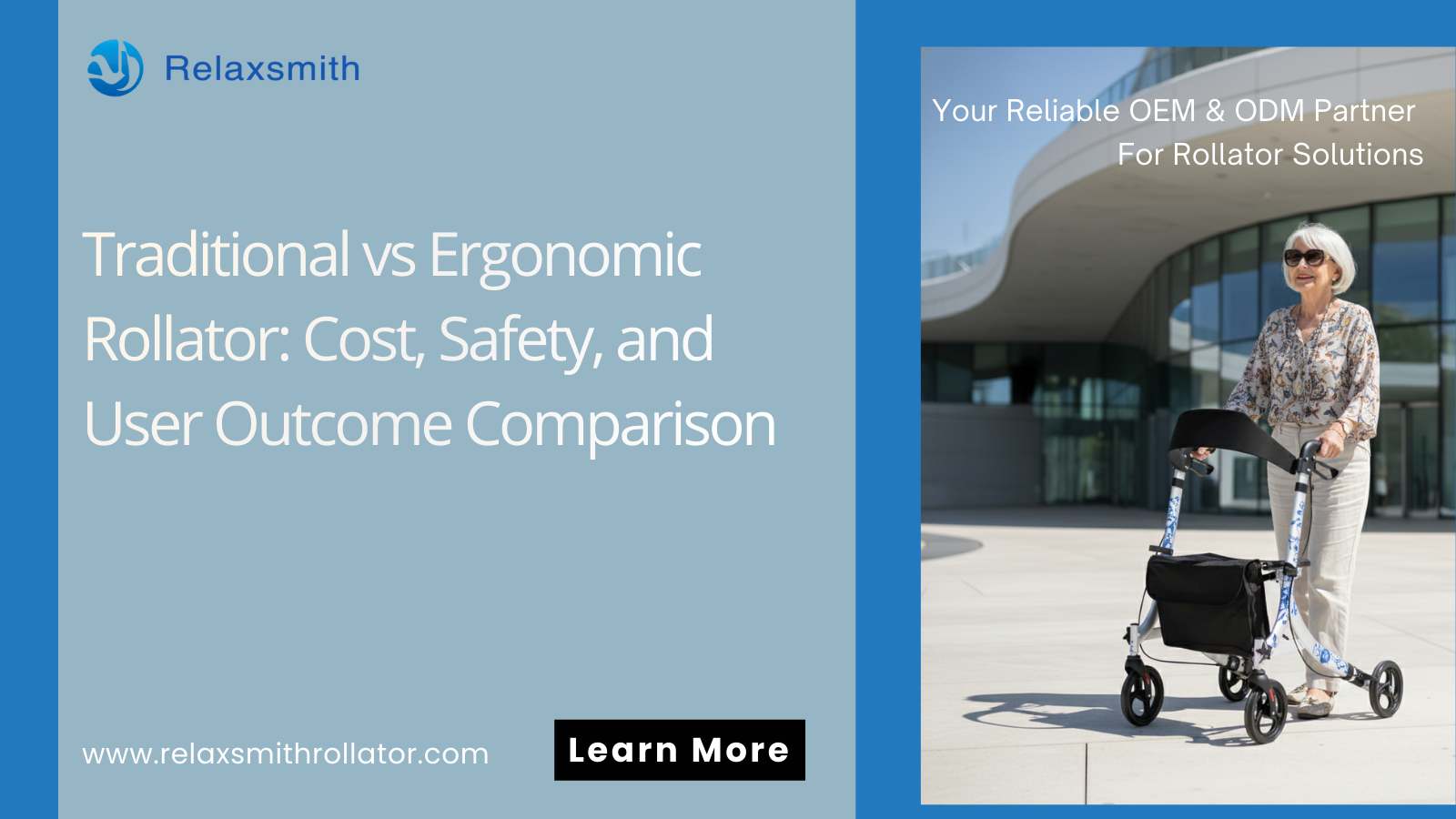
Traditional vs Ergonomic Rollator: Cost, Safety, and User Outcome Comparison
Procurement and supply chain professionals face a critical decision: traditional vs ergonomic rollator. With evolving user expectations and evidence-based healthcare purchasing, the stakes for choosing the right rollator design are higher than ever. This article provides a detailed, side-by-side comparison of traditional vs ergonomic rollator, with emphasis on cost, safety, and user outcomes for professional buyers.
1. Cost Analysis: Upfront vs Lifecycle Expenditure
Traditional rollators generally offer lower upfront costs, appealing to budget-conscious buyers. However, ergonomic rollators—featuring advanced grips, adjustable frames, and user-centric features—may yield savings over time through reduced maintenance, fewer replacements, and higher patient compliance. Procurement teams should calculate total cost of ownership when evaluating traditional vs ergonomic rollator.
2. Safety Considerations: Stability, User Fatigue, and Fall Risk
Ergonomic rollators provide enhanced stability and support, reducing user fatigue and fall risk. Features like contoured handles, anti-tip mechanisms, and improved braking systems set ergonomic designs apart in traditional vs ergonomic rollator assessments. Clinical trials and incident reports should inform purchasing decisions.
3. User Outcomes: Satisfaction, Mobility, and Recovery
Patient satisfaction and functional mobility are key metrics in the traditional vs ergonomic rollator debate. Studies indicate that ergonomic designs promote better adherence to mobility plans and faster recovery, while traditional models may suffice for short-term or low-intensity users. Buyer feedback and clinical outcomes data support investment in ergonomic rollators for long-term use.
4. Customization and Accessory Integration
Ergonomic rollators typically offer greater customization—adjustable heights, modular accessories, and premium materials. Traditional models are often more limited. Procurement teams should consider futureproofing and adaptability in their traditional vs ergonomic rollator comparisons.
5. Supply Chain and Procurement Implications
Bulk buyers should assess supply availability, lead times, and warranty coverage for both types. Ergonomic models may require closer supplier relationships and pilot programs, but deliver higher satisfaction and lower complaint rates.
Conclusion: Making Informed Traditional vs Ergonomic Rollator Choices
Professional procurement of traditional vs ergonomic rollator should be driven by lifecycle value, patient safety, and outcome data—not just price. Informed choices strengthen user satisfaction and institutional reputation.
SEO Keywords:
Traditional vs ergonomic rollator, rollator cost comparison, ergonomic rollator benefits, traditional rollator procurement, rollator user outcomes, rollator safety evaluation, healthcare rollator buying, rollator customization options, patient satisfaction mobility aid, rollator lifecycle analysis
Tags:
Elder walker with comfort grip, Lightweight folding aid, Rollator walker with bag, Mobility support with wheels, Easy storage walker, Ultra compact rollator, Stylish senior walker, Sturdy mobility walker, Walker with dual function seat, Rollator for uneven terrain
For more details, please visit: www.relaxsmithrollator.com