





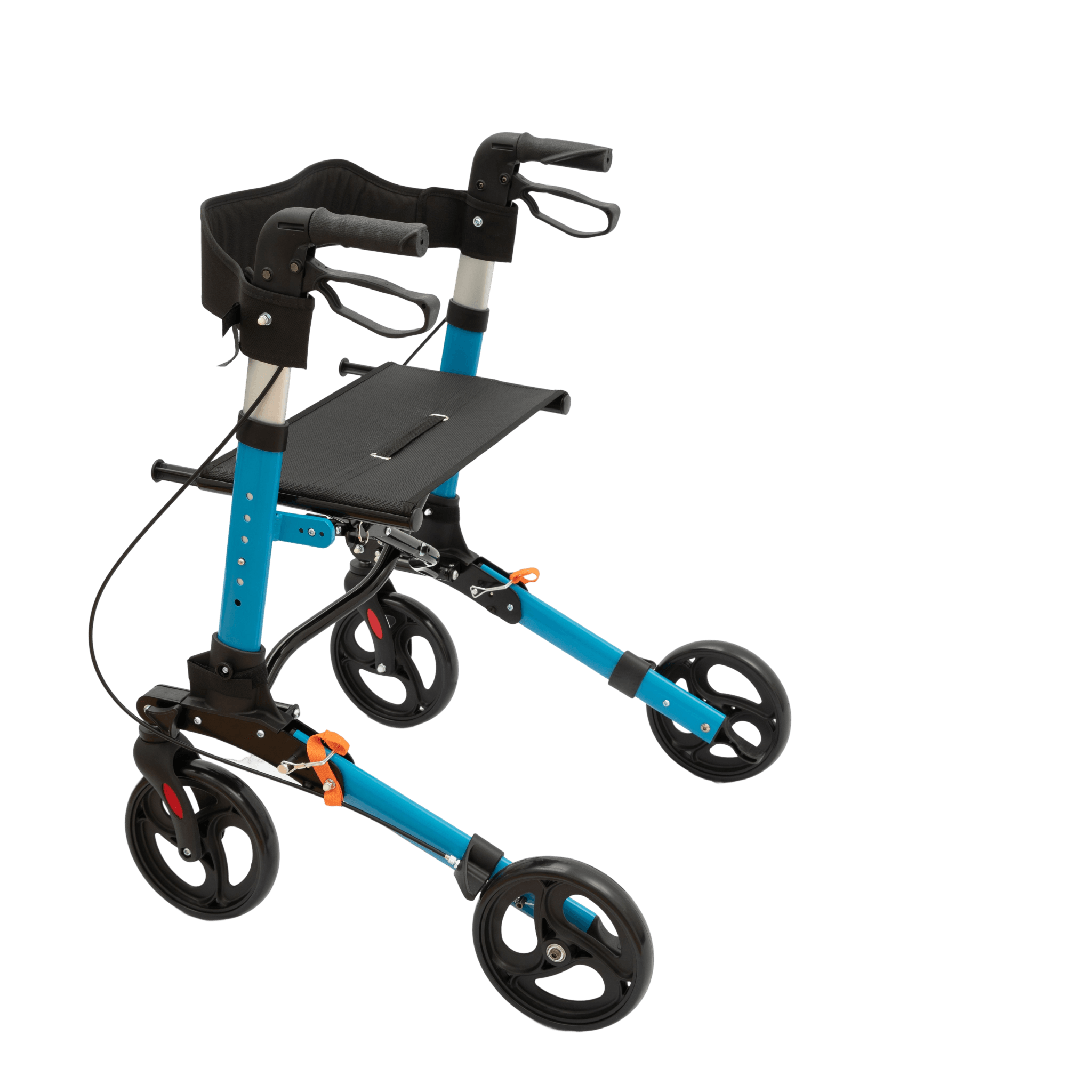
Understanding User Profiles and Matching Rollator Weight Capacities

When sourcing mobility aids for clinical, rehabilitation, or senior care settings, one of the most critical specifications to evaluate is weight capacity. Procurement professionals must ensure that the rollator's weight capacity is sufficient for a wide range of users. Misalignment between user profiles and device ratings can lead to safety risks, compliance issues, and product failure.
Defining the User Spectrum in Healthcare
Hospitals, long-term care facilities, and rehab centers serve highly diverse populations. When evaluating mobility equipment, procurement teams must categorize users across dimensions such as:
Body weight range – from under 120 lbs to over 400 lbs
Posture and gait variation – affecting force distribution on the device
Load-bearing behavior – including leaning, seated rest, and cargo placement
A rollator suitable for one patient population may fail entirely when used in another. That’s why verifying if the rollator's weight capacity is sufficient involves more than checking a spec sheet.
Matching Weight Ratings with Real-World Use
Many manufacturers publish a “maximum user weight” on packaging. However, institutional buyers must interpret that number with nuance:
Static vs. dynamic weight: A 300-lb rated rollator may not withstand a user descending ramps or sudden stops.
Accessory loads: Add-ons like oxygen tanks, baskets, or IV poles alter balance and stress points.
Behavioral variance: Some users apply full downward pressure during movement, raising effective load.
Evaluating whether a rollator's weight capacity is sufficient must involve real-use testing, clinician feedback, and historical incident data.
Inclusive Sizing and Procurement Planning
Facilities committed to inclusive care must stock a range of rollator models:
Standard models (250–300 lb capacity) for most adults
Bariatric models (400–500 lb capacity) for heavier or broader patients
Compact/lightweight models for smaller framed users and transport purposes
Procurement leaders should request usage breakdowns by body type or diagnosis, ensuring stock rotation matches patient demographics.
Conclusion
When it comes to mobility support, one size does not fit all. A comprehensive evaluation of user profiles is the only way to ensure that the rollator's weight capacity is sufficient across your facility’s needs. By investing in proper fit and robust design, procurement professionals improve safety, satisfaction, and equipment longevity.



