





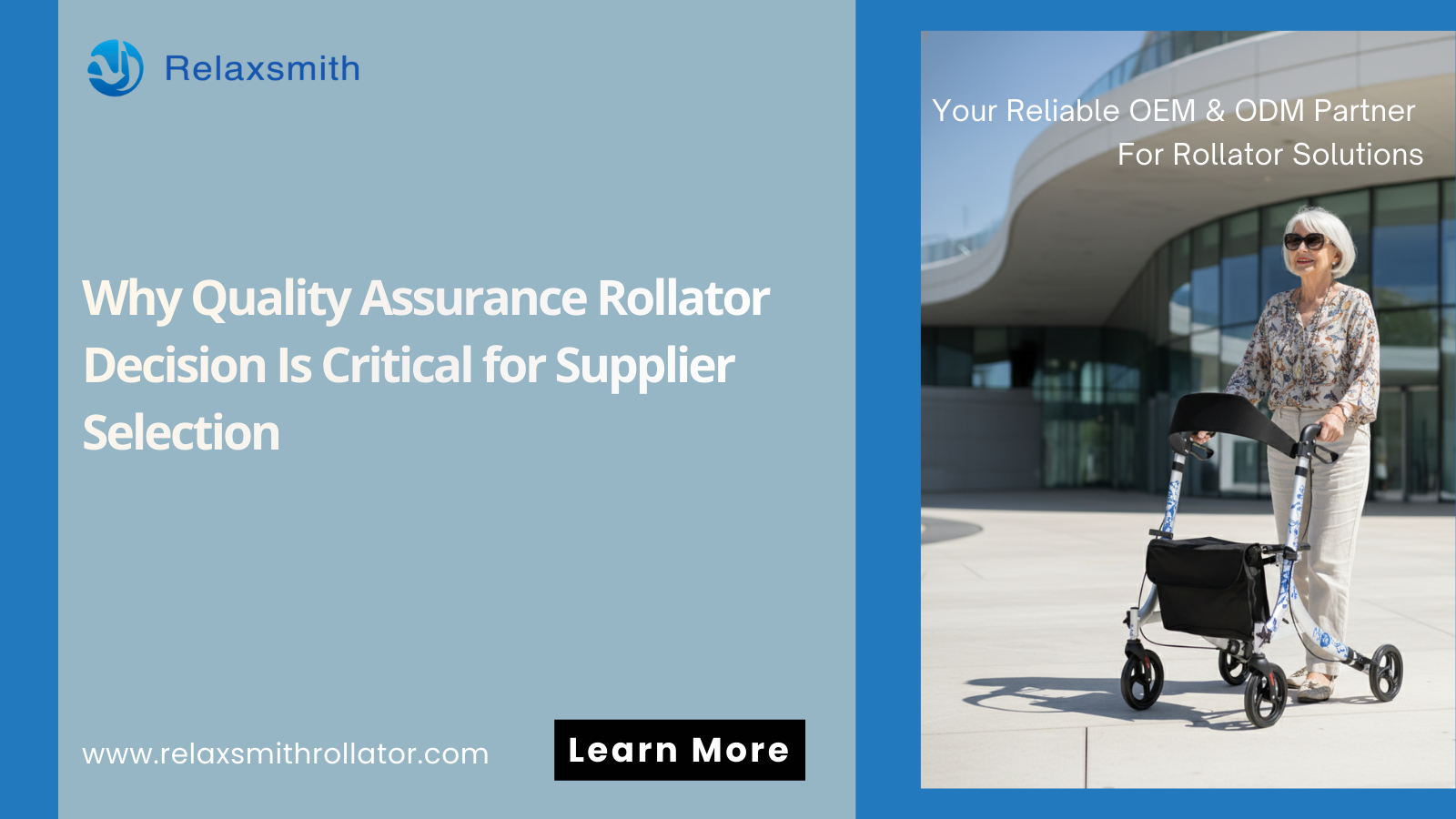
Why Quality Assurance Rollator Decision Is Critical for Supplier Selection
Quality assurance (QA) is a pivotal factor in the procurement process for rollators. The decisions made in evaluating QA protocols and product performance directly impact not only supplier selection, but also patient safety, regulatory compliance, and the reputation of healthcare providers. This article examines why a robust quality assurance rollator decision framework is vital for supply chain leaders and procurement managers seeking reliable, high-value supplier partnerships.
Establishing Rigorous QA Criteria for Supplier Selection
Effective supplier selection starts with clearly defined QA criteria tailored to clinical and operational needs. Healthcare organizations must ensure that each quality assurance rollator decision accounts for manufacturing standards, material traceability, and conformity to international certifications.
Suppliers with ISO 13485 or equivalent certifications demonstrate consistent quality in medical device production.
Regular factory audits and third-party testing provide transparency and mitigate supply chain risks.
Documentation of quality control processes ensures traceability and accountability throughout the product lifecycle.
Impact on Patient Safety and Clinical Outcomes
A robust quality assurance rollator decision minimizes the likelihood of device failures, recalls, or patient injuries. By prioritizing QA in supplier selection, healthcare facilities protect their patients and staff while reducing the risk of adverse events and costly litigation.
Rigorous QA programs lower the rate of post-market complaints and warranty claims.
Evidence shows that facilities prioritizing quality assurance rollator decision-making experience fewer equipment-related incidents and higher satisfaction rates.
Clear QA benchmarks align expectations between procurement teams and suppliers, ensuring reliable product performance.
Building Strong, Long-Term Supplier Partnerships
Quality assurance is not a one-time task, but an ongoing process that underpins strong supplier relationships. Engaging in transparent, QA-driven dialogue with vendors creates mutual trust and continuous improvement. Supplier scorecards, routine audits, and feedback mechanisms all support long-term value creation.
Collaborative partnerships based on shared QA values drive innovation and cost savings.
Suppliers that embrace continuous QA improvement are more adaptable to changing regulatory and clinical demands.
Healthcare organizations benefit from reduced supply chain disruptions and more predictable procurement outcomes.
| Elder walker with comfort grip | Lightweight folding aid |
| Rollator walker with bag | Mobility support with wheels |
| Easy storage walker | Ultra compact rollator |
| Stylish senior walker | Sturdy mobility walker |
| Walker with dual function seat | Rollator for uneven terrain |
| Portable walking frame | Bariatric walking aid |
| Adjustable handle rollator | Indoor rollator with seat |
| Rollator with locking brakes | Elderly mobility support |
| Rollator walker for tall users | Foldable seated walker |
| Mobility walker with basket | Rollator walker with tray attachment |
| Quality assurance rollator decision | Supplier selection healthcare |
| Medical device quality criteria | Rollator compliance standards |
| ISO 13485 rollator | Healthcare supplier evaluation |
| Device audit protocols | Rollator manufacturing control |
| Post-market surveillance rollator | Supplier QA partnership |
| Patient safety mobility device | Warranty claims reduction |
| Supplier scorecard healthcare | Continuous QA improvement |
| Healthcare risk mitigation | Traceability rollator supply |
| QA-driven procurement process | Clinical outcome improvement |
| Regulatory compliance rollator | Supplier performance review |
| Transparent vendor management | Audit-ready documentation |
| Third-party testing mobility aid | Rollator failure prevention |
| Supply chain quality risk | Long-term vendor collaboration |



