






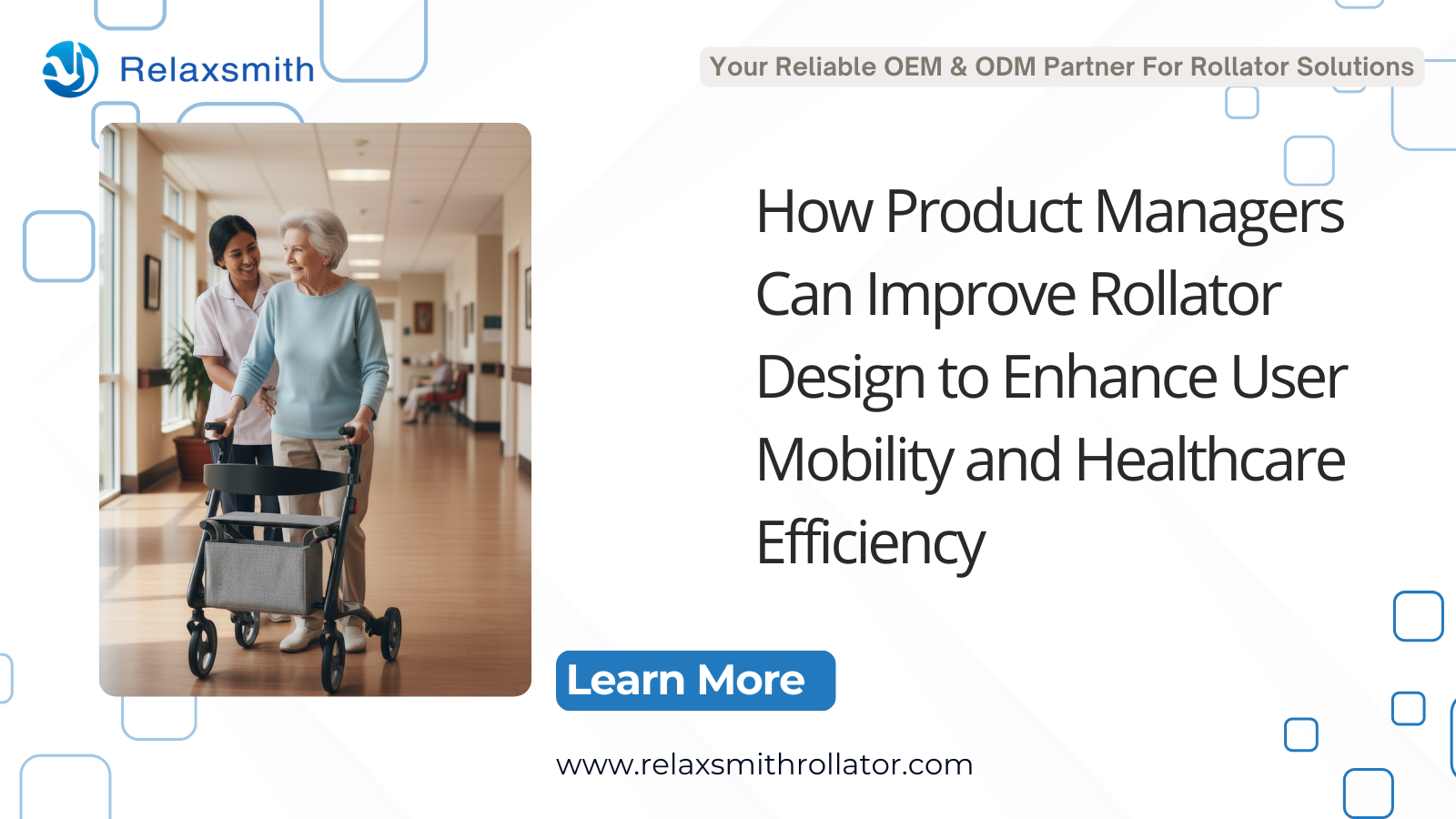
 How Product Managers Can Improve Rollator Design to Enhance User Mobility and Healthcare Efficiency
Rollators are essential mobility aids that assist individuals with walking and balance. For elderly patients and individuals with mobility impairments, rollators offer a sense of independence, security, and comfort. As healthcare professionals and product designers, product managers play a key role in improving the design of rollators to enhance both user mobility and healthcare efficiency. In this article, we will discuss how product managers can optimize rollator design to meet the evolving needs of patients and improve healthcare workflows.
Understanding User Needs in Rollator Design
The first step in improving rollator design is understanding the diverse needs of users. Product managers must consider the physical and emotional challenges faced by patients who use rollators. These include limited strength, balance issues, and pain or discomfort while walking. Product managers must ensure that the design of the rollator accommodates these limitations while making it easy for patients to use daily. Features such as adjustable heights, cushioned seats, and ergonomic handles are essential for making rollators more comfortable and accessible.
Improving Mobility with Advanced Features
Mobility is the primary function of a rollator, and product managers must focus on features that improve the ease and range of movement. Lightweight frames made from durable materials such as aluminum or carbon fiber are essential for providing the right balance of sturdiness and maneuverability. Additionally, the addition of large, sturdy wheels with shock-absorbing features can help users navigate rough or uneven terrain with ease. These improvements enhance mobility and ensure that patients can use their rollators both indoors and outdoors without difficulty.
Ensuring Safety Through Innovative Braking Systems
Safety is a key consideration when designing rollators. Rollators must be equipped with reliable and easy-to-use braking systems that prevent accidents. For patients with limited hand strength or dexterity, it is crucial that the braking system is simple to operate. Product managers should focus on designing intuitive brake systems that can be easily activated and released, even by patients with limited strength or joint issues. Additionally, incorporating automatic brake engagement when the user slows down or stops can provide extra security and help prevent rollator-related accidents.
Enhancing Healthcare Efficiency with Rollator Integration
Rollators can be integrated into healthcare systems to improve overall efficiency. For healthcare providers, rollators that are easy to store, clean, and maintain can reduce administrative burdens and improve workflow. Product managers should consider designing rollators that are easy to fold, allowing for compact storage in healthcare facilities such as hospitals, nursing homes, and rehabilitation centers. Additionally, rollators with removable or washable parts, such as seats and handle grips, can ensure a higher standard of hygiene, especially in healthcare environments where infection control is critical.
Comfort and Customization
Comfort is a top priority for users of rollators, especially for elderly patients who may experience joint pain or muscle fatigue. Product managers should ensure that the seat is cushioned for comfort, and the handles are ergonomically designed to reduce strain on the hands and wrists. Moreover, the ability to adjust the height of the handles and seat ensures that the rollator is customizable for users of different heights and physical conditions. Offering a variety of customization options can also help meet the specific needs of different users, enhancing their overall experience and improving mobility.
The Role of Technology in Rollator Design
As technology continues to advance, rollator designs are incorporating innovative features that can further enhance user mobility and healthcare efficiency. Product managers can explore the integration of technology such as GPS navigation, fitness tracking, or remote monitoring capabilities. These technologies can help healthcare providers track patient mobility, monitor physical activity, and assess the effectiveness of the rollator. Additionally, smart rollators with integrated sensors can detect when a patient needs assistance or when the rollator is being used improperly, providing valuable data to healthcare professionals.
Product Testing and User Feedback
Product managers must engage in rigorous product testing and gather feedback from users to ensure that rollators are practical and effective. User feedback from elderly patients and healthcare providers is invaluable for refining designs and identifying areas for improvement. Additionally, testing under real-world conditions allows product managers to assess the durability, stability, and ease of use of the rollator. Regular testing and feedback loops help ensure that rollators are meeting the evolving needs of users and healthcare professionals.
Conclusion
Product managers play a critical role in improving the design of rollators to enhance user mobility and healthcare efficiency. By focusing on innovation, safety, comfort, and practicality, product managers can develop rollators that meet the needs of elderly patients while improving healthcare workflows. As the demand for mobility aids continues to grow, the role of product managers in designing advanced rollator solutions will be essential in improving the quality of life for elderly patients and supporting healthcare providers in delivering efficient care.
Tags
Product manager
rollator solution
mobility aids
fall prevention
healthcare solutions
ergonomics
mobility technology
user feedback
adjustable rollators
smart rollators
product design
healthcare efficiency
comfort features
patient mobility
easy-to-use rollators
durable rollators
ergonomic handles
lightweight rollators
user-centered design
SEO Keywords
Product manager
rollator solution
mobility aids
fall prevention
healthcare solutions
ergonomics
mobility technology
user feedback
adjustable rollators
smart rollators
product design
healthcare efficiency
comfort features
patient mobility
easy-to-use rollators
durable rollators
ergonomic handles
lightweight rollators
user-centered design