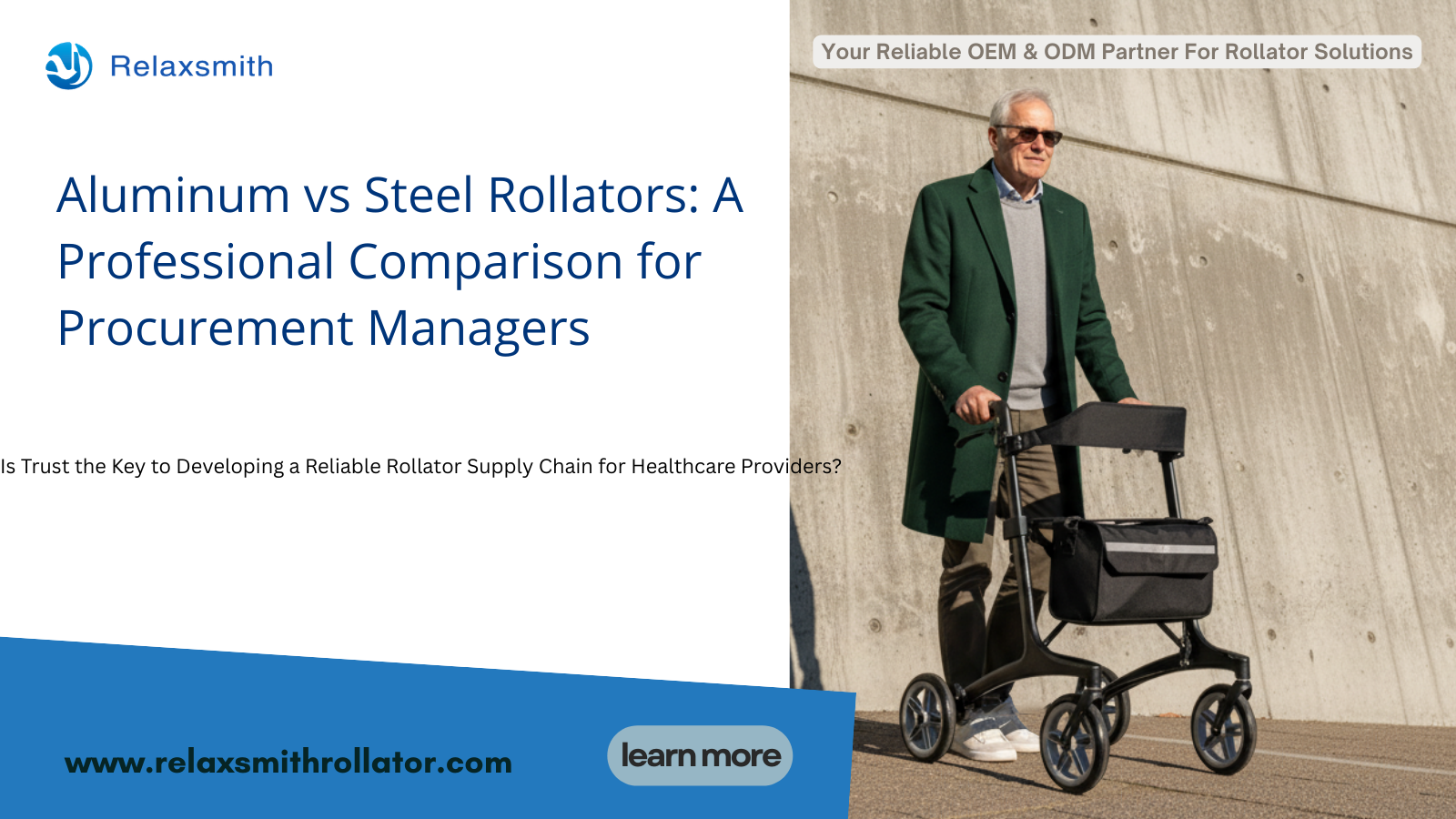
 Aluminum vs Steel Rollators: A Professional Comparison for Procurement Managers
When sourcing rollators for healthcare institutions, procurement managers face important decisions regarding material selection. Aluminum and steel are two of the most commonly used materials for manufacturing rollators, and understanding the differences between these materials is essential for making informed purchasing decisions. This article explores the advantages of aluminum rollators compared to their steel counterparts, focusing on comfort, safety, storage, and customization, while addressing critical pain points in the decision-making process.
The Pros and Cons of Aluminum and Steel Rollators
Rollators made from aluminum are widely favored for their lightweight construction. These models are often easier to maneuver, making them ideal for patients who require mobility aids that can be used indoors and outdoors. Aluminum is known for its resistance to rust, offering durability and reliability in various climates, especially in humid environments. On the other hand, steel rollators are known for their robustness and sturdiness, making them a reliable option for individuals who may need extra support or durability in high-traffic areas.
However, the question of aluminum versus steel becomes a balancing act for procurement managers. Steel rollators, while durable, tend to be heavier, which can be a challenge for individuals with limited strength. Aluminum, while lighter, may not offer the same level of strength under heavy load conditions. Therefore, choosing the right material often depends on the specific needs of the user. Both materials have their merits, and understanding these differences can help procurement managers select the most appropriate product for their healthcare setting.
Comfort and Safety Features: How Design Plays a Key Role
Comfort is one of the most critical factors when choosing a rollator for healthcare providers. The seat and backrest are two features that directly affect a patient’s comfort. Aluminum rollators typically offer a more comfortable design, as they are often equipped with ergonomic seats and backrests that can be adjusted to accommodate various patient needs. This is particularly important for elderly patients or those recovering from surgery, who may need to sit and rest frequently throughout the day.
Steel rollators, while sturdy, often have less focus on comfort design due to the weight of the material. However, advancements in the industry have led to the development of more comfortable steel rollators, offering added cushioning and adjustable backrests to provide a balance between comfort and strength.
Safety is another critical consideration in rollator design. Both aluminum and steel rollators often come equipped with safety features such as non-slip grips, brakes, and locking mechanisms. These safety features are vital for preventing falls and ensuring the stability of the user. While both materials offer similar safety benefits, aluminum rollators tend to be more maneuverable, which can further reduce the risk of accidents.
Height Adjustability and Customization for Different User Needs
Rollators need to be customizable to meet the diverse needs of healthcare patients. Height adjustability is a key feature that allows patients to customize the rollator for optimal comfort and usability. Whether the patient is short or tall, a rollator with adjustable handlebars can provide better posture and ease of movement.
Aluminum rollators often offer more versatile height adjustment features, allowing users to easily adapt the device to their unique needs. The lightweight nature of aluminum also makes these rollators more flexible when it comes to storage and portability. Steel rollators, on the other hand, may offer less flexibility in this regard, but their robust frame can provide additional stability, which some users may prefer for extended use.
Convenience of Folding and Storage Design
Another factor that influences procurement decisions is the convenience of folding and storage. Healthcare professionals often need rollators that are easy to store and transport. Aluminum rollators are typically lighter and easier to fold, making them ideal for facilities that require mobility aids to be stored in tight spaces.
Steel rollators, although heavier and bulkier, can still offer folding mechanisms, but they may not be as compact as aluminum models. Depending on the available storage space in a healthcare facility, the choice of material and design may heavily influence the final decision.
The Future of Rollators in Healthcare
The future of rollators in healthcare looks promising, with ongoing advancements in material science and design. Aluminum rollators are expected to become even lighter and more durable, incorporating cutting-edge safety features such as automatic braking systems and built-in sensors to prevent falls.
Steel rollators are also likely to continue evolving, with improvements in weight distribution and comfort. The continued focus on customization and user-centered design will ensure that rollators remain an essential tool for healthcare providers worldwide.
Conclusion
For procurement managers, understanding the benefits of aluminum and steel rollators is essential when selecting the best product for their healthcare setting. While aluminum rollators are often preferred for their lightweight design and portability, steel rollators offer superior strength and durability. By balancing comfort, safety, and customization, procurement managers can make informed decisions that meet the needs of patients while optimizing healthcare resources.
SEO Keywords
Tags
rollators
healthcare
procurement
mobility aids
aluminum rollators
steel rollators
patient safety
rollator sourcing
adjustable height
folding design
For more details, please visit:www.relaxsmithrollator.com


