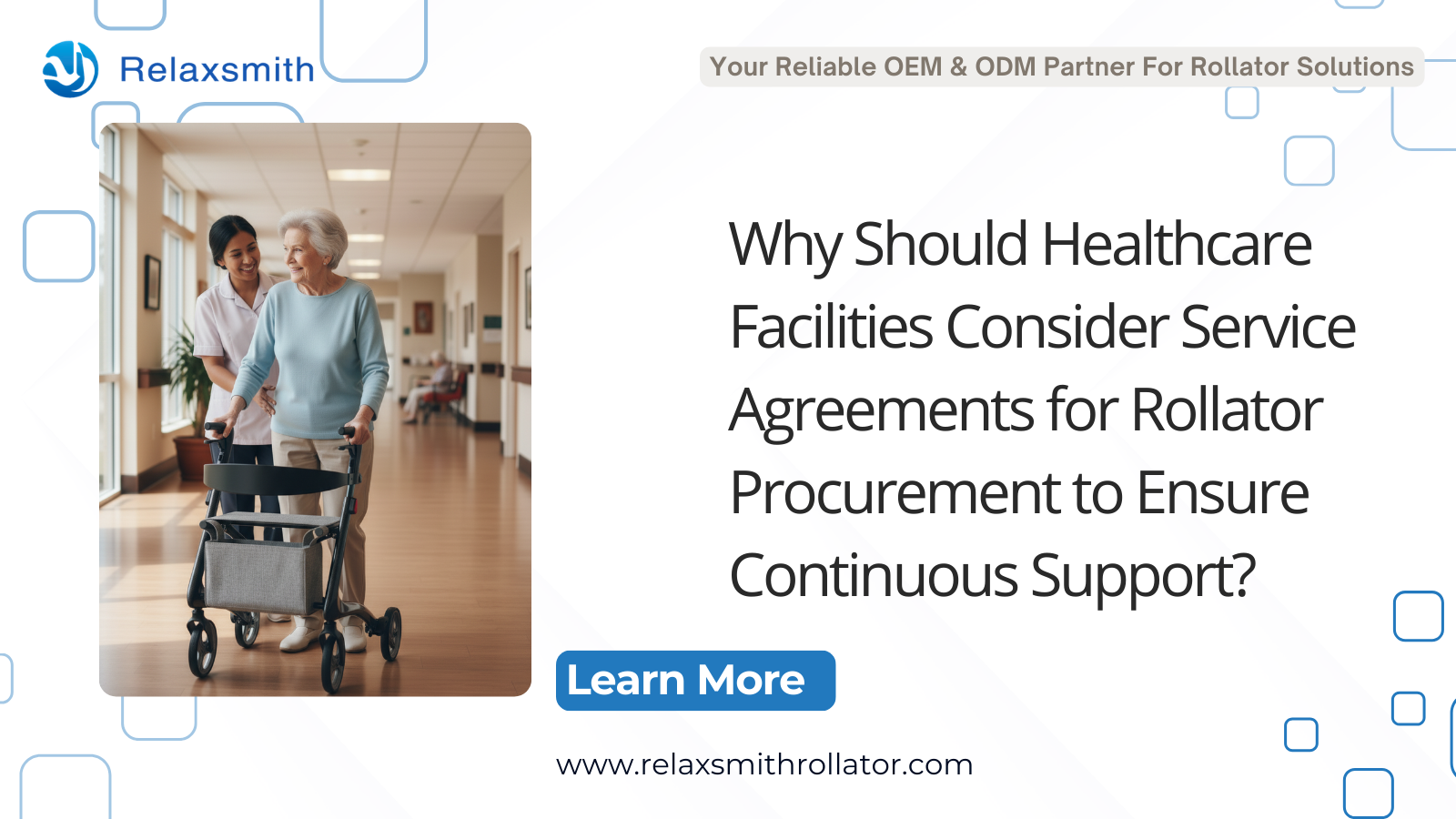
 Why Should Healthcare Facilities Consider Service Agreements for Rollator Procurement to Ensure Continuous Support?
When sourcing rollators for healthcare facilities, procurement managers need to think beyond just purchasing the product. Ensuring continuous support and maintenance is equally important for the longevity and functionality of these vital mobility aids. This is where service agreements come into play. In this article, we explore why healthcare facilities should consider service agreements for rollator procurement, and how these agreements can provide long-term benefits in terms of both financial and operational support.
The Role of Service Agreements in Rollator Procurement
Service agreements for rollators provide healthcare facilities with a contract that guarantees maintenance and repairs over an agreed-upon period. These agreements are designed to ensure that the mobility aids remain in optimal condition, preventing costly breakdowns and ensuring the safety of patients using the equipment. By establishing a service agreement with the rollator supplier, healthcare facilities can secure ongoing technical support, repairs, and replacements, leading to a more reliable and efficient healthcare environment.
Operational Advantages of Service Agreements
One of the key operational benefits of service agreements is the reduction in downtime for rollators. Rollators are essential tools for patient mobility, and when they break down, it can have a significant impact on patient care. With a service agreement in place, healthcare facilities can ensure that any issues with their rollators are addressed quickly, minimizing disruptions to patient care and improving overall efficiency.
Additionally, service agreements can provide regular maintenance checks to ensure that the rollators are in good working order. This proactive approach to maintenance can extend the lifespan of the equipment, reduce the frequency of major repairs, and ultimately save healthcare facilities money in the long run.
Financial Benefits of Service Agreements
From a financial perspective, service agreements can offer healthcare facilities predictable and stable costs. Instead of facing unexpected repair expenses, service agreements allow facilities to budget more effectively, as the cost of maintenance and repairs is included in the agreement. This can be especially beneficial for public hospitals and healthcare providers with tight budgets, as it allows them to forecast their expenses and avoid unforeseen costs.
Service agreements can also include options for replacement parts, which can reduce the cost of replacing defective components. In addition, service providers often offer discounted rates for additional services, such as upgrades or product enhancements, making the overall procurement and maintenance process more cost-effective.
Ensuring Continuous Support and Minimizing Risks
Rollators, like all medical equipment, are subject to wear and tear over time. By entering into a service agreement, healthcare facilities can mitigate the risks associated with broken or poorly maintained equipment. In addition to minimizing downtime, service agreements ensure that rollators meet safety standards, reducing the risk of accidents or injury to patients and staff.
Moreover, a reliable service agreement can provide healthcare facilities with access to the latest models and technology, ensuring that they have the most advanced mobility aids available for their patients. This can enhance the quality of care and improve patient satisfaction, as well as reduce the likelihood of costly repairs or replacements due to outdated equipment.
Conclusion
Service agreements for rollator procurement offer healthcare facilities a way to ensure continuous support and maintenance, ultimately benefiting both operational efficiency and financial stability. By reducing downtime, extending the lifespan of equipment, and providing predictable costs, service agreements can help healthcare providers maintain the quality of care they offer while minimizing risks and unexpected expenses.
SEO Keywords
service agreements rollator
rollator procurement
healthcare procurement
healthcare facility support
maintenance agreements
rollator repairs
patient mobility aids
predictable costs
cost-effective rollator procurement
rollator supplier relationships
service contract benefits
healthcare equipment maintenance
maintenance cost savings
continuous support rollators
rollator warranties
mobility aid support
healthcare cost management
rollator service contracts
operational efficiency healthcare
medical equipment service
Tags
For more details, please visit:www.relaxsmithrollator.com


