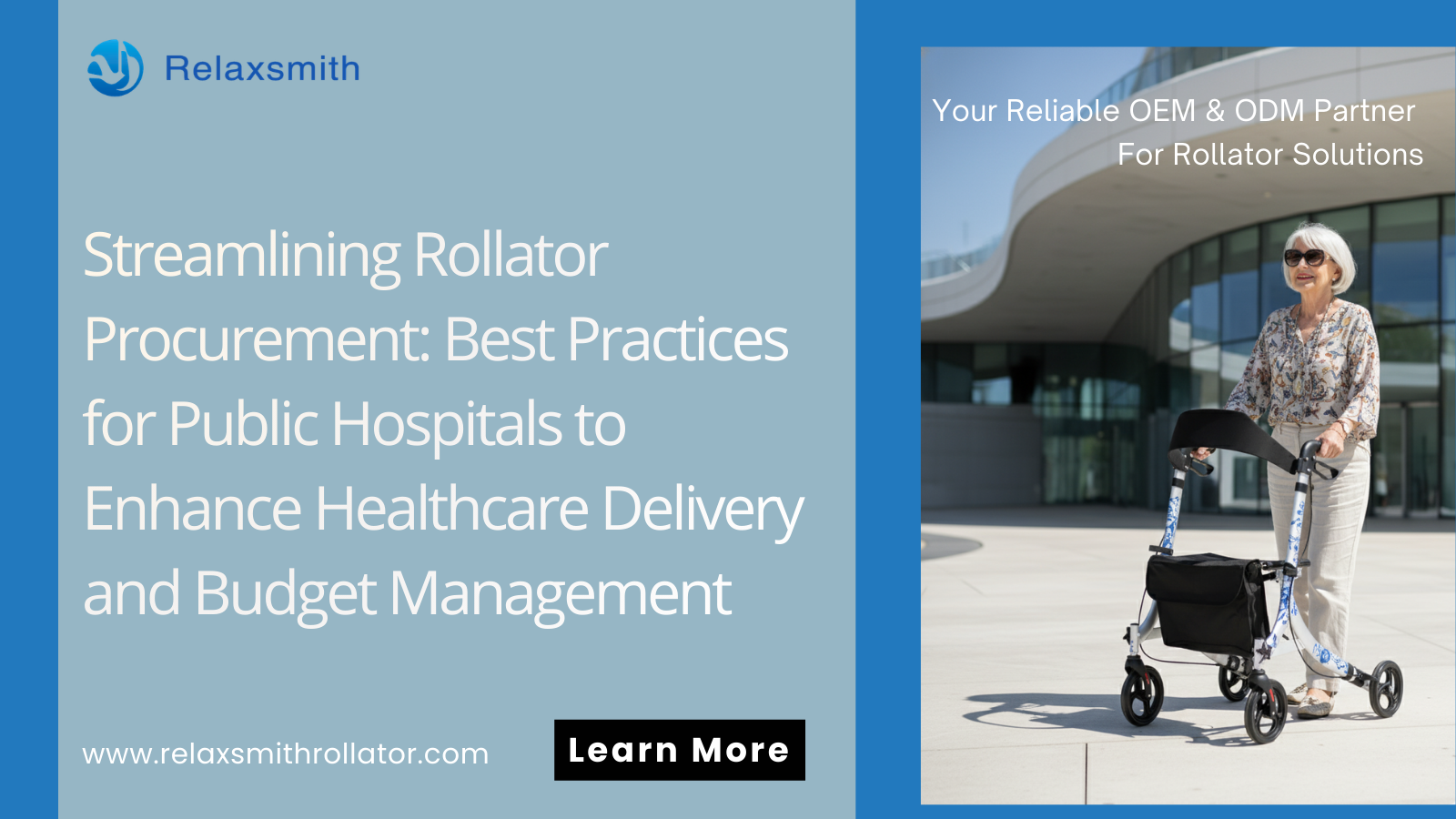
 Streamlining Rollator Procurement: Best Practices for Public Hospitals to Enhance Healthcare Delivery and Budget Management
For public hospitals, managing procurement processes efficiently is crucial for optimizing both healthcare delivery and budget management. Rollators, as essential mobility aids, must be sourced in a way that meets patients' needs while adhering to strict financial constraints. In this article, we explore best practices to streamline rollator procurement for public hospitals, focusing on cost savings, operational efficiency, and improving overall patient care.
Understanding the Procurement Challenges in Public Hospitals
Public hospitals face significant procurement challenges, particularly when sourcing medical equipment like rollators. Budget limitations, competing priorities, and an increasing demand for quality care make it essential to adopt strategies that maximize cost efficiency while maintaining patient outcomes. With rising healthcare costs, procurement managers must navigate the complexities of sourcing durable and reliable rollators without exceeding budgets.
Key challenges include selecting rollators that meet safety and comfort requirements while also being affordable, negotiating with suppliers to secure favorable pricing, and ensuring that the rollators are available when needed. Streamlining procurement processes helps hospitals meet these challenges effectively.
Best Practices for Streamlining Rollator Procurement
To streamline rollator procurement, public hospitals can implement the following best practices:
Standardize Procurement Requirements: By standardizing the models and specifications for rollators, hospitals can simplify the procurement process and reduce the complexity of purchasing decisions. Standardized models also reduce the need for multiple suppliers, streamlining inventory management and facilitating easier maintenance.
Leverage Bulk Purchasing: Bulk purchasing offers significant cost savings. Public hospitals can negotiate discounts by ordering larger quantities of rollators, reducing the overall cost per unit. Additionally, bulk purchasing ensures a consistent supply of rollators, minimizing the risk of shortages and delays.
Negotiate Long-Term Supplier Contracts: Establishing long-term contracts with trusted suppliers can ensure more favorable pricing, predictable supply timelines, and consistent product quality. Long-term partnerships reduce the uncertainty of procurement, creating more stable operations within the healthcare facility.
Utilize Technology for Efficient Procurement: Using procurement software and inventory management tools can help hospitals track stock levels, predict demand, and place timely orders. This technology enhances procurement visibility and enables better decision-making, ultimately improving efficiency.
Improving Healthcare Delivery Through Streamlined Procurement
Streamlining rollator procurement has direct benefits on healthcare delivery. With a well-established procurement process, hospitals can ensure that patients have timely access to the mobility aids they need. By eliminating procurement bottlenecks and ensuring the consistent availability of rollators, healthcare providers can focus more on delivering care rather than managing procurement-related issues.
Moreover, streamlining procurement helps improve patient satisfaction. When rollators are available and meet patient needs for safety, comfort, and functionality, patients experience a higher quality of care. This is especially important for elderly patients or those with mobility impairments who rely heavily on rollators for their daily activities.
Managing Budgets Effectively in Rollator Procurement
In addition to improving healthcare delivery, streamlined rollator procurement plays a critical role in managing hospital budgets. By implementing bulk purchasing, standardizing models, and negotiating favorable supplier agreements, public hospitals can reduce costs associated with procurement while maintaining the quality and availability of mobility aids.
Effective budgeting also involves forecasting demand, adjusting procurement strategies based on patient needs, and making data-driven decisions to avoid overstocking or understocking inventory.
Conclusion
Streamlining rollator procurement is a powerful strategy for public hospitals to enhance healthcare delivery and improve budget management. By adopting best practices such as bulk purchasing, standardizing procurement processes, leveraging technology, and establishing long-term supplier relationships, public hospitals can optimize procurement efficiency while providing high-quality mobility aids to patients.
SEO Keywords
public hospital procurement rollator
rollator procurement best practices
healthcare procurement strategies
cost-effective rollator procurement
bulk rollator procurement
hospital procurement process
patient mobility aids
efficient healthcare procurement
procurement software healthcare
standardized procurement
long-term supplier agreements
healthcare delivery improvement
inventory management for hospitals
hospital budget management
procurement efficiency
rollator suppliers
patient satisfaction healthcare
procurement strategies for public hospitals
cost-saving strategies healthcare
healthcare supply chain management
Tags
For more details, please visit:www.relaxsmithrollator.com


