Modern Concept Carbon Fibre Rollator Walker Lightweight Foldable White Body Black Seat Red Detail Design
Product Introduction
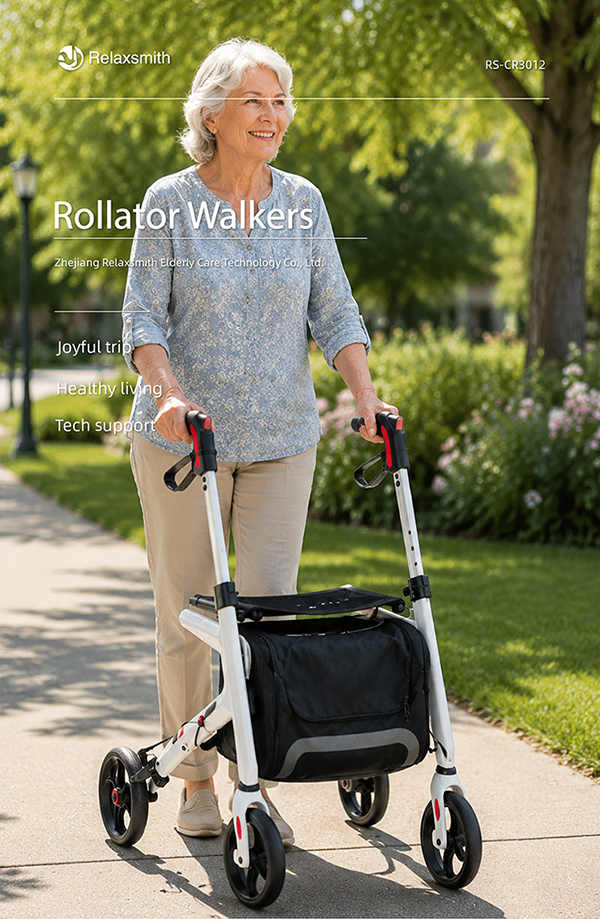
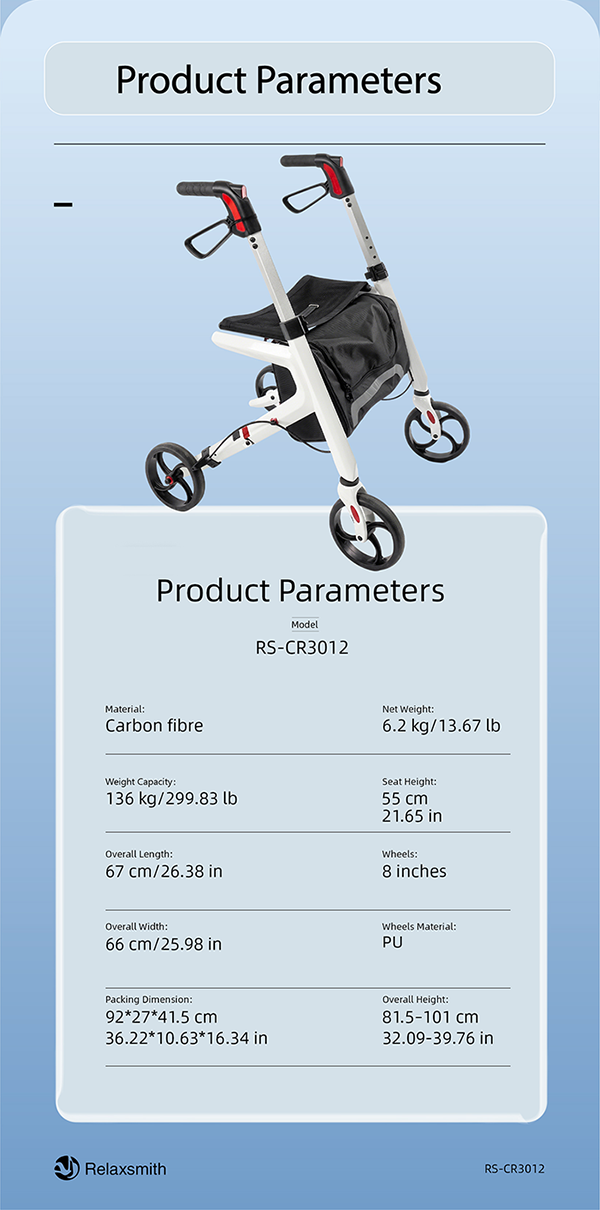
The RS-CR3012 carbon fiber rollator redefines mobility with a perfect fusion of futuristic design and advanced functionality. Featuring a modern grey tone enhanced with striking amber accents, it introduces a new visual language to traditional mobility aids, making it ideal for users who value both performance and aesthetics.
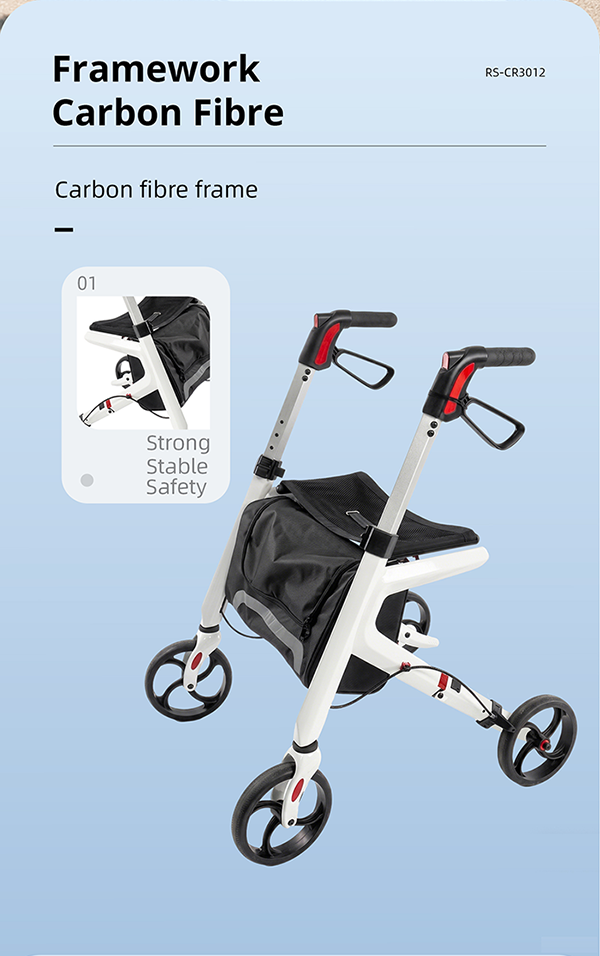
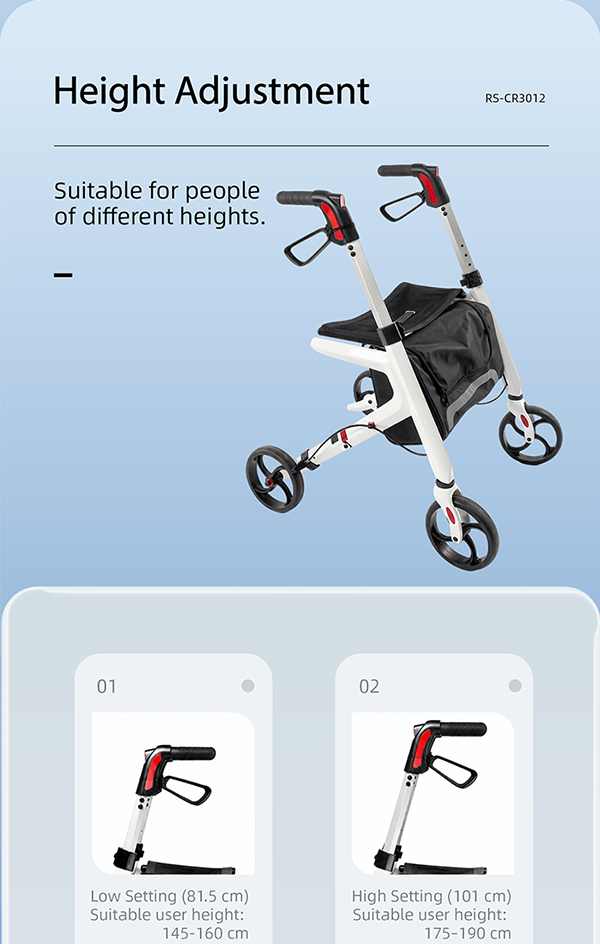
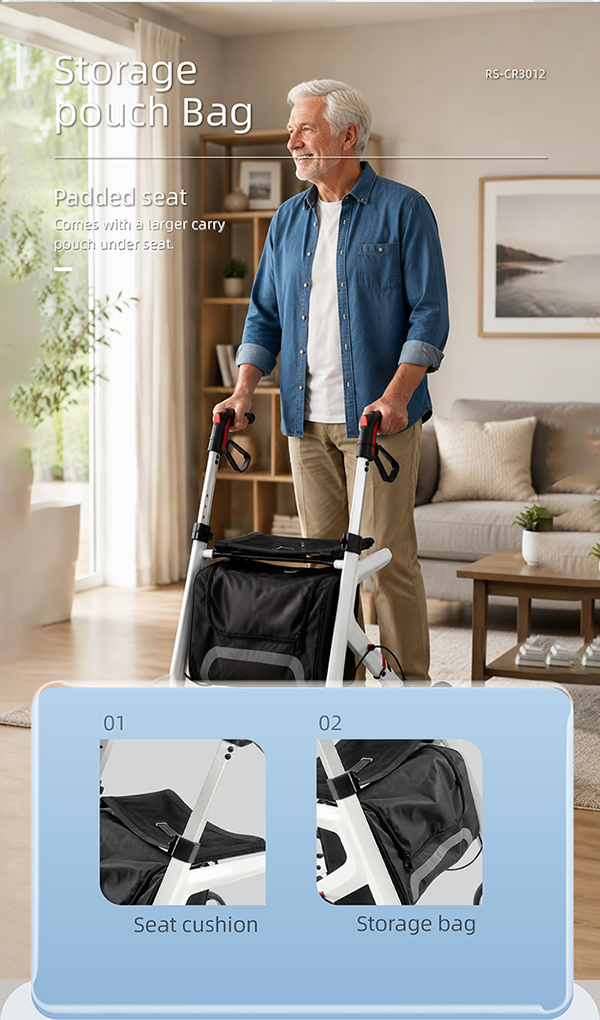
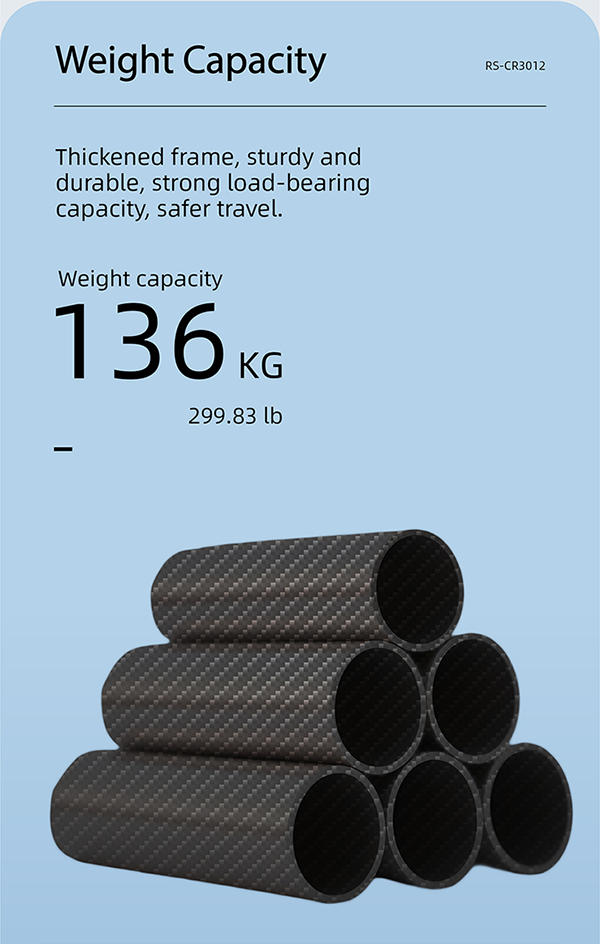
Built with a high-strength carbon fiber frame, this rollator achieves an exceptional balance between durability and lightweight performance. Weighing only 6kg while supporting up to 100kg, it ensures stable, reliable assistance without compromising ease of use. The ergonomic structure includes adjustable handle heights from 85.5 cm to 98 cm, accommodating users of different heights and providing enhanced comfort through every step. A padded seat further allows users to rest conveniently whenever needed.
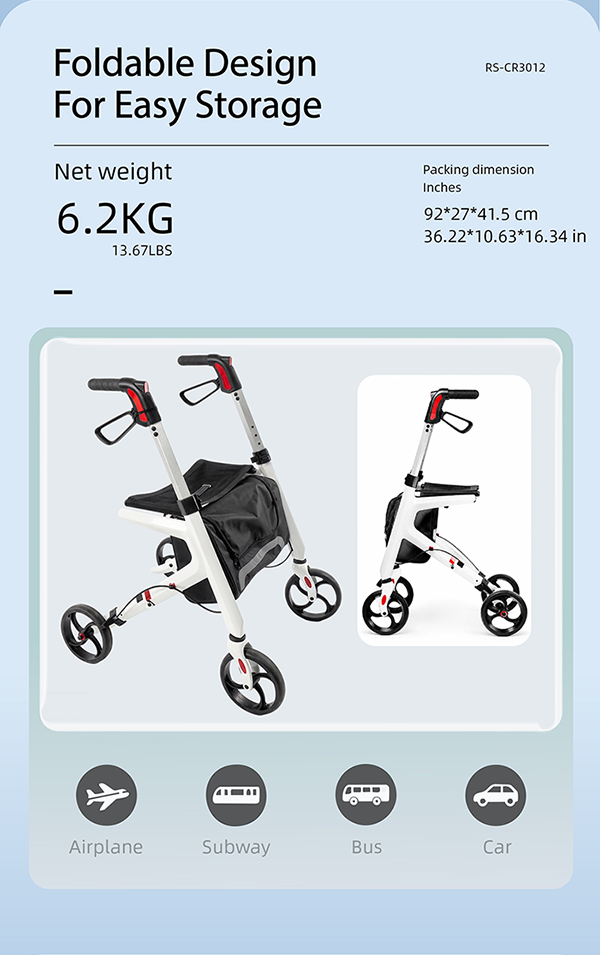
Designed for modern lifestyles, the RS-CR3012 features a compact foldable structure that enables easy storage and transport. Whether traveling by airplane, subway, bus, or car, it offers maximum portability and flexibility for daily use.
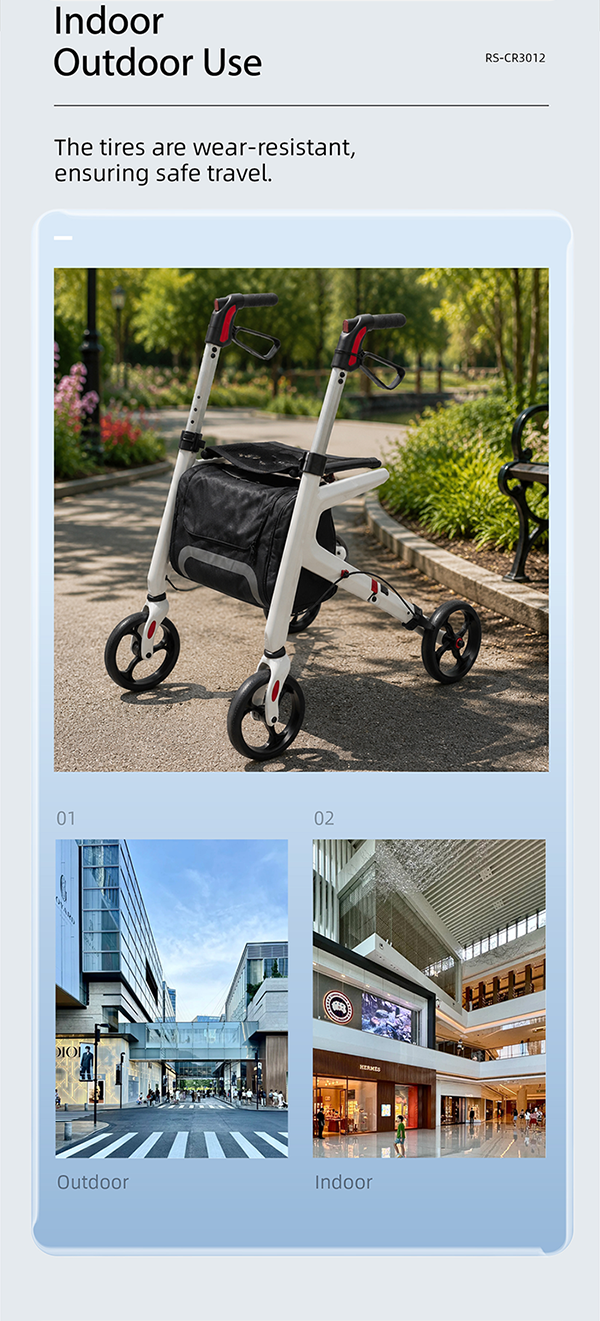
Equipped with 8-inch wear-resistant PU wheels, this rollator delivers smooth and stable performance across both indoor and outdoor environments. From hospitals and rehabilitation centers to shopping malls and outdoor pathways, it ensures safe and effortless mobility.
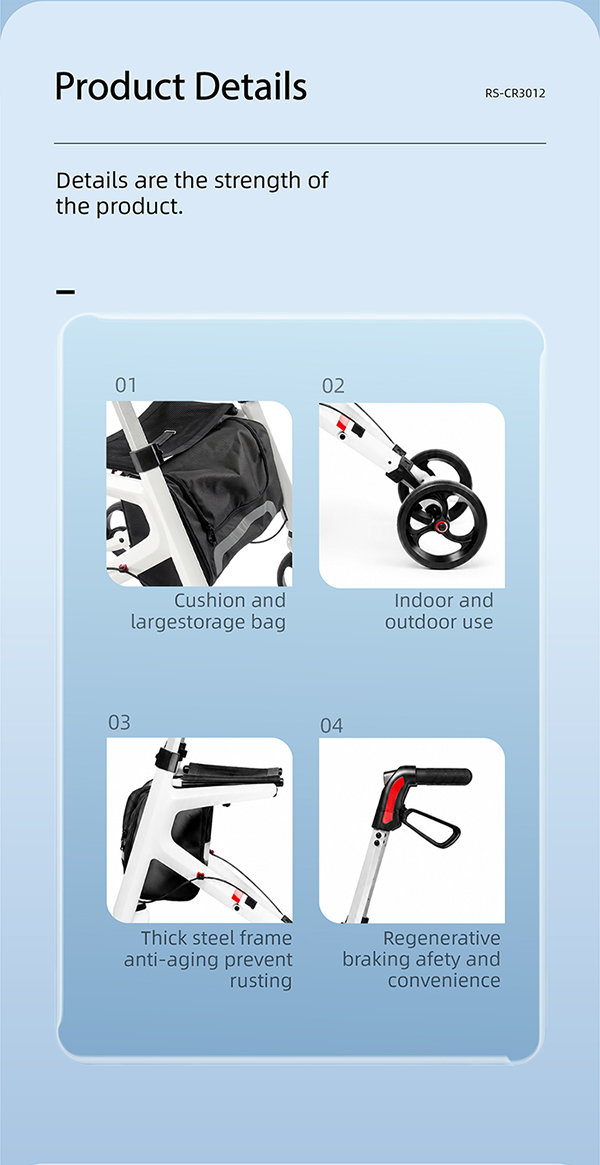
Additional practical features include a spacious under-seat storage bag for carrying personal belongings, along with a responsive braking system that enhances safety and control. Every detail is engineered to improve user convenience while maintaining a premium experience.
More than just a mobility aid, the RS-CR3012 is a statement of innovation. Its concept-inspired design and refined color combination make it a standout product for high-end markets, offering an upgraded solution for distributors, healthcare providers, and modern users seeking both functionality and style.
Key Features
Futuristic Concept Design
Modern grey finish with amber accents, creating a distinctive and premium visual identity.
✔ Carbon Fiber Frame
Ultra-lightweight yet strong structure ensures durability and long-term reliability.
✔ Only 6KG Lightweight
Easy to lift, carry, and transport without compromising stability.
✔ 100KG Load Capacity
Robust construction designed for safe and dependable daily use.
✔ Adjustable Height System
Flexible handle adjustment to suit users of different heights comfortably.
✔ Foldable & Travel-Friendly
Compact folding design for easy storage and convenient transportation.
✔ Indoor & Outdoor Performance
8-inch PU wheels provide smooth mobility across various surfaces.
✔ Comfortable Seating
Padded seat allows users to rest anytime with enhanced comfort.
✔ Large Storage Bag
Spacious under-seat pouch for carrying personal items with ease.
✔ Safe Braking System
Responsive hand brakes ensure better control and enhanced safety.
Q1: Do you offer OEM/ODM services?
A: Sure, we are professionals in OEM and ODM services with a strong team. We offer full services of new design, new development, logo design/print, packaging design, etc. An instruction manual translation service for multiple languages can be done in a very short time.
Q2: Can I get a sample before placing an order?
A: Yes, some samples are available to send immediately after the sample cost and payment are confirmed. If not available, it will take some time to produce specially
Q3: What are your payment terms?
A: T/T, PayPal, L/C, Credit Card, etc. Other payment terms are negotiable.
Q4: What are your packaging terms?
A: Generally, we pack each rollator in a standard exporting carton box with extra-thick material, plus protection materials to make sure safety during transportation. Carton box printing can be customized with a logo and other detailed information.
Q5: How about after-sales service?
A: All rollators are covered by a one-year warranty from the date of receipt. For any quality issues within the warranty period, we provide online technical support. If the issue is caused by a product defect (excluding damage due to improper use), replacement parts or components will be provided. If the problem cannot be resolved, a replacement with a new product can be negotiated.
Q6: What other support do you offer?
A: We understand the diverse needs of our customers and strive to build long-term partnerships. Our professional photography team provides customized photos, videos, and social media materials to support your marketing needs.
Q7: How do you ensure quality?
A: Production is carried out in strict compliance with EU and US international standards. Our QC team conducts inspections at every stage of production to ensure customer requirements are fully met. A final inspection is performed before shipment to guarantee all products match the approved samples. Third-party quality inspections are welcome.
Q8: What is your delivery time?
A: It is generally about 30-45 days, depending on the quantity and customized requirements. If urgent orders, we can help with special priority.