Bedridden seniors represent one of the most clinically sensitive groups in elderly care. Whether due to stroke, advanced illness, post-surgical recovery, or severe frailty, prolonged immobility significantly increases risks such as pressure injuries, muscle atrophy, joint stiffness, and complications during transfers. According to clinical data from long-term care research, pressure ulcers affect up to 20–30% of bedridden patients in institutional settings, making prevention and safe handling a top priority in caregiving systems.
A caregiver shared a common experience:
"The most difficult part wasn’t just moving my father—it was worrying about hurting his skin or causing pain every time we repositioned him."
This reflects a key challenge in bedridden care: mobility support is not about walking anymore—it is about safe transfers, pressure management, and continuous protection.
Key Challenges Faced by Bedridden Seniors
Bedridden patients experience multiple interconnected risks that require specialized solutions:
Loss of independent movement
Extended immobility reduces the ability to change position, increasing dependency on caregivers for even minor adjustments.
High risk of pressure injuries (bedsores)
Continuous pressure on bony areas restricts blood circulation, leading to skin breakdown and wounds that are difficult to heal.
Muscle and joint deterioration
Lack of movement accelerates muscle wasting and joint stiffness, further reducing recovery potential.
Caregiver physical strain
Manual lifting and repositioning significantly increase risk of back injury for caregivers, especially without assistive devices.
Emotional and psychological stress
Both patients and caregivers often experience anxiety due to fear of injury during transfers.
Why Standard Mobility Solutions Are Not Enough
Conventional mobility aids like walkers or basic wheelchairs are not designed for bedridden care needs. Their limitations include:
· Lack of safe horizontal transfer support
· No pressure redistribution system for prolonged bed rest
· High dependency on manual lifting
· Limited adjustability for different care scenarios
· Increased risk during repositioning without mechanical assistance
A rehabilitation nurse explained it clearly:
"In bedridden care, the challenge is not walking—it is safe movement within the bed and safe transfer out of it. Standard mobility aids do not solve this problem."
Key Mobility Solutions for Bedridden Seniors
Selecting the right assistive devices requires focusing on three core areas: transfer safety, pressure protection, and caregiver support.
Transfer assistance systems
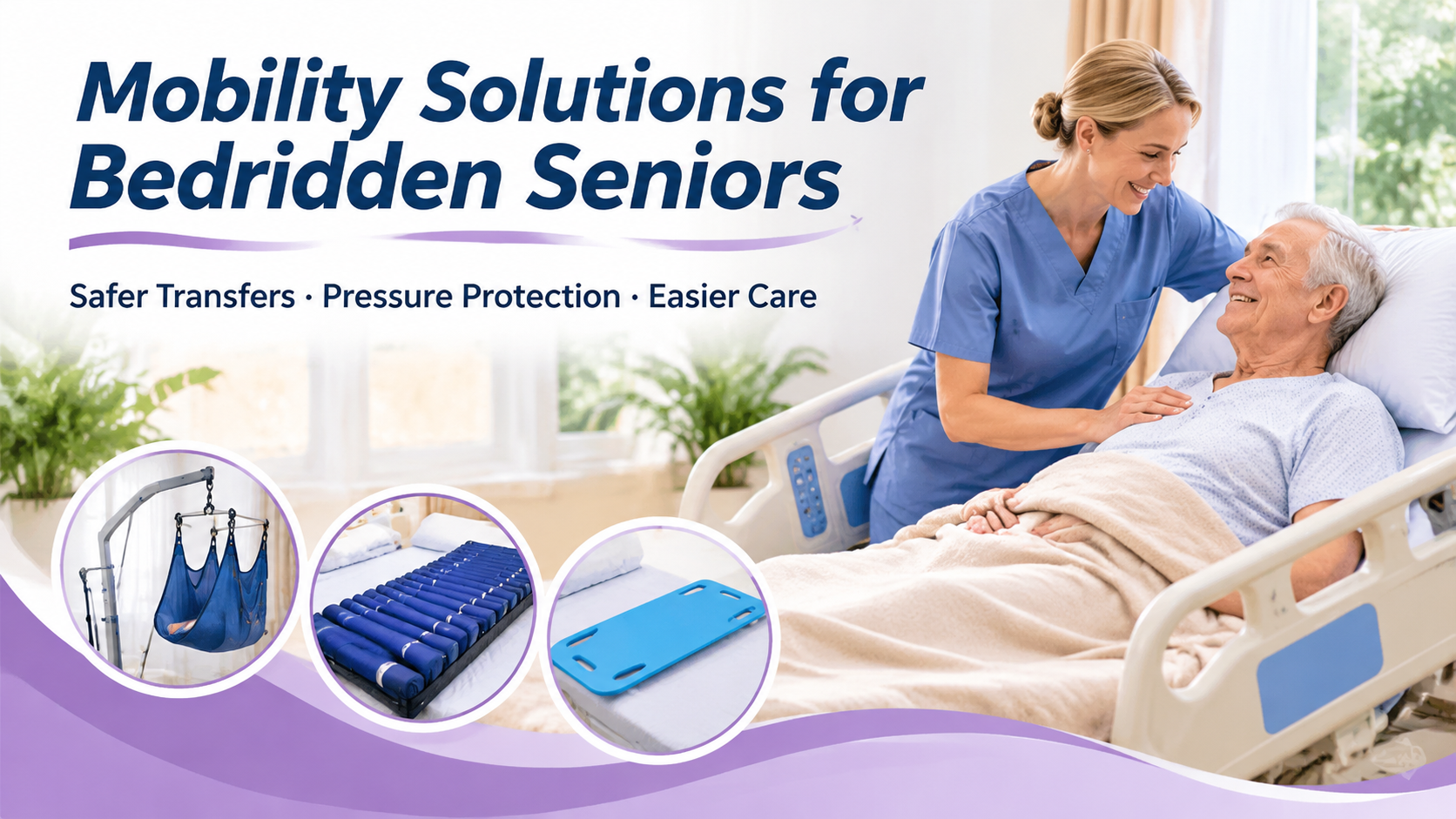
Devices such as transfer boards, patient lift systems, or sliding sheets help reduce manual lifting. These tools distribute body weight more evenly, reducing strain on caregivers while improving patient safety.
Pressure relief mattresses
Alternating pressure mattresses, foam overlays, or gel-based systems help redistribute body weight and reduce long-term pressure on vulnerable areas. These systems are widely used in clinical settings to help prevent pressure ulcers.
Adjustable positioning beds
Electric or semi-electric beds allow controlled adjustments of head and leg elevation. This supports circulation, reduces pressure concentration, and improves comfort.
Side rail and safety systems
Bed rails and locking mechanisms help prevent accidental falls and provide stability during repositioning.
Skin-friendly materials and breathable surfaces
Moisture-wicking and low-friction materials reduce skin irritation and support long-term skin integrity.
Modular and easy-to-clean design
In long-term care environments, hygiene is critical. Equipment that can be easily cleaned and maintained reduces infection risk and improves operational efficiency.
Real-World Observations from Care Settings
Caregivers and clinical staff consistently report measurable improvements when appropriate assistive systems are used:
· "After introducing a transfer board, we reduced physical strain during repositioning significantly," reported a home caregiver.
· Nurses in long-term care facilities observed fewer pressure-related complications when alternating pressure mattresses were properly implemented.
· Patients demonstrated improved comfort and reduced agitation when repositioning was performed with smoother, supported transfer systems.
These observations reinforce an important principle: proper equipment directly impacts both patient safety and caregiver well-being.
Clinical and Procurement Considerations
For hospitals, rehabilitation centers, and home care systems, selecting bedridden care equipment should focus on:
Safety in transfers
Mechanical or semi-mechanical transfer systems reduce risk during movement between bed, chair, and wheelchair.
Pressure injury prevention capability
Mattress systems should match patient risk level and usage duration.
Ease of caregiver operation
Devices must reduce physical strain and simplify repositioning workflows.
Adjustability and compatibility
Equipment should adapt to different patient sizes, conditions, and care environments.
Hygiene and maintenance
Materials must support frequent cleaning and infection control standards.
A clinical procurement specialist summarized it simply:
"In bedridden care, equipment is not optional support—it is a core part of patient safety infrastructure."
Summary
Choosing mobility aids for bedridden seniors is fundamentally about safe transfers, pressure management, and long-term skin protection rather than walking assistance. Effective solutions combine:
· Transfer assistance systems
· Pressure-relief surfaces
· Adjustable positioning beds
· Safety rails and stabilization systems
· Hygienic and caregiver-friendly design
When these systems work together, they significantly reduce complications and improve quality of care.
A senior care nurse summarized it best:
"The right tools don’t just make care easier—they make care safer for both the patient and the caregiver."
For more information about Mobility rollator solutions, feel free to contact us:
🌐 Learn more: www.RelaxsmithRollator.com
📱 WhatsApp / Wechat: +86 1781 6801 959
📧 Email: relaxsmith@smartelderlycare.com