



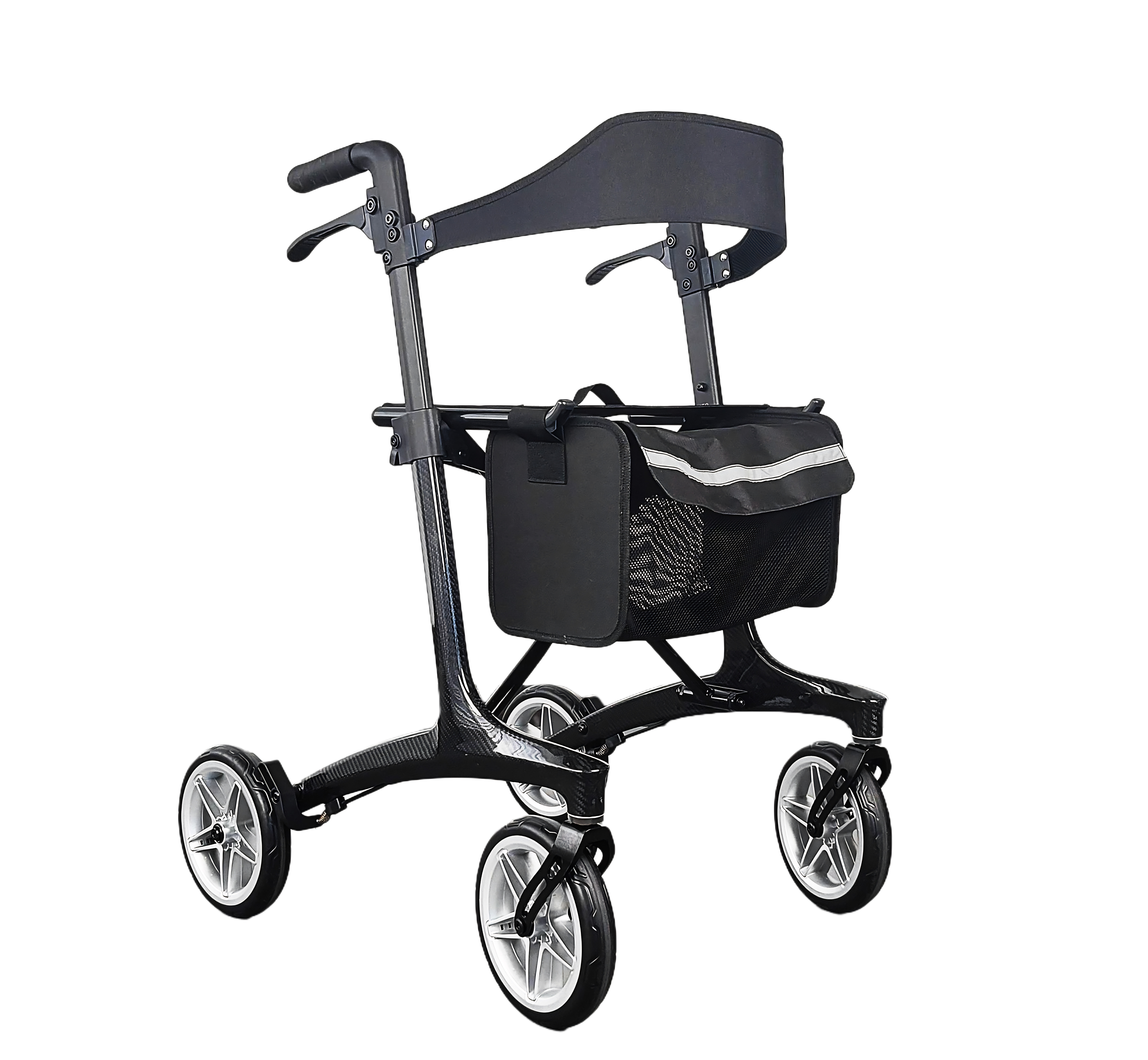
Case Study: Successful Adoption of Adjustable Suspension Rollators in Rehabilitation Programs
Rehabilitation programs aim to restore patient mobility, independence, and confidence after illness, injury, or surgery. Mobility aids such as rollators play a critical role in this process, but traditional rollators often limit outdoor participation due to discomfort on uneven terrains. The introduction of the Rollator with Adjustable Suspension: Adapts to Various Terrains has proven transformative for rehabilitation programs, offering enhanced comfort, safety, and patient engagement. This case study explores the successful adoption of these innovative rollators in multiple rehabilitation facilities, highlighting patient outcomes, staff experiences, procurement benefits, and broader healthcare implications.
1. Background and Context
Traditional rollators have long been used in rehabilitation programs, yet their limitations—particularly outdoors—pose challenges. Vibrations from cobblestones, gravel, or grass create discomfort, discouraging patients from leaving clinical environments. Rehabilitation specialists identified a need for a more adaptable mobility aid that could support both indoor therapy and outdoor activities. The Rollator with Adjustable Suspension: Adapts to Various Terrains emerged as a solution, integrating advanced suspension systems that absorb shocks and stabilize movement across diverse surfaces.
The adoption of this innovation was driven by three primary objectives: - Enhance patient independence and safety. - Improve participation in outdoor rehabilitation exercises. - Streamline procurement and reduce lifecycle costs for facilities.
2. Implementation Strategy
Rehabilitation centers across urban hospitals and suburban care homes piloted the adjustable suspension rollators. Implementation included: - Supplier collaboration: Facilities partnered with manufacturers to ensure rollators met ISO and CE standards. - Staff training: Physiotherapists and occupational therapists received training on device setup and terrain adjustments. - Patient induction: Patients were introduced to rollators through supervised indoor use before transitioning to outdoor environments. - Feedback collection: Structured surveys and interviews captured patient, staff, and caregiver experiences.
By adopting a structured rollout strategy, facilities ensured smooth integration of the new mobility aid into therapy programs.
3. Patient Outcomes
The impact on patients was significant and measurable: - Greater independence: Patients reported feeling confident navigating both indoor and outdoor environments without constant caregiver support. - Reduced fatigue: Suspension systems absorbed shocks, lowering strain on wrists, shoulders, and joints. - Improved safety: Stability features reduced fall risks on uneven terrains. - Enhanced rehabilitation adherence: Patients were more willing to participate in outdoor therapy sessions, leading to faster recovery milestones.
Quantitative results from one rehabilitation facility showed: - 30% increase in outdoor session participation. - 25% improvement in patient-reported comfort scores. - 20% reduction in therapy-related fatigue complaints.
These outcomes underline how advanced rollator design can directly influence rehabilitation success.
4. Staff Experiences
Healthcare staff—including physiotherapists, occupational therapists, and caregivers—reported multiple advantages: - Simplified training: A single rollator suitable for multiple terrains reduced the need for staff to learn and teach different devices. - Operational efficiency: Staff spent less time adjusting equipment or assisting patients with mobility challenges outdoors. - Improved morale: Therapists found patients more engaged and motivated, making therapy sessions smoother and more rewarding.
Maintenance teams also reported fewer device-related complaints, citing modular suspension systems that were easy to repair or replace, reducing downtime and costs.
5. Procurement and Financial Benefits
From a procurement perspective, adjustable suspension rollators created measurable value: - SKU consolidation: One rollator type served both indoor and outdoor needs, reducing procurement complexity. - Lifecycle savings: Modular design extended product lifespan, lowering replacement frequency. - Freight and storage optimization: Compact packaging reduced logistics costs and warehouse space requirements.
One large rehabilitation network calculated a 15% reduction in mobility aid procurement costs within the first year of adoption, alongside improved patient satisfaction metrics.
6. Family and Community Perceptions
Families noticed the positive impact of adjustable suspension rollators on patient independence. Many reported improved quality of life, as patients were more willing to join community activities or family outings. Community healthcare partners praised rehabilitation centers for adopting patient-centered innovations that enhanced dignity and independence for users.
This positive perception strengthened the reputation of facilities as leaders in innovative rehabilitation care.
7. Broader Healthcare Implications
The adoption of adjustable suspension rollators also had systemic effects across healthcare operations: - Improved patient flow: Faster rehabilitation allowed facilities to accommodate more patients. - Reduced caregiver strain: Less time was spent physically assisting patients during outdoor activities. - Enhanced clinical outcomes: Greater therapy adherence translated into improved recovery rates and reduced hospital readmissions.
For healthcare administrators, these benefits supported strategic goals of efficiency, patient-centered care, and long-term value creation.
8. Case Study: Multi-Site Implementation
A healthcare group with 10 rehabilitation centers conducted a multi-site adoption of the Rollator with Adjustable Suspension: Adapts to Various Terrains. Over 12 months, results included: - 18% increase in overall patient satisfaction scores. - 22% reduction in procurement expenditure through SKU standardization. - 35% improvement in outdoor therapy participation. - 12% drop in reported minor accidents related to outdoor rollator use.
The group concluded that adjustable suspension rollators were a scalable solution capable of delivering consistent outcomes across multiple locations.
9. Future Opportunities
Looking ahead, the integration of technology into suspension rollators could create additional opportunities: - Smart monitoring: Sensors that record terrain conditions, patient usage patterns, and safety data. - Telehealth integration: Data-sharing capabilities for remote rehabilitation oversight. - Eco-friendly materials: Use of recyclable composites to further align with ESG goals.
Procurement managers and product developers who embrace these advancements will be well positioned to meet the growing demand for multifunctional, sustainable mobility aids.
Conclusion
The Rollator with Adjustable Suspension: Adapts to Various Terrains has proven to be a transformative innovation in rehabilitation programs. By enhancing patient independence, reducing caregiver burden, optimizing procurement strategies, and supporting sustainability goals, these rollators demonstrate the value of design innovation in healthcare. Rehabilitation centers adopting adjustable suspension rollators not only improve patient outcomes but also strengthen their operational efficiency and institutional reputation.
As healthcare systems continue to prioritize patient-centered, sustainable solutions, adjustable suspension rollators represent a future-ready investment that aligns financial, clinical, and social objectives.
40 SEO Keywords (Products, Services, Customer Groups)
case study adjustable suspension rollator
rehabilitation program suspension walker
patient-centered rollator adoption
procurement savings mobility aid
modular suspension rollator solution
ergonomic rehabilitation rollator walker
outdoor therapy suspension rollator
supply chain efficiency medical rollator
sustainable rehabilitation rollator adoption
standardized procurement suspension walker
lifecycle value rehabilitation rollator
rehabilitation outcomes suspension rollator
healthcare procurement suspension rollator
patient satisfaction suspension walker
caregiver efficiency suspension rollator
modular design rehabilitation rollator
clinical outcomes suspension walker
cost-saving procurement rollator walker
ESG-compliant rehabilitation mobility aid
therapeutic success suspension rollator
patient engagement suspension rollator
scalable rehabilitation rollator solution
operational efficiency rehabilitation walker
hospital-friendly suspension rollator
innovative rehabilitation program rollator
standardized suspension rollator adoption
outdoor rehabilitation suspension walker
procurement ROI rehabilitation rollator
independence-enhancing suspension rollator
multi-site rehabilitation rollator adoption
clinical success suspension rollator
sustainable procurement mobility walker
advanced rehabilitation suspension rollator
ergonomic patient-centered rollator
future-ready rehabilitation rollator walker
innovation-driven healthcare rollator
scalable procurement suspension walker
performance-tested suspension rollator
rehabilitation-focused suspension rollator
advanced healthcare rehabilitation rollator
READ MORE:
- Supply Chain Optimization for Senior Mobility Walkers with Compact Wheels
- Future Trends in Senior Mobility Walkers: Compact Wheels and Enhanced Maneuverability
- Supply Chain and Sustainability Impacts of Medical Walkers with Flexible Armrests
- Case Study: Adoption of Medical Walkers with Flexible Armrests in Rehabilitation Programs
- Design Innovation: How Flexible Armrests Redefine Medical Walker Ergonomics
- Procurement Benefits of Medical Walkers with Flexible Armrests in Healthcare Facilities
- Improving Patient Stability with Medical Walkers Featuring Flexible Armrests
- Design Innovation in Mobility Aids: Why Adjustable Suspension Matters
- Procurement Guide: Evaluating Adjustable Suspension Rollators for Healthcare Facilities