



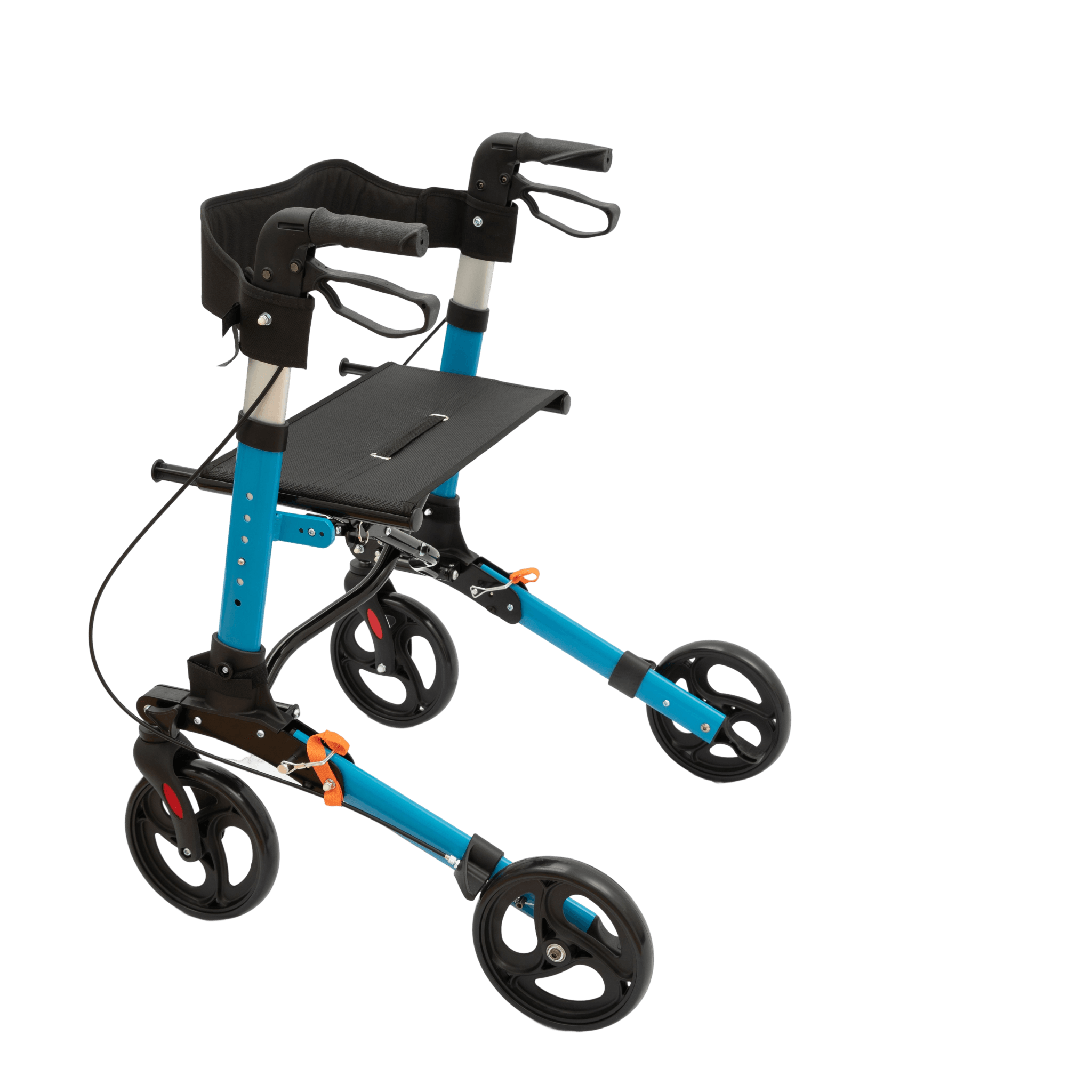
Improving Patient Stability with Medical Walkers Featuring Flexible Armrests
Mobility aids are central to enhancing independence and safety for patients recovering from surgery, managing chronic conditions, or living with age-related mobility challenges. Traditional walkers often fall short in providing adequate upper body support, especially for patients who experience fatigue, muscle weakness, or limited arm strength. The Medical Walker with Flexible Armrests: Provides Extra Support addresses these gaps, offering innovative solutions for both patients and healthcare facilities. This article explores how flexible armrests improve stability, patient confidence, and overall rehabilitation outcomes.
1. The Challenge of Stability in Mobility Aids
Many patients rely on walkers to maintain independence, but standard designs with rigid handgrips place significant stress on wrists and shoulders. Over time, this can lead to discomfort, reduced endurance, and in some cases, abandonment of the device. Lack of upper body support also increases fall risks, particularly when navigating uneven surfaces or prolonged walking sessions. These issues highlight the need for innovations that provide additional stability and comfort.
2. Role of Flexible Armrests
The Medical Walker with Flexible Armrests: Provides Extra Support is designed with ergonomically positioned, cushioned armrests that adjust to patient posture and movement. Unlike rigid handles, flexible armrests distribute weight evenly across forearms, reducing localized strain on joints. This design creates three major advantages: - Extra stability: By extending support from wrists to forearms, the walker minimizes fall risks. - Improved posture: Patients maintain a more natural upright stance, aiding in respiratory health and balance. - Reduced fatigue: Even distribution of weight decreases muscle strain, enabling longer mobility sessions.
3. Benefits for Patients
Patients using walkers with flexible armrests report significant improvements in daily life: - Greater confidence: Enhanced stability reduces anxiety about falls. - Increased independence: Patients can navigate both clinical and home environments with less caregiver assistance. - Comfort and endurance: Longer walking sessions improve cardiovascular fitness and support rehabilitation goals.
For seniors, post-operative patients, and individuals with neurological conditions, these benefits directly translate to better health outcomes and higher quality of life.
4. Value for Rehabilitation Programs
Rehabilitation programs rely on patient engagement and consistency. Flexible armrests support: - Therapy adherence: Patients are more likely to complete prescribed walking exercises. - Customizable training: Armrest adjustments allow physiotherapists to tailor support to individual patient needs. - Reduced dropout rates: Comfortable, safe devices encourage sustained rehabilitation participation.
Clinical case studies show that introducing walkers with flexible armrests increases patient compliance by up to 20%, leading to faster recovery milestones.
5. Procurement and Facility Benefits
For healthcare procurement managers, the Medical Walker with Flexible Armrests: Provides Extra Support represents both clinical and operational value: - Standardization: One device serves a wide range of patients with different needs. - Durability: Reinforced frames and modular armrest components extend product lifespan. - Cost-effectiveness: Reduced patient falls and higher therapy adherence lower long-term healthcare costs.
Facilities adopting these walkers also report fewer equipment returns, higher patient satisfaction scores, and better alignment with patient-centered care strategies.
6. Future Implications
The innovation of flexible armrests reflects a broader trend toward ergonomic, multifunctional mobility aids. Future developments may integrate smart sensors to track patient posture and endurance or eco-friendly materials to meet sustainability goals. Procurement teams that embrace such innovations position their facilities at the forefront of patient-centered rehabilitation and sustainable healthcare delivery.
Conclusion
The Medical Walker with Flexible Armrests: Provides Extra Support represents a major advancement in mobility aid design. By addressing stability, posture, and comfort, these walkers empower patients to walk with confidence, reduce caregiver dependence, and achieve better rehabilitation outcomes. For healthcare providers and procurement professionals, adopting walkers with flexible armrests is a strategic decision that balances clinical value with operational efficiency.
40 SEO Keywords (Products, Services, Customer Groups)
medical walker with flexible armrests
extra support rehabilitation walker
patient stability flexible armrest walker
ergonomic design medical walker
procurement strategy rehabilitation walker
rehabilitation compliance mobility aid
patient-centered medical walker design
caregiver-friendly flexible walker
adjustable armrest walker solution
durable rehabilitation walker with support
healthcare procurement flexible walker
patient independence medical walker
clinical outcomes flexible armrest walker
sustainable medical walker innovation
modular rehabilitation walker solution
rehabilitation adherence medical walker
ergonomic patient mobility walker
procurement lifecycle medical walker
adjustable support rehabilitation walker
patient-centered care flexible walker
innovative rehabilitation walker design
enhanced stability patient walker
caregiver workload reduction walker
sustainable procurement mobility aid
resilient healthcare rehabilitation walker
posture-improving flexible walker
standardized medical walker procurement
modular spare parts medical walker
rehabilitation therapy walker solution
independence-enhancing medical walker
comfort-focused rehabilitation walker
procurement ROI medical walker
ergonomic rehabilitation walker adoption
patient satisfaction mobility aid
hospital-friendly flexible walker design
innovative healthcare rehabilitation walker
staff training efficient medical walker
operational efficiency rehabilitation walker
eco-friendly flexible medical walker
advanced patient-centered walker solution
READ MORE:
- Supply Chain Optimization for Senior Mobility Walkers with Compact Wheels
- Future Trends in Senior Mobility Walkers: Compact Wheels and Enhanced Maneuverability
- Supply Chain and Sustainability Impacts of Medical Walkers with Flexible Armrests
- Case Study: Adoption of Medical Walkers with Flexible Armrests in Rehabilitation Programs
- Design Innovation: How Flexible Armrests Redefine Medical Walker Ergonomics
- Procurement Benefits of Medical Walkers with Flexible Armrests in Healthcare Facilities
- Case Study: Successful Adoption of Adjustable Suspension Rollators in Rehabilitation Programs
- Design Innovation in Mobility Aids: Why Adjustable Suspension Matters
- Procurement Guide: Evaluating Adjustable Suspension Rollators for Healthcare Facilities