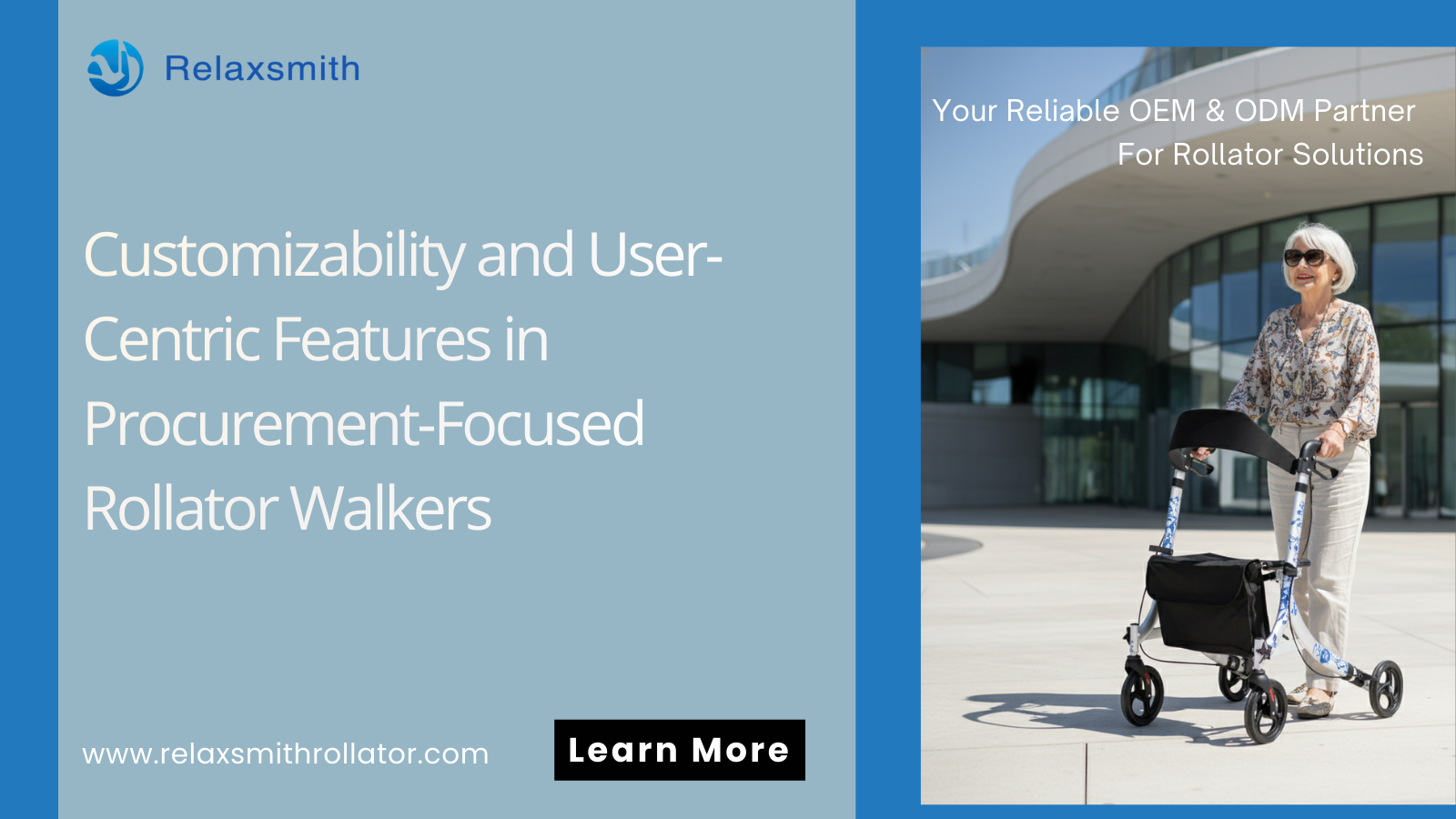
Customizability and User-Centric Features in Procurement-Focused Rollator Walkers
Institutional buyers and GPOs are increasingly prioritizing user-centric features and customizability in their procurement-focused rollator walker decisions. The needs of end-users—ranging from patients in rehabilitation to long-term care residents—drive new standards for procurement and product evaluation. This article explores how adjustable, tailored, and ergonomic features enhance value and outcomes for all stakeholders.
Adjustability for Diverse Patient Needs
Height-adjustable handles, customizable backrests, and interchangeable accessories empower procurement managers to select rollator walkers that serve a broader range of users. Adjustable features accommodate variations in user height, mobility limitations, and clinical requirements, reducing the risk of improper fit and associated injury.
Ergonomic Design Elements
Procurement-focused rollator walker products must offer ergonomic grips, padded seating, and smooth rolling wheels. These elements directly impact user comfort and safety, particularly for elderly or rehabilitating patients. User feedback and clinical input should drive supplier product development and selection criteria.
Patient Engagement and Empowerment
Patients are more likely to comply with mobility aid use when they are involved in the product selection process. Institutions that provide choice in colors, accessories, and seating configurations see higher user satisfaction. Procurement teams should partner with suppliers that embrace co-design and user participation in product development.
Support for Clinical and Operational Staff
Customizable rollator walkers can streamline operations for clinical and maintenance staff. Modular designs and easy-to-replace parts simplify repairs, cleaning, and stock management. Procurement decisions that prioritize user-centric features deliver ongoing operational benefits in addition to better patient outcomes.
Outcome Measurement and Continuous Improvement
Gathering post-procurement feedback from users and clinical teams enables organizations to refine their procurement-focused rollator walker selection criteria over time. Suppliers who offer analytics dashboards or regular review meetings contribute to a continuous improvement cycle, ensuring ongoing alignment with user needs.
Summary
For institutional buyers and GPOs, prioritizing customizability and user-centric features in procurement-focused rollator walkers elevates patient satisfaction, safety, and operational performance. Adopting a collaborative, feedback-driven approach to product selection will create lasting value for both organizations and their patients.
SEO Keywords
| customizable rollator walker | user-centric mobility aids |
| adjustable walker handles | ergonomic rollator design |
| clinical input procurement | patient feedback walker |
| procurement modular walker | accessory options rollator |
| padded seat walker | interchangeable walker parts |
| co-design mobility aid | color choice rollator |
| analytics dashboard walker | continuous improvement procurement |
| modular maintenance walker | clinical outcome rollator |
| user engagement procurement | supplier feedback loop |
| institutional custom walker | operational efficiency mobility |
| procurement user satisfaction | rollator configuration |
| mobility aid patient outcome | staff workflow walker |
| feedback-driven procurement | procurement analytics |
| ergonomic accessory walker | clinical staff rollator |
| mobility aid procurement improvement | user participation walker |
Tags
| customizability | user-centric |
| adjustable walker | ergonomic design |
| clinical input | modular parts |
| co-design | patient engagement |
| analytics | feedback loop |
| operational efficiency | continuous improvement |
| staff workflow | accessory options |
| padded seat | color choice |
| institutional procurement | mobility aid |
| procurement manager | GPO |
For more details, please visit: www.relaxsmithrollator.com