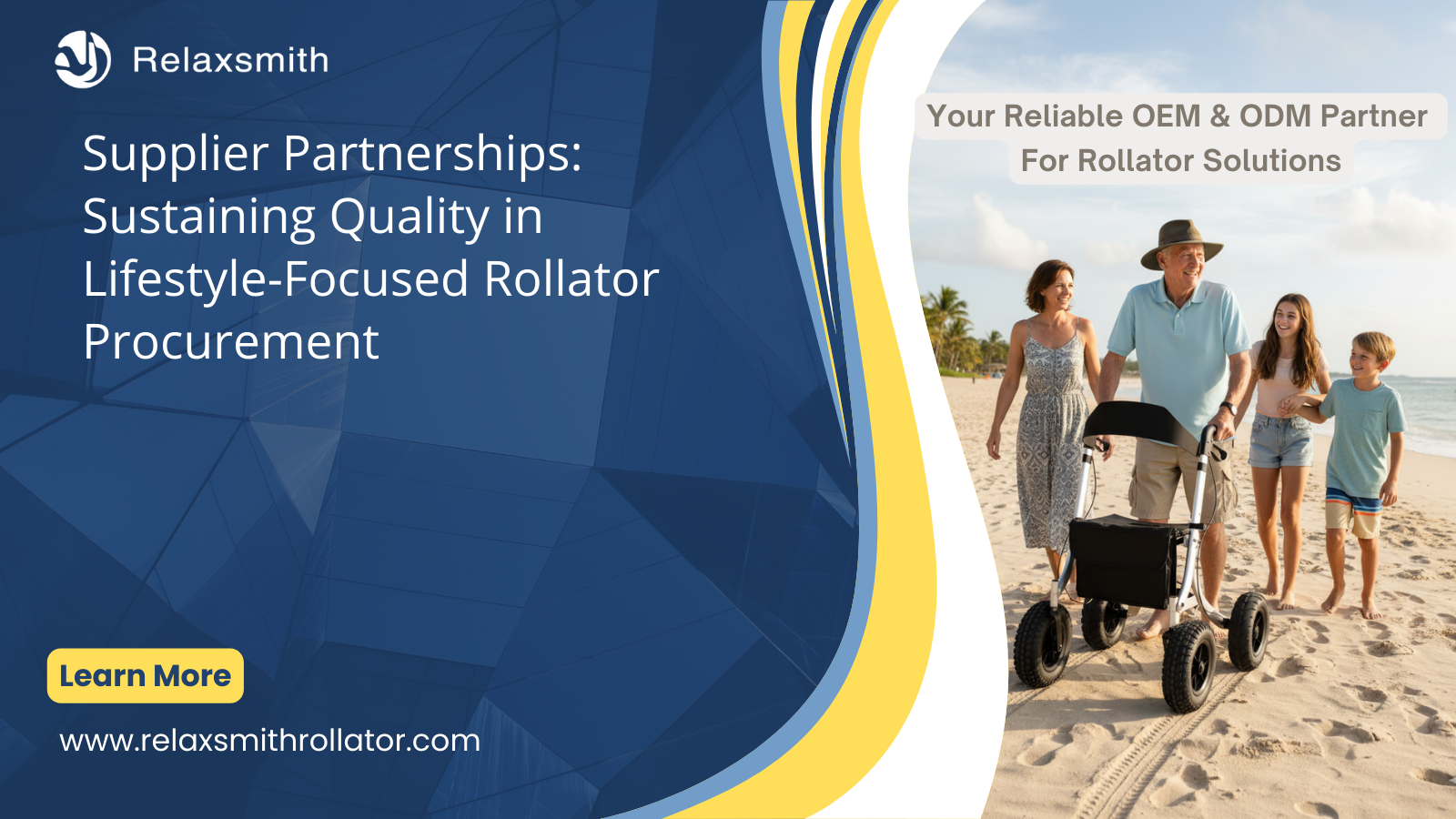
Evaluating Safety & Compliance Features for Procurement-Focused Rollator Walkers
For institutional buyers and Group Purchasing Organizations (GPOs), the procurement of rollator walkers is not just about price, but more critically, about the safety and compliance standards that these mobility aids must meet. As the global population ages and healthcare demands increase, choosing the right procurement-focused rollator walker can significantly impact both patient safety and organizational liability.
Understanding Safety Standards
Regulatory bodies such as the FDA and ISO establish stringent requirements for medical mobility equipment. Procurement-focused rollator walker products must adhere to these standards to ensure user protection. When evaluating suppliers, institutional buyers should demand clear certification documentation, such as ISO 11199 or FDA registration, and ask for regular product testing results to mitigate risk. Procurement-focused rollator walker models with enhanced stability, secure locking mechanisms, and high-visibility brakes reduce the potential for patient falls, which is a top concern in long-term care settings.
Key Compliance Features
Compliance is not only a legal requirement but also a foundation for trust between institutions and their suppliers. Features such as anti-tip technology, load-bearing certifications, and ergonomic hand grips must be part of every procurement-focused rollator walker assessment. Buyers should document vendor compliance with standards including the Americans with Disabilities Act (ADA) and ensure that walkers can accommodate various patient needs.
Training & Documentation
Procurement teams should ensure that every rollator walker order comes with clear user instructions, multilingual guides, and maintenance schedules. Training resources for staff not only improve safety but also increase operational efficiency.
Vendor Auditing and Traceability
For long-term contracts, regular supplier audits and batch traceability must be in place. Institutional buyers should require batch numbers, recall support, and transparent incident reporting as standard. This reduces liability and increases confidence in the product supply chain.
Cost Optimization While Prioritizing Safety
Balancing cost with safety is a challenge for procurement managers. Volume purchasing, contract negotiations, and competitive bidding can reduce costs, but must not compromise compliance or safety. Many procurement-focused rollator walker suppliers offer tiered pricing without reducing product quality—buyers should always compare lifecycle costs, warranty coverage, and post-purchase support.
Summary
In summary, the most crucial features for institutional procurement of rollator walkers include regulatory compliance, enhanced safety mechanisms, clear user instructions, and vendor transparency. By prioritizing these aspects, organizations not only safeguard their users but also streamline operational processes and reduce long-term costs.
SEO Keywords
| rollator walker procurement | GPO rollator features |
| medical walker safety | ADA compliant rollator |
| ISO certified walker | healthcare rollator standards |
| FDA approved rollator | institutional rollator selection |
| compliance walker supplier | procurement mobility aid |
| stable rollator design | long-term care walker |
| rollator audit trail | mobility product liability |
| batch traceability walker | rollator warranty support |
| procurement safety checklist | group purchasing walker |
| high-visibility walker brakes | vendor compliance rollator |
| anti-tip walker | load-bearing rollator |
| ergonomic rollator handles | multilingual user guide |
| training resources rollator | volume purchase rollator |
| contract walker pricing | lifecycle cost rollator |
| post-purchase walker support | institutional mobility equipment |
Tags
| procurement | rollator walker |
| GPO | mobility aid |
| safety | compliance |
| ADA | ISO |
| FDA | medical device |
| institutional purchase | healthcare |
| long-term care | vendor |
| audit | warranty |
| traceability | group purchasing |
| product manager | procurement manager |
For more details, please visit: www.relaxsmithrollator.com