





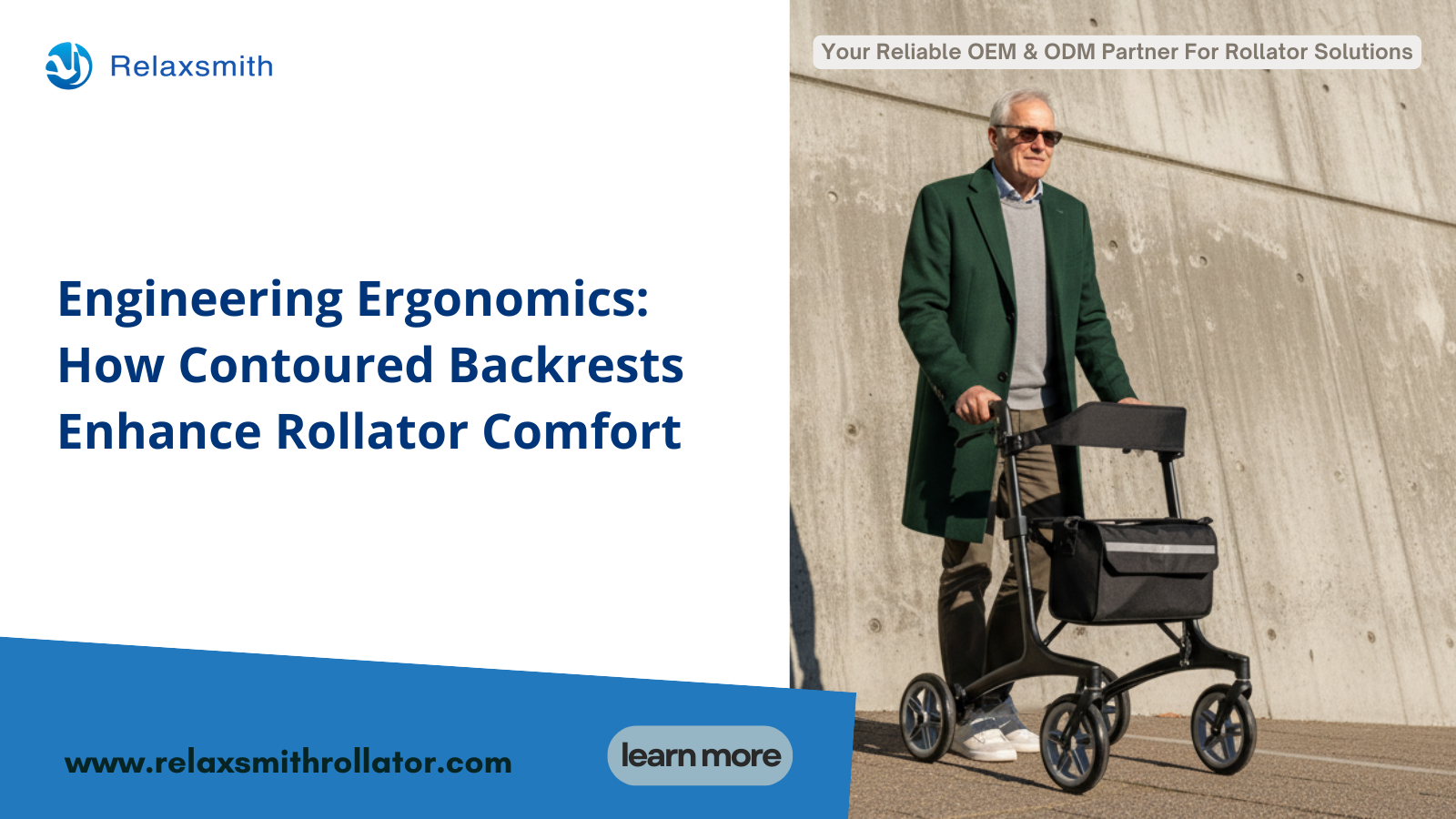
Engineering Ergonomics: How Contoured Backrests Enhance Rollator Comfort
As mobility aid technology advances, the emphasis on user-centric design grows ever stronger. A prime example is the rollator with contoured backrest, which represents a leap forward in ergonomic engineering. This article provides an in-depth analysis of the technical and practical benefits of contoured backrests, with a focus on how these features elevate comfort and usability for a diverse range of users and procurement stakeholders.
1. The Science Behind Ergonomic Contouring
The design of a rollator with contoured backrest is grounded in biomechanical research. Engineers carefully shape the backrest to conform to the spine's natural curvature, supporting both lumbar and thoracic regions. This precise contouring reduces muscle strain, alleviates back pain, and supports better posture throughout the user's mobility journey.
Procurement professionals seeking best-in-class rollator solutions should prioritize models validated by clinical studies and user trials—criteria that the rollator with contoured backrest meets consistently.
2. Materials and Adjustability: Comfort Without Compromise
Quality matters. The best rollator with contoured backrest incorporates high-resilience foams, breathable fabrics, and easy-to-clean surfaces. Modern designs also feature adjustable angles and removable cushions, ensuring that comfort can be tailored for individual user preferences and clinical requirements.
Such modularity is a boon for supply chain managers overseeing large, diverse populations, as it allows for greater inventory flexibility and end-user satisfaction.
3. Clinical Outcomes and Long-Term Value
Clinical outcomes are a core focus in rollator procurement. Evidence shows that a rollator with contoured backrest improves users’ sitting tolerance, reduces pressure sores, and facilitates more frequent use. These benefits translate directly into improved rehabilitation results, greater independence, and reduced healthcare costs.
Organizations investing in comfort-centric designs report higher user satisfaction rates and fewer product returns—a key metric for procurement leaders.
4. Integration with Institutional Protocols
The flexibility of the rollator with contoured backrest allows seamless integration with institutional protocols, from hospitals and long-term care facilities to outpatient clinics. Standardizing on ergonomically advanced models can reduce training time, simplify maintenance, and improve compliance with safety guidelines.
Procurement leaders benefit from vendor relationships focused on clinical value and operational efficiency.
5. The Procurement Perspective: Balancing Cost and Quality
Choosing a rollator with contoured backrest may involve a higher upfront cost, but the long-term return on investment is compelling. Lower maintenance costs, reduced user injuries, and positive brand differentiation make ergonomic designs a wise choice for forward-thinking organizations.
Procurement and supply chain leaders should use a total cost of ownership approach when evaluating bids and contracts, considering not just the purchase price but the lifetime impact of user-centered features.



