





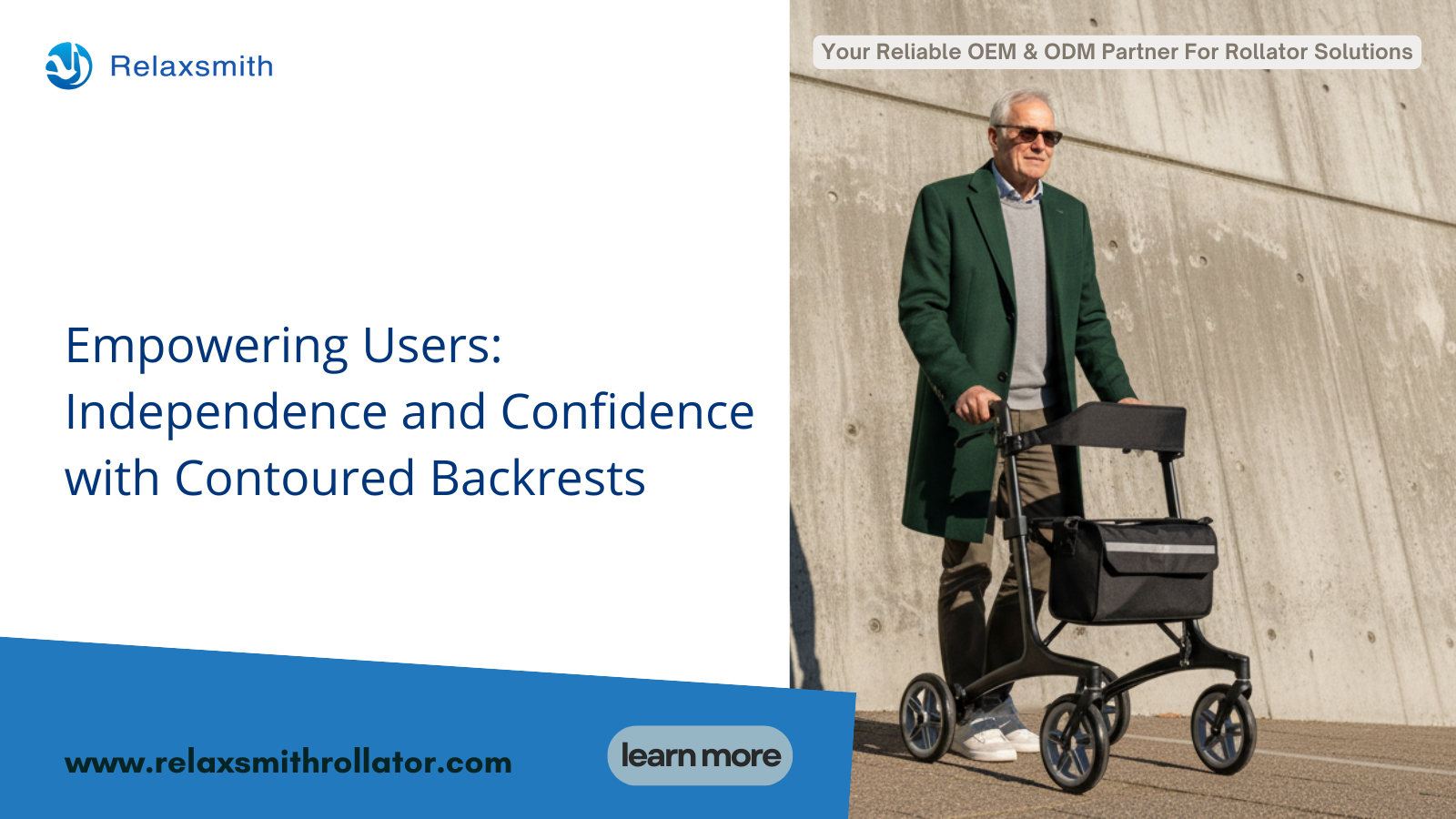
Empowering Users: Independence and Confidence with Contoured Backrests
Mobility is about more than just movement—it is about dignity, self-assurance, and autonomy. For individuals using a rollator with contoured backrest, these values are more easily achieved. This article analyzes how contoured backrests boost independence and confidence, offering procurement and clinical leaders insights to guide better purchasing decisions.
1. Secure Support and Postural Stability
The rollator with contoured backrest is designed to cradle the user’s spine, providing lateral and vertical stability. This security helps users feel more confident when sitting or taking a break, minimizing fears of tipping or sliding. The result is a willingness to travel farther and participate more fully in social or rehabilitation activities.
Clinical feedback demonstrates that users with access to a rollator with contoured backrest report higher satisfaction scores and reduced anxiety during daily mobility tasks.
2. Psychological Wellbeing and Motivation
Comfort and security have profound psychological effects. The ergonomic fit of a rollator with contoured backrest encourages upright posture and reduces fatigue, empowering users to take control of their movement. This, in turn, motivates regular use and supports better health outcomes.
For procurement and supply chain professionals, selecting comfort-driven solutions translates to improved compliance and fewer user dropouts from therapy or independent living programs.
3. Reducing Risk of Falls and Injury
Fall prevention is a top priority for mobility aid buyers. A rollator with contoured backrest reduces the risk of sliding or unsafe sitting, which are common causes of falls in frail populations. Intuitive design features—such as anti-slip coverings and easy-to-adjust supports—provide an extra layer of protection, safeguarding both users and organizational reputation.
4. Enhancing Participation in Daily Life
When users are comfortable and secure, they are more likely to engage in daily activities outside the home, from social gatherings to shopping trips and physical therapy. A rollator with contoured backrest supports this active participation, driving higher satisfaction for both users and caregivers.
Supply chain leaders can leverage these outcomes to justify investment in premium designs and ensure long-term loyalty from both users and referral partners.
5. Measuring Success: Data-Driven Procurement
Leading organizations track user-reported outcomes and usage statistics to measure the impact of mobility solutions. Procurement teams should collaborate with clinicians to collect feedback on rollator with contoured backrest models, using this data to refine product selection and negotiate better supplier terms.
Such evidence-based purchasing delivers sustained benefits for users and organizations alike.