





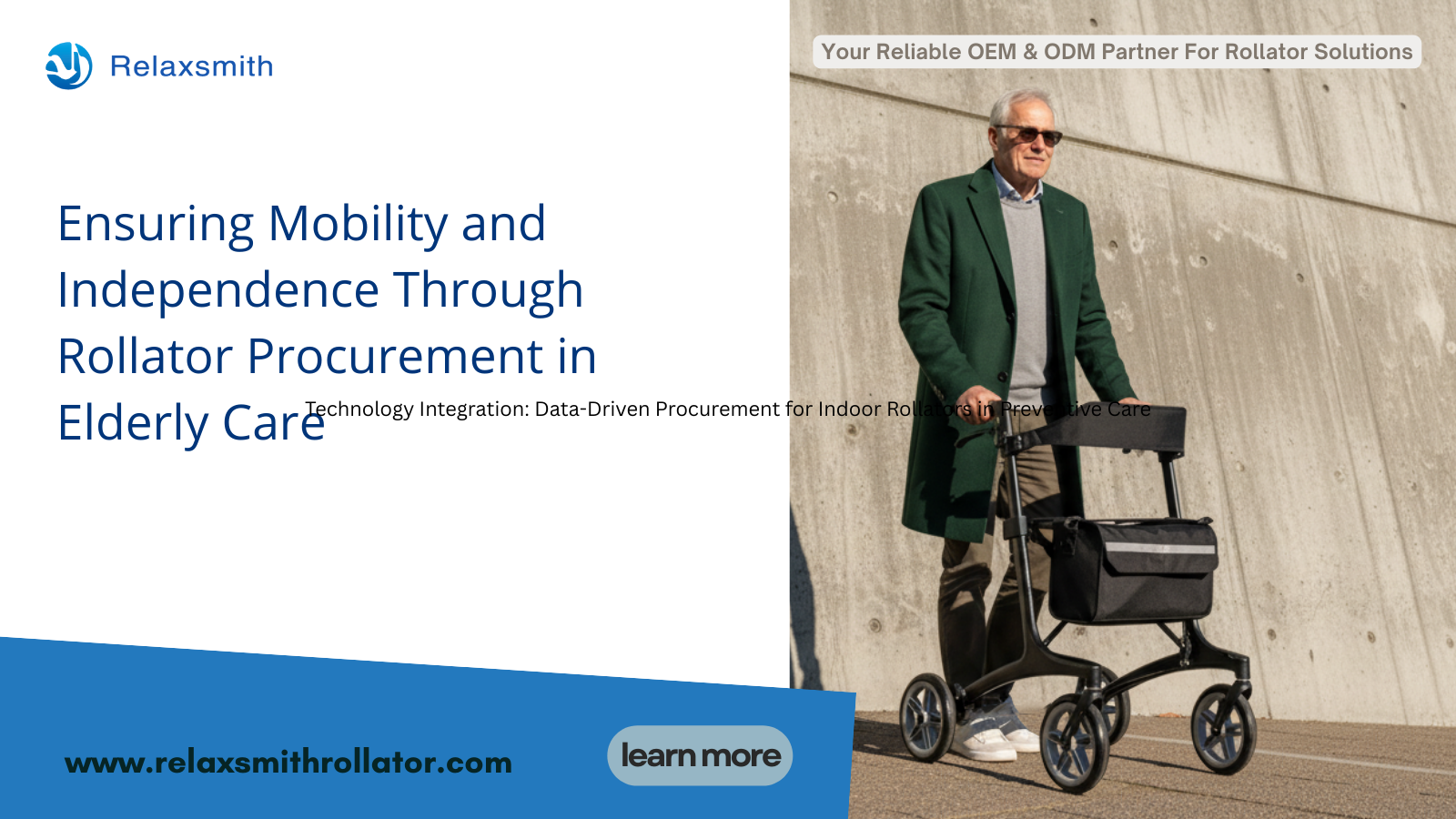
Ensuring Mobility and Independence Through Rollator Procurement in Elderly Care
To effectively support elderly residents, mobility aids like rollators must be chosen with a focus on their role in independence and quality of life. This article examines how procurement models can ensure that rollators are optimized to improve mobility, safety, and resident satisfaction.
The Link Between Mobility and Quality of Life
For elderly residents, mobility is closely tied to quality of life. The ability to move freely around a facility is essential for social interaction, self-care, and overall mental well-being. Without the ability to independently navigate spaces, residents may feel isolated, stressed, and dependent on staff. Rollators provide the necessary support to enhance mobility, thus helping residents retain autonomy over their daily lives.
Rollators as Mobility Enhancers
Rollators are designed to offer superior mobility and stability for elderly residents. They provide a safe and reliable means for individuals with limited mobility to move around their environments. With features like adjustable handles, sturdy frames, and built-in seats, rollators can significantly reduce the risk of falls and provide greater confidence in residents’ ability to move independently. The right rollator can transform the daily experience of a resident, allowing them to engage more fully in the care facility’s activities and daily routines.
Procurement Considerations for Optimized Rollator Deployment
Customization and Fit — The most important factor in selecting a rollator is ensuring it fits the resident’s needs. Adjustable settings for height, comfort, and ease of use are key in ensuring mobility aids contribute to independence.
Safety and Durability — Rollators must be sturdy, with features like anti-slip wheels and reliable braking systems. Durability is vital to ensure the long-term effectiveness of the investment.
Ease of Use — Rollators should be easy to maneuver, with lightweight frames and simple controls that residents can easily operate on their own.
Maintenance and Upkeep — Care facilities should invest in rollators that require minimal maintenance, with easily replaceable parts that ensure they continue to function optimally over time.
Procurement Models for Long-Term Success
There are several procurement models that can support the goal of enhancing mobility and independence for elderly residents. Some key models to consider include:
Long-Term Investment — Purchasing durable, high-quality rollators that provide long-term support for residents’ mobility needs.
Leasing Programs — Leasing rollators offers flexibility, allowing care facilities to upgrade equipment as residents’ needs change or new technologies emerge.
Subscription Services — Subscription models allow facilities to regularly receive updated models, ensuring residents always have access to the latest and most effective mobility aids.
Staff Training and Resident Support
To fully capitalize on the benefits of rollator deployment, staff members must be trained on how to support residents in using the devices. Proper training ensures that residents can use the rollators safely and independently. This training should include tips for adjusting rollators to suit individual needs, as well as instructions on how to safely navigate the environment. Staff should also be educated on how to assess residents’ needs and help them select the appropriate rollator for their specific mobility challenges.
Case Study: Successful Rollator Integration
One elderly care facility implemented a comprehensive rollator procurement strategy that prioritized independence and mobility. By selecting rollators with adjustable settings, safety features, and lightweight designs, the facility saw improvements in resident satisfaction, mobility, and overall well-being. Residents were able to enjoy greater freedom of movement, and the facility was able to reduce staff intervention in daily mobility tasks.
Conclusion: Supporting Independence Through Effective Procurement
Rollators play a crucial role in supporting mobility and independence in elderly care facilities. Care facilities that prioritize procurement strategies designed to meet residents’ mobility needs will not only improve the quality of life for residents but also increase overall satisfaction and reduce the need for staff intervention. By selecting the right rollators and using appropriate procurement models, facilities can ensure that residents maintain their independence and enjoy a better quality of life.