





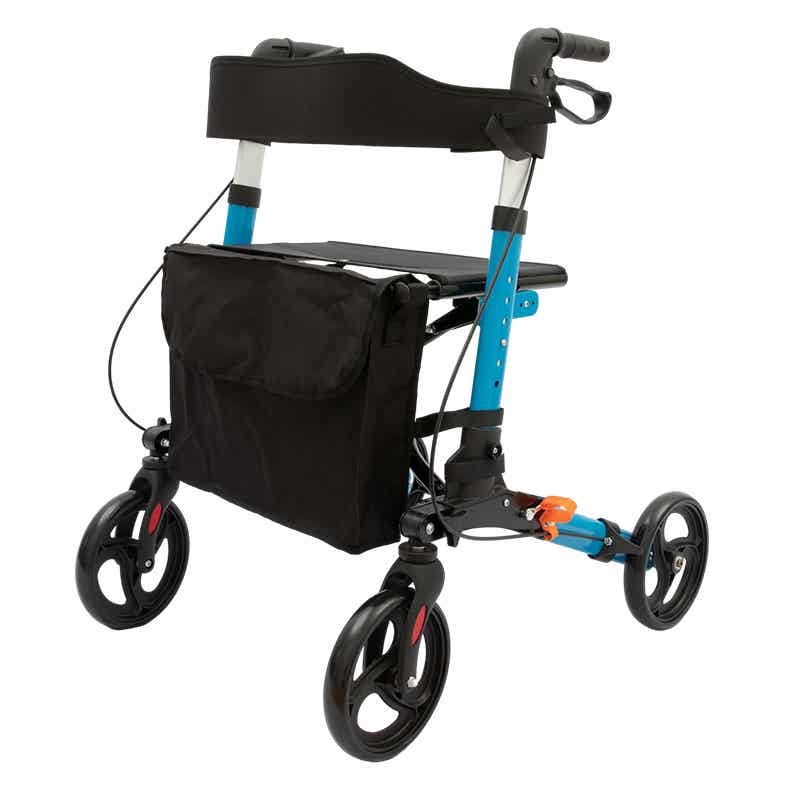
Frame Material Face-Off: Choosing the Best Rollator by Use Case

Choosing between a steel, aluminum, and carbon fiber rollator isn’t just a matter of cost or trend—it’s about aligning materials to clinical and practical needs. This article walks procurement teams through real-world use cases to show how each frame type performs in typical mobility situations, from rehab centers to assisted living homes.
1. Rehabilitation and Recovery Clinics
In rehab centers, rollators need to support repeated use, variable patient weights, and quick sanitization. Steel rollators offer strength and durability but are harder to maneuver. Aluminum provides a better weight-to-stability ratio, improving mobility training outcomes. For progressive recovery programs, comparing between a steel, aluminum, and carbon fiber rollator often favors aluminum for daily therapy use.
2. Assisted Living and Long-Term Care
For seniors with declining strength, ease of use and portability take priority. Carbon fiber rollators allow effortless turning and lifting, especially for residents in multi-level housing. Aluminum remains a cost-effective and reliable alternative. Steel may be too heavy for daily independent use, so when choosing between a steel, aluminum, and carbon fiber rollator, lighter options dominate for aging-in-place scenarios.
3. Hospital and Emergency Room Use
Hospitals value standardization and hygiene. Aluminum rollators are easy to disinfect and can be quickly folded and redeployed. Steel, while strong, requires more cleaning time and adds strain on storage logistics. Carbon fiber may be underutilized due to cost at this scale but could serve private wings or outpatient clinics effectively.
4. Bariatric Applications and Rural Clinics
Steel rollators shine in bariatric care and rural environments with rugged terrain. Their structural rigidity handles weight and unpredictable surfaces well. Aluminum works if weight loads are within 250 lbs. Carbon fiber, despite strength, may feel fragile under stress, making it a niche option in these conditions.
Conclusion
Choosing between a steel, aluminum, and carbon fiber rollator depends heavily on use context. Hospitals and clinics may lean toward aluminum; long-term care prefers carbon fiber for independence and ease of use; and steel remains valuable in heavy-duty and rural settings. Let material strategy be shaped by where and how the rollator is used—not just the catalog price.