





_compressed.png)
From Optional to Indispensable: How Rollator Accessories Earn Their Place
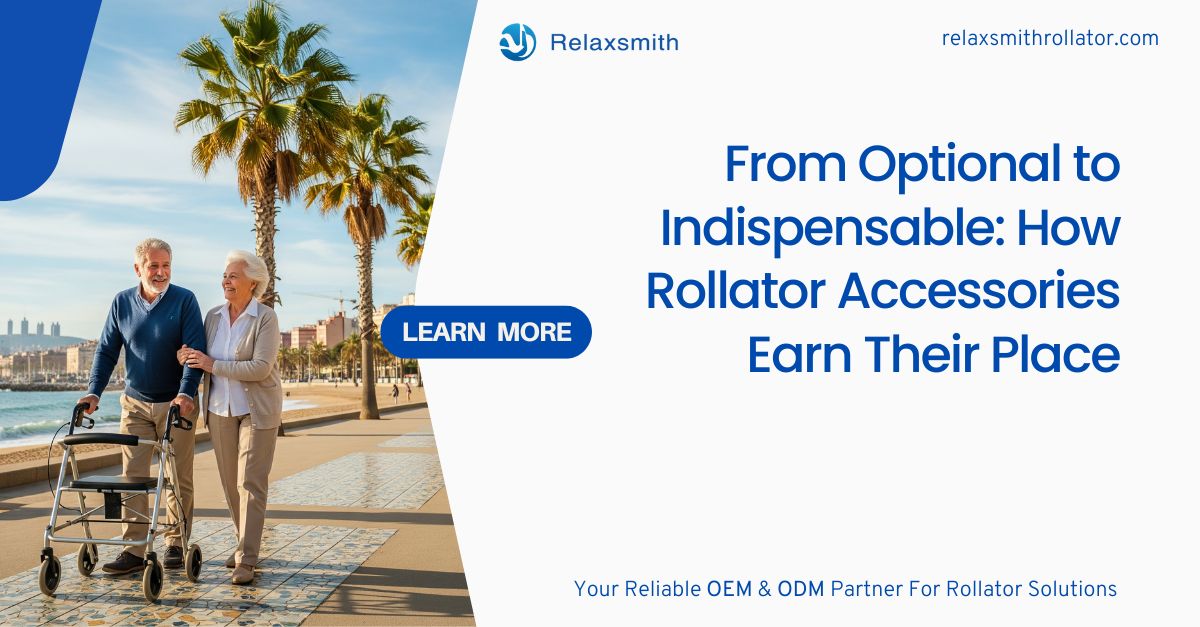
Understanding what makes a rollator accessory truly essential requires more than observing initial sales. Some accessories begin as afterthoughts but evolve into irreplaceable tools in users' lives. This article reveals how optional features become critical components in care and mobility settings, influencing procurement and product development strategies.
1. The Lifecycle of an Accessory
Accessories typically move through five stages:
Introduction as an optional upgrade
Positive anecdotal feedback
Inclusion in bundles or packages
Procurement-level demand
Standard inclusion in future rollators
2. Procurement Signals of Indispensability
Procurement teams begin to treat certain accessories as essential when:
They are requested consistently in bulk orders
They reduce maintenance complaints or support issues
They correlate with lower return rates
This feedback loop is critical in recognizing what makes a rollator accessory truly essential.
3. User Habituation and Emotional Connection
Accessories become indispensable when users integrate them into daily habits and associate them with safety, dignity, or comfort. For example:
A storage bag used to manage medications or ID cards
A tray used for breakfast or crafts
A cup holder enabling independence outdoors
4. Data Indicators of Essential Status
Tracking usage, reorders, and feedback helps determine which accessories cross the line from helpful to necessary. Smart procurement teams look at:
Repeat sales of accessory kits
Custom configurations with specific add-ons
Patient and staff surveys
Conclusion: Recognizing True Essentials
Understanding what makes a rollator accessory truly essential is about observing behavior over time, not just initial popularity. From procurement to design, acknowledging this evolution creates better products and care outcomes.
SEO Keywords (40 groups)
must-have rollator tools
walker accessory adoption
high-demand walker items
top-rated mobility add-ons
walker gear usage stats
repeat buy walker accessory
procurement rollator data
habit-forming mobility tool
critical rollator upgrade
daily use walker accessory
clinical rollator innovation
standardized walker item
mobility improvement gear
reliable rollator add-ons
functionality upgrade walker
preferred rollator accessory
trusted walker features
rollator accessory lifecycle
walker user loyalty
habit-based mobility aid
accessory feedback trend
smart procurement mobility
frequent use walker gear
essential aid kit
rollator standard components
walker return prevention
value-driven walker add-on
retention focused mobility
high-utility walker accessory
comfort-enhancing rollator
rollator independence tool
patient-preferred accessory
upgrade walker design
user-tested rollator gear
essential care facility tools
long-term use mobility
built-in walker feature
accessory procurement insight
clinical approved walker part
optimized walker bundle
Tags:
must-have rollator tools, high-demand walker items, critical rollator upgrade, repeat buy walker accessory, rollator accessory lifecycle, trusted walker features, smart procurement mobility, essential aid kit, patient-preferred accessory, upgrade walker design