






Implementing Rollator‑Based Exercise Programs in Elder Care Supply Chains
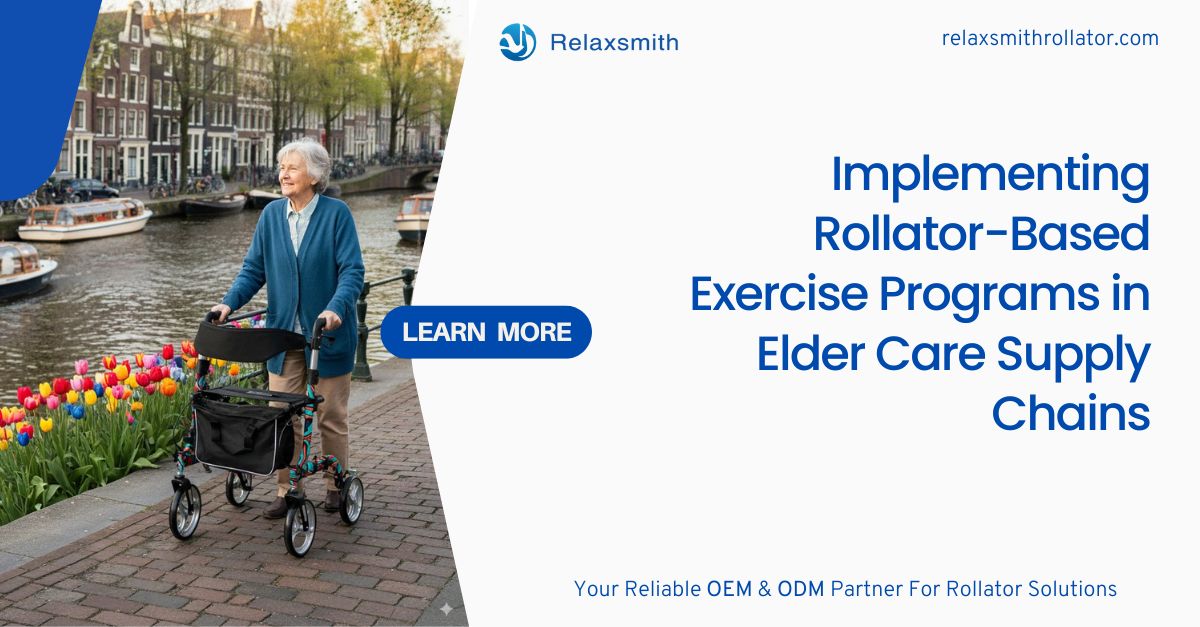
Elder care facilities and rehabilitation supply chains have unique challenges: diverse resident mobility levels, budget constraints, staff training needs, and regulatory oversight. A targeted approach that includes rollator‑based exercise programs can significantly improve resident balance and reduce falls. This article provides a practical blueprint for facility managers, product and procurement teams to deploy programs that leverage some easy exercises I can do with my rollator for balance in elder care settings.
Program Goals and Stakeholders
Before implementation, defining clear objectives and involving the right stakeholders is essential. Goals might include reducing fall incidents by a certain percentage, improving residents’ confidence, or lowering insurance costs. Stakeholders typically include facility directors, physical therapists, procurement and supply chain managers, and frontline care staff.
Core Components of the Exercise Program
Assessment: Evaluate each resident’s baseline balance ability, gait stability, and mobility limitations.
Equipment selection: Choose rollators that support standing balance, with secure brakes, suitable height, stable base, and good grip handles.
Session design: Short sessions (10‑15 minutes), 3‑4 times per week, including warm‑up, main exercises, and cooldown.
Staff training: Train care assistants and physical therapists to guide residents through correct posture and safe rollator use.
Monitoring & evaluation: Track key metrics such as fall frequency, resident feedback, and balance test scores.
Some Easy Exercises I Can Do With My Rollator for Balance in Elder Care
Integrating routines that are feasible, safe, and effective is vital. Here are examples of some easy exercises I can do with my rollator for balance tailored for elder care residents:
Supported Heel Raises: Residents stand behind rollator, brake locked, hands lightly on handles; raise heels, hold 2‑3 seconds, lower. Helps improve ankle strength.
Assisted Mini Squats: Using rollator handles, residents bend knees slightly (not deeper than comfort), then return to standing. Aids hip and knee joint stability.
Seated to Standing Transitions: From seated position in a chair near the rollator, stand up holding handles, sit back down slowly. Builds leg strength and functional balance.
These are some easy exercises I can do with my rollator for balance that are safe for a majority of residents, adaptable by ability, and can be incorporated daily with minimal equipment or space.
Implementation Steps & Resource Planning
To execute effectively, elder care supply chain and facility teams should:
Procure enough rollators to support group sessions and individual use; ensure backup stock for maintenance downtime.
Allocate staff time for training and supervising early sessions to ensure correct execution.
Create simple visual aids or posters showing the exercises, for residents to follow safely.
Schedule evaluations at baseline, then at 4‑week and 8‑week intervals to measure balance metrics (e.g. timed up‑and‑go test, single‑leg stand time).
Gather feedback from residents and caregivers to adapt the program (e.g. adjust handle height, session duration, rest periods).
Expected Outcomes & Cost Savings
Fewer falls and fall‑related injuries among residents, reducing emergency care and liability costs.
Improved resident mobility, which can decrease caregiving burden and staffing strain.
Enhanced resident satisfaction and quality of life.
Better resource utilization: lower replacement of devices due to misuse, fewer maintenance incidents.
Conclusion
Elder care is more than care—it’s creating safe, empowering environments. By systematically implementing rollator‑based exercise programs that include some easy exercises I can do with my rollator for balance, facility leaders and procurement teams can make measurable improvements in safety, mobility, and cost effectiveness across their care supply chains.