





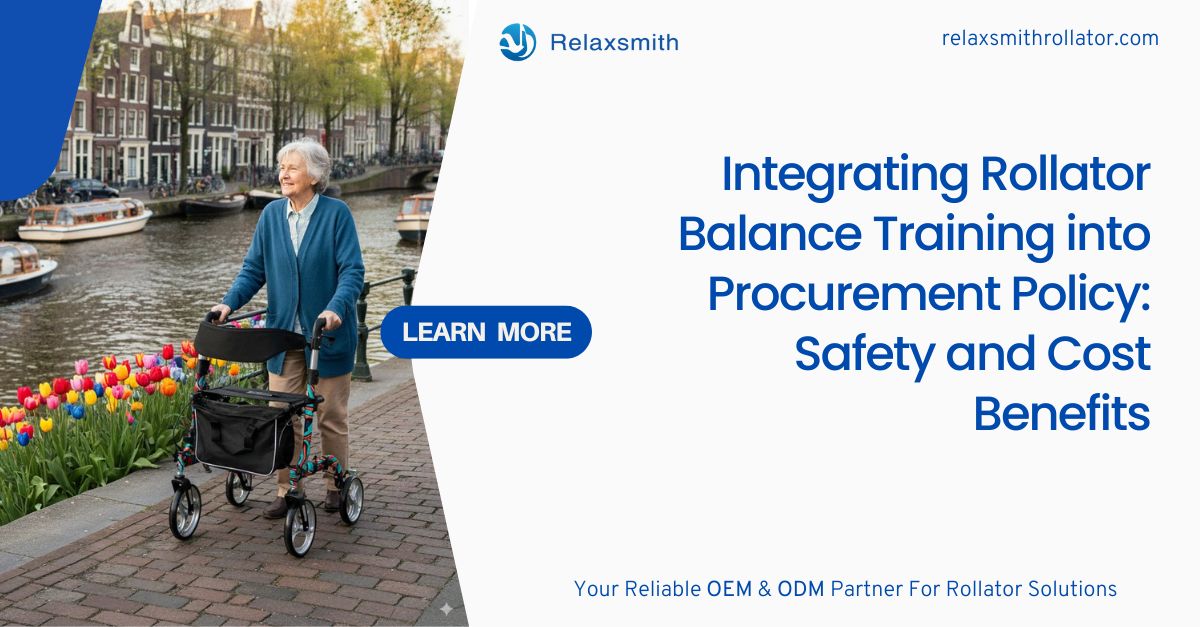
Integrating Rollator Balance Training into Procurement Policy: Safety and Cost Benefits
For product managers and procurement specialists, cost control and safety are always top priorities. One overlooked opportunity is incorporating balance training into the procurement criteria for mobility devices. In particular, understanding how some easy exercises I can do with my rollator for balance can be enabled by choosing the right features is key to delivering both safety benefits and long‑term cost savings.
Why Procurement Should Include Balance Training Criteria
Procurement policies traditionally emphasize durability, cost per unit, and supplier reliability. However, including balance training criteria creates value in multiple dimensions. Devices that support physical exercise contribute to reduced fall risk, lower injury-related claims, and improved user satisfaction. When you specify rollators that facilitate some easy exercises I can do with my rollator for balance, you're effectively investing in a preventive safety strategy rather than just mobility equipment.
Key Features to Specify in Policy
Adjustable handle height to accommodate various user heights and maintain posture during balance exercises.
Locking brakes and stable wheels to ensure the rollator stays in place when users perform movements.
Wide base or footprint to minimize tipping risk during side‑to‑side or forward/backward weight shifts.
Lightweight yet strong frame materials to ensure ease of movement by users without compromising safety.
Inclusion of accessories like built‑in seats or fold‑down rests for intermittent rest during exercise sets.
Some Easy Exercises I Can Do With My Rollator for Balance That Align with Procurement Goals
When procurement sets requirements, including support for these types of exercises helps ensure usability and safety. Examples of some easy exercises I can do with my rollator for balance that procurement‑specified devices should support include:
Forward and Backward Shifts: With rollator stationary, shift weight forward onto toes, then shift back onto heels. Great for improving ankle and calf stability.
Single‑Leg Stance with Support: Hold rollator handles lightly, lift one foot off the ground, hold for 10‑15 seconds, then switch. Helps improve balance on each side.
Side Lunges: Step one foot to the side, bend knee, then return. Alternate. Encourages hip stability and improves lateral balance.
Ensuring rollator selection allows for safe performance of some easy exercises I can do with my rollator for balance ensures devices aren’t just mobility aids, but safety‑enhancing tools.
Cost‑Benefit Analysis
Implementing procurement policy changes may have upfront costs. However, consider the following benefits:
Fewer slip/trip/fall incidents → lower insurance claims and medical costs.
Reduced downtime and worker lost hours from injuries.
Longer device lifespan due to better usage (devices used for balance exercises and mobility, not misused).
Higher user satisfaction, which can reduce replacement requests or warranty issues.
Implementing the Policy: Steps for Product & Procurement Teams
Form a cross‑functional committee (product design, safety, procurement, training) to define balance‑friendly specifications.
Include sample devices in pilot tests to ensure users can safely do exercises without risk.
Train vendors and suppliers to understand specifications (e.g. what “stable frame” or “locking brakes” mean in practice).
Monitor outcomes (incident rates, user feedback, maintenance issues) after introducing devices into the field.
Conclusion
Integrating criteria that support balance training, especially those enabling some easy exercises I can do with my rollator for balance, into procurement policy is not just a safety nice‑to‑have—it’s a strategic investment. For product managers and procurement leaders, this approach improves outcomes, lowers costs, and establishes a stronger safety culture across operations.



