





Improving Rollator Durability through Design Innovation and Material Engineering
.jpg)
Author: Selina | Category: NEWS | Date: 2025-10-24
Introduction
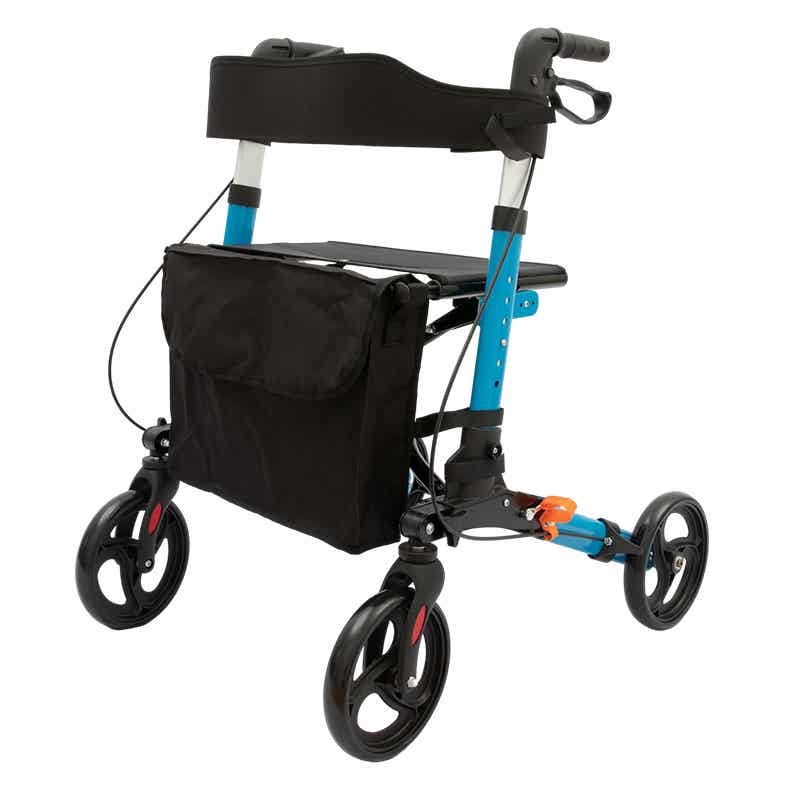
In the competitive landscape of medical mobility equipment, durability is the cornerstone of quality. Engineers and product managers working with foldable aluminum rollators must integrate material science, structural optimization, and user-centric innovation to extend product life. Understanding How to Maintain and Care for Your Foldable 4-Wheeled Aluminum Rollator for Longevity starts with superior design decisions and manufacturing discipline. This article explores how innovation in design and materials can significantly enhance the performance, safety, and sustainability of modern rollators.
1. The Foundation of Durability: Material Engineering
The first step toward rollator longevity lies in material selection. Aluminum alloys such as 6061-T6 or 7005 provide the perfect combination of strength, lightness, and corrosion resistance. Advanced surface treatments, including anodizing and powder coating, protect against moisture and oxidation. Reinforcing high-stress joints with carbon fiber inserts or stainless-steel pivots further improves fatigue resistance without adding unnecessary weight.
Product managers should collaborate with material scientists to evaluate load-bearing limits, corrosion resistance tests, and environmental exposure simulations. Such cross-functional testing ensures that every component exceeds minimum performance thresholds, guaranteeing long-term user safety.
2. Innovative Folding Mechanisms
One of the defining features of modern rollators is their foldability. However, repetitive folding can lead to wear at hinge points. Design engineers are now leveraging dual-axis mechanisms and polymer-coated pivot bearings to enhance mechanical lifespan. In addition, finite element analysis (FEA) during design allows engineers to predict where stress concentrations may occur, optimizing geometry to distribute loads evenly.
Routine inspection and lubrication of these mechanisms, as outlined in How to Maintain and Care for Your Foldable 4-Wheeled Aluminum Rollator for Longevity, further ensure consistent performance and safety during daily use.
3. Ergonomic Design and Load Distribution
Ergonomics plays a crucial role in durability. A poorly balanced rollator can concentrate force on single joints, accelerating wear. By refining handle angles, wheel placement, and center-of-gravity positioning, engineers can reduce torsional stress. Adjustable handles also accommodate different user heights, minimizing structural strain caused by improper posture.
Testing with diverse user profiles provides real-world insights into mechanical endurance and comfort optimization — a critical step in translating engineering precision into lasting usability.
4. Smart Manufacturing and Supply Chain Quality
Durability isn’t just achieved in the design room — it’s maintained across the supply chain. Implementing ISO 9001 and ISO 13485 quality management systems ensures every stage, from raw material sourcing to assembly, adheres to strict traceability and performance standards. Rollators should undergo mechanical fatigue testing and corrosion exposure trials before shipment.
Furthermore, digital supply chain integration allows manufacturers to track part lifecycles and proactively schedule maintenance updates. Predictive analytics based on field data can inform design revisions and production improvements, creating a feedback loop between engineering and market performance.
5. Sustainable Design Practices
Durability and sustainability go hand in hand. Designing rollators for disassembly enables easier recycling and component reuse. Choosing eco-friendly coatings, modular frames, and recyclable packaging supports circular economy goals. Manufacturers adopting life cycle assessment (LCA) tools can quantify environmental impact and identify opportunities to improve efficiency.
For procurement managers, sustainability certifications like RoHS and REACH compliance enhance brand credibility and reduce regulatory risk. Integrating these practices into product roadmaps establishes a long-term foundation for responsible innovation.
6. Testing and Verification
Before entering the market, rollators must undergo rigorous endurance and impact tests. Standards such as ISO 11199-2 define structural stability and braking performance criteria. Continuous quality assurance audits, combined with statistical process control (SPC), help detect manufacturing variances early, ensuring every unit meets its expected lifespan.
Post-market surveillance programs also collect feedback from distributors and end users, enabling real-time quality adjustments and data-driven product upgrades.
7. Future Trends: Integrating Smart Technology
The future of rollator design includes embedding sensors to monitor structural stress, brake wear, and user interaction. IoT-enabled models can alert users when maintenance is needed and provide data to manufacturers for predictive design improvements. This synergy between physical durability and digital intelligence will redefine mobility equipment reliability over the next decade.
Conclusion
Improving rollator durability requires more than robust materials — it demands a holistic approach combining engineering innovation, maintenance discipline, and sustainable design. By applying principles outlined in How to Maintain and Care for Your Foldable 4-Wheeled Aluminum Rollator for Longevity, professionals can ensure every rollator not only meets performance standards but exceeds user expectations. As technology and material science evolve, the future of mobility support will be defined by smarter, stronger, and more sustainable solutions.
🔧 40 SEO Keywords
rollator durability, foldable aluminum rollator, material innovation, design engineering, aluminum corrosion resistance, ergonomic mobility aid, sustainable rollator, product lifecycle, rollator maintenance, mobility equipment quality, aluminum frame testing, ISO 13485 medical devices, supply chain traceability, anodized aluminum rollator, FEA simulation, fatigue resistance design, healthcare equipment engineering, lightweight mobility design, smart rollator IoT, folding mechanism optimization, aluminum alloy 6061-T6, carbon fiber reinforcement, sustainable manufacturing, circular economy mobility, product quality testing, rollator hinge mechanism, ergonomic optimization, digital supply chain, product lifecycle management, rehabilitation technology, maintenance predictive analytics, rollator quality certification, healthcare innovation, adjustable handle design, product reliability strategy, aluminum surface treatment, long-term durability, rollator structural analysis, innovation in mobility aids, smart healthcare devices.
🏷️ 20 Tags
#rollatorDurability #foldableRollator #designInnovation #materialEngineering #mobilityAid #productManagement #medicalDevices #sustainability #supplyChain #engineeringExcellence #productLongevity #healthcareInnovation #rehabilitationEquipment #ISO13485 #mobilityTechnology #corrosionResistance #aluminumDesign #predictiveMaintenance #smartRollator #durableDesign



