






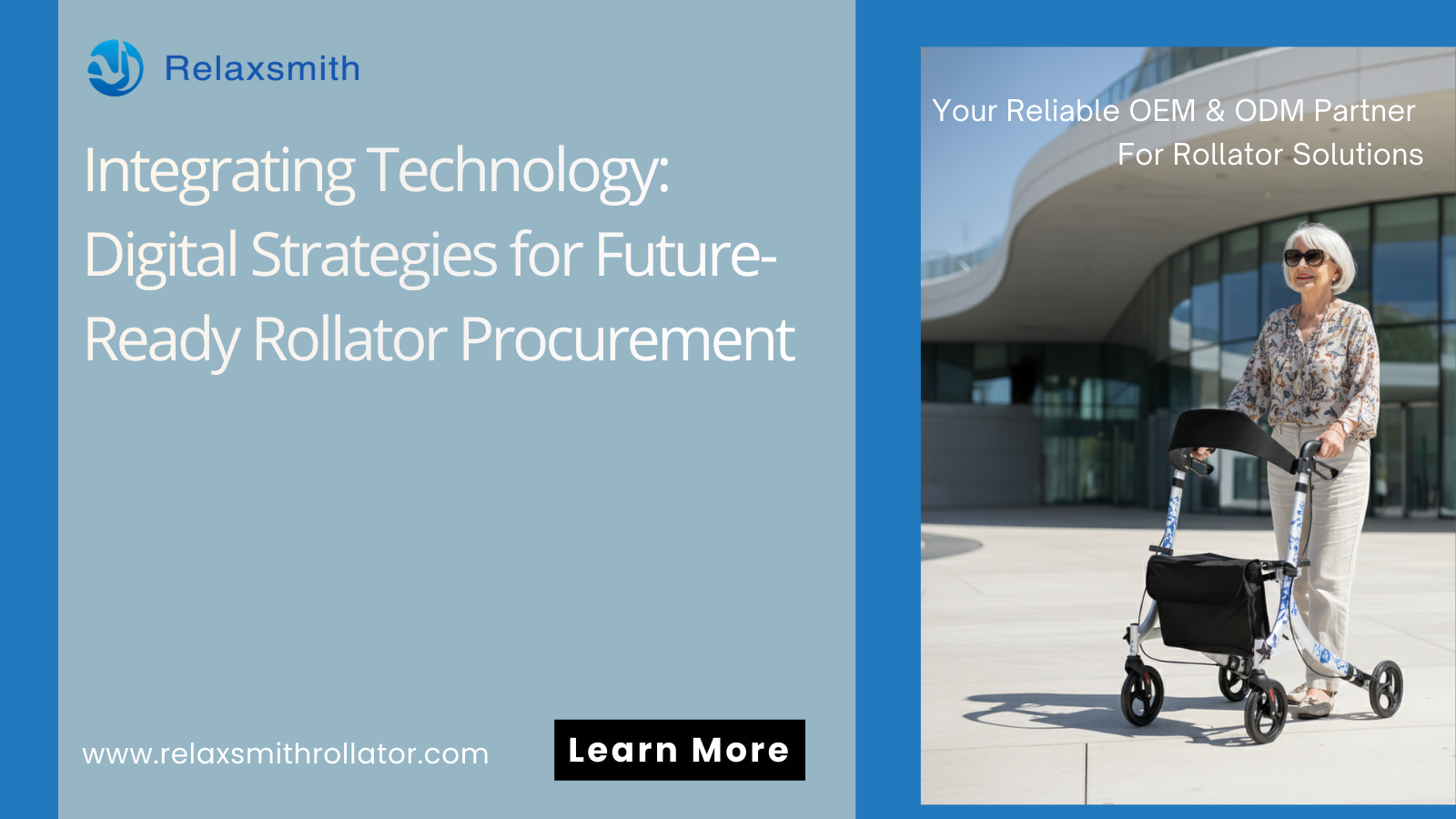
Integrating Technology: Digital Strategies for Future-Ready Rollator Procurement
How can procurement leaders future-proof investments in rollators? This article focuses on digital transformation and technology integration in resilient future-ready rollator procurement for long-term care, giving actionable advice for IT-savvy decision makers.
The Digital Imperative for Resilient Future-Ready Rollators
Technology is no longer optional in healthcare procurement. Procurement teams must consider rollators equipped for real-time data tracking, remote diagnostics, and IoT-enabled asset management. The “resilient future-ready rollator” delivers not only physical mobility but also integrates digital insights into patient safety, predictive maintenance, and workflow efficiency.
Essential Technology Features in Future-Ready Rollator Procurement
IoT Connectivity — Ensures rollators can be tracked, monitored, and managed remotely, reducing loss and enabling proactive servicing.
Integration with EHR/EMR — Devices that communicate with healthcare record systems improve safety and compliance.
Predictive Analytics — Use of data to forecast maintenance needs, usage patterns, and support cost reduction strategies.
Remote Software Updates — Keep devices secure and compliant as new standards and cyber threats emerge.
User Behavior Analytics — Inform procurement teams about user needs and support continuous improvement in care delivery.
Managing Digital Transition Risks in Procurement
Transitioning to digitally enabled resilient future-ready rollators presents unique challenges:
Cybersecurity concerns—Require robust encryption and vendor support for regular vulnerability assessments.
Integration complexity—Partner with vendors offering open APIs and technical documentation.
Change management—Provide staff training and involve end users in pilot programs before system-wide adoption.
Vendor Selection and Total Cost of Digital Ownership
Go beyond sticker price. Assess vendors for digital roadmap maturity, after-sales digital support, and track record in healthcare technology. Evaluate the total cost of ownership, including software licensing, security compliance, and ongoing IT maintenance. Select only suppliers committed to the evolution of resilient future-ready rollator technologies.
Implementing a Digital Procurement Strategy
Procurement leaders should establish cross-functional teams to plan, test, and evaluate digital rollator investments. Adopt standards-based procurement, involve IT and clinical stakeholders, and conduct pilots to measure real-world outcomes. Make digital literacy and data stewardship central to all procurement decisions regarding resilient future-ready rollators.