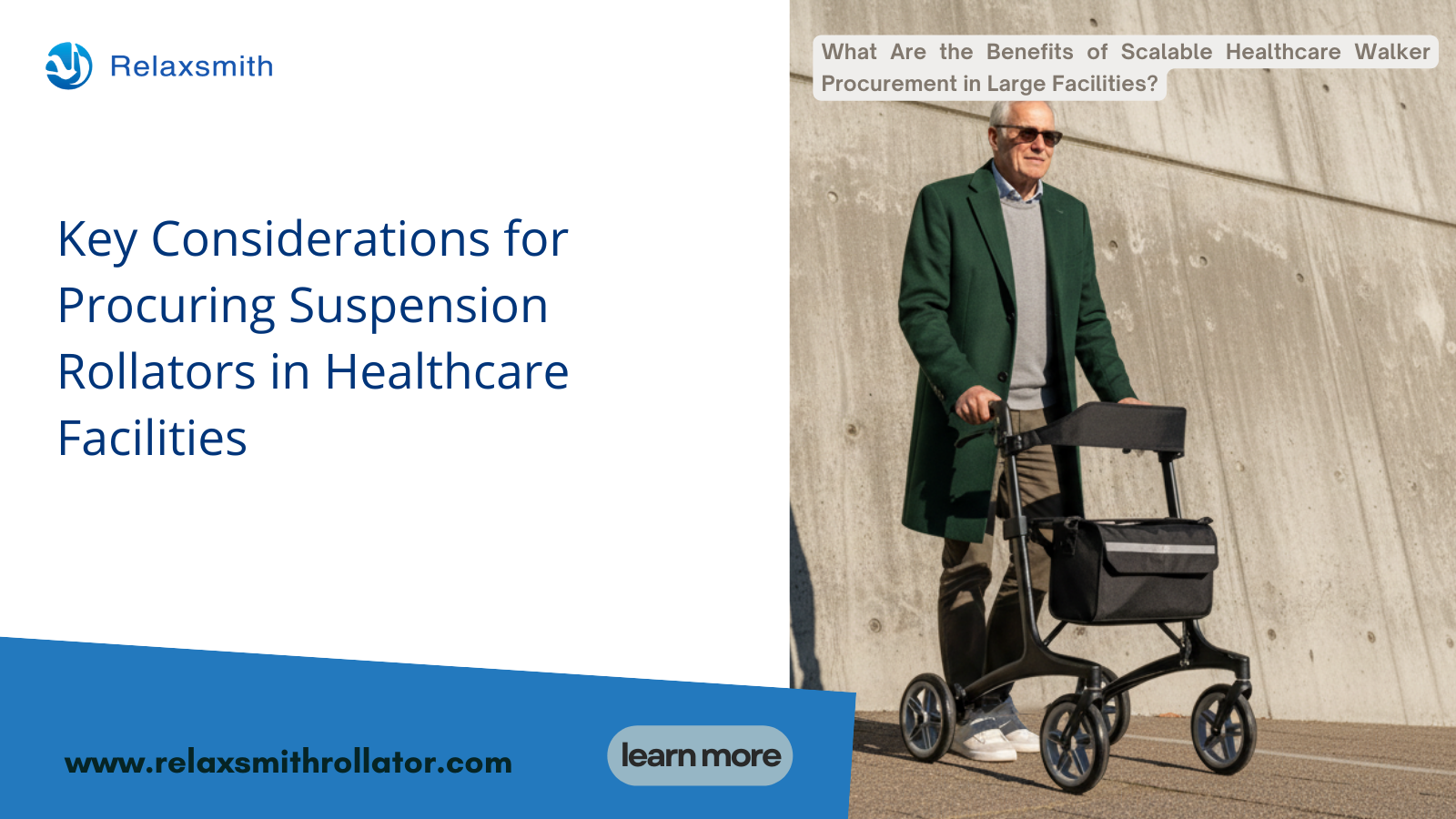
Key Considerations for Procuring Suspension Rollators in Healthcare Facilities
Introduction
Suspension rollators are specialized mobility aids designed to provide patients with enhanced support and comfort. These rollators are particularly beneficial in healthcare settings where patients require additional assistance with mobility. When procuring suspension rollators for healthcare facilities, it is important to consider several key factors to ensure that the equipment meets the needs of patients and staff while maintaining cost-effectiveness and operational efficiency.
1. Patient Needs and Mobility Requirements
The primary consideration when procuring suspension rollators is understanding the specific needs of the patients. Healthcare facilities must evaluate the mobility requirements of the patients they serve, including factors such as weight capacity, stability, and the need for additional support features like adjustable handles or padded seats. Suspension rollators are particularly useful for patients with joint pain, arthritis, or those recovering from surgery, as they provide smooth movement and reduce strain on the body.
2. Durability and Quality
Durability is a critical factor in procuring suspension rollators, as these devices are frequently used in demanding healthcare environments. Healthcare facilities must ensure that the rollators are made from high-quality materials that can withstand daily use, cleaning, and disinfection. Durable frames, comfortable grips, and strong suspension systems are essential for maintaining performance and safety over time.
3. Ease of Maintenance
When selecting suspension rollators, healthcare organizations should also consider ease of maintenance. These devices must be easy to clean and maintain to ensure hygiene standards are met. Additionally, healthcare facilities should choose rollators with parts that are readily available for replacement or repair. Regular maintenance is essential for the long-term functionality and safety of the equipment.
4. Cost and Budget
Budget constraints are always a consideration when procuring medical equipment for healthcare facilities. It is important to strike a balance between quality and cost-effectiveness when selecting suspension rollators. While it is crucial to invest in high-quality equipment, healthcare facilities should also explore bulk purchasing or leasing options to maximize their budget. Understanding the long-term value and potential savings from reduced maintenance costs is essential when evaluating the overall cost of procurement.
5. Staff Training and Support
Once suspension rollators are procured, healthcare staff must be adequately trained in their proper use and maintenance. It is essential to provide comprehensive training on how to adjust the rollators, assist patients with mobility, and ensure the safety and comfort of patients while using the devices. Training should be standardized across all departments to ensure consistency in usage.
SEO Keywords
suspension rollator procurement healthcare
healthcare rollators
patient mobility aids
medical equipment procurement
cost-effective rollators
mobility aids for healthcare facilities
healthcare equipment maintenance
patient support devices
rehabilitation mobility aids
medical device selection
patient safety rollators
healthcare staff training
rollator procurement tips
healthcare innovation rollators
medical device efficiency
operational efficiency healthcare
mobility support devices
rehabilitation rollators
healthcare budget rollators
rollator quality and durability
For more details, please visit: www.relaxsmithrollator.com