





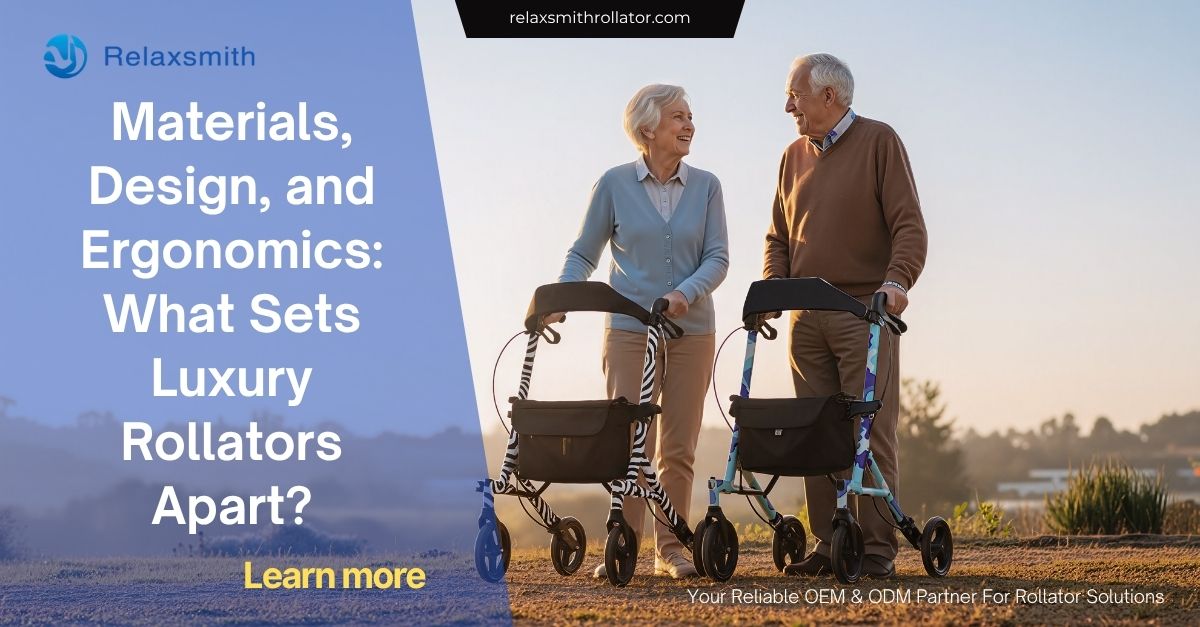
Materials, Design, and Ergonomics: What Sets Luxury Rollators Apart?
For product managers and supply chain professionals, the key differences between a luxury rollator brand and a budget-friendly one often begin with a close examination of materials, design philosophy, and user ergonomics. In environments where safety, comfort, and compliance are paramount, these factors drive not only user satisfaction but also brand reputation and operational efficiency.
Premium Materials and Attention to Detail
Luxury Rollator Brands: Invest in high-grade aluminum alloys, lightweight carbon fiber, and medical-grade plastics. Handles are often made with non-slip, anti-microbial coatings, while tires use puncture-resistant compounds for maximum safety and smoothness.
Budget-Friendly Brands: Typically utilize standard aluminum, steel, or generic plastics. Hand grips and tires may show faster wear, and there is less focus on antimicrobial or advanced material properties.
Design Philosophy: Function Meets Form
Luxury Brands: Employ experienced industrial designers who prioritize sleek aesthetics, intuitive folding mechanisms, and seamless adjustability. Many feature tool-free height and width adjustments, integrated safety lighting, and discreet storage options.
Budget Brands: Focus on essential functionality, sometimes at the expense of user-friendly design. Adjustments may require tools or extra effort, and form factor is often bulkier and less visually appealing.
Ergonomics and User Comfort
Luxury Brands: Prioritize ergonomic handles, padded and contoured seats, and optimized user posture for both walking and sitting. Adjustable components accommodate a wider range of body types, reducing fatigue and injury risk.
Budget Brands: Meet baseline requirements for comfort but may lack adjustability and advanced ergonomics. Some may have hard plastic seats or non-adjustable grips, which can lead to discomfort over extended use.
Ultimately, the key differences between a luxury rollator brand and a budget-friendly one in terms of materials, design, and ergonomics will shape long-term satisfaction and the total cost of ownership for any professional buyer.
Conclusion
In summary, understanding the key differences between a luxury rollator brand and a budget-friendly one in this dimension means looking beyond the price tag to the lasting benefits of comfort, safety, and professional-grade design. For organizations serving high-need or long-term users, investing in luxury design may drive better outcomes and stronger market positioning.
SEO Keywords (40 groups for this series)
Luxury rollator materials
Budget rollator construction
Rollator ergonomic design
Medical device aesthetics
Anti-microbial mobility aid
Premium rollator handle
Contoured seat rollator
Puncture-resistant tire rollator
Adjustable mobility device
Tool-free adjustment rollator
Industrial design rollator
User comfort mobility aid
Non-slip rollator grip
Professional-grade rollator
Integrated storage mobility
Luxury mobility brand
Budget rollator limitations
Rollator height adjustment
Medical-grade plastic rollator
Ergonomic seat mobility
Discreet storage rollator
Supply chain medical equipment
Procurement design choice
Rollator posture optimization
Fatigue prevention mobility aid
Professional healthcare rollator
Seat comfort mobility device
Mobility aid aesthetics
Antimicrobial hand grip rollator
Carbon fiber rollator frame
High-end mobility solution
Long-term comfort rollator
Luxury equipment for seniors
Rollator design trends
Mobility aid adjustability
Premium vs. budget rollator
User-centered mobility device
Visual appeal rollator
Healthcare product design
Procurement best practices rollator
Tags:
Luxury rollator materials, Budget rollator construction, Rollator ergonomic design, Medical device aesthetics, Anti-microbial mobility aid, Premium rollator handle, Contoured seat rollator, Puncture-resistant tire rollator, Adjustable mobility device, Tool-free adjustment rollator, Industrial design rollator, User comfort mobility aid, Non-slip rollator grip, Professional-grade rollator, Integrated storage mobility, Luxury mobility brand, Budget rollator limitations, Rollator height adjustment, Medical-grade plastic rollator, Ergonomic seat mobility, Discreet storage rollator, Supply chain medical equipment, Procurement design choice, Rollator posture optimization, Fatigue prevention mobility aid, Professional healthcare rollator, Seat comfort mobility device, Mobility aid aesthetics, Antimicrobial hand grip rollator, Carbon fiber rollator frame, High-end mobility solution, Long-term comfort rollator, Luxury equipment for seniors, Rollator design trends, Mobility aid adjustability, Premium vs. budget rollator, User-centered mobility device, Visual appeal rollator, Healthcare product design, Procurement best practices rollator